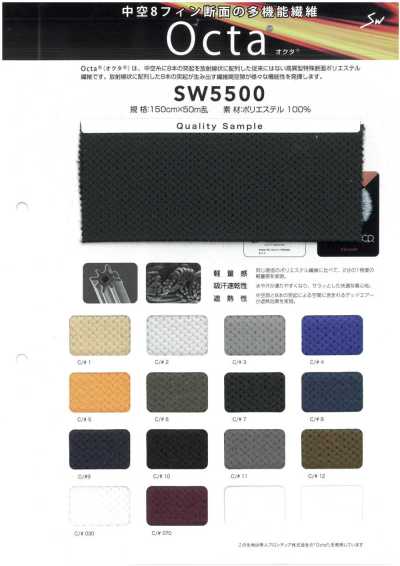
Half Milano
Half Milano is a Milan rib-type flat knit fabric that presents a relatively flat face while giving the reverse side the texture of the knit structure.


Contents6 sections
Definition and Overview
Half Milano is a knitted fabric in the Milan rib family, mainly made on a flat knitting machine. The surface is relatively smooth like jersey, while the reverse side shows texture from tuck stitches and other structures, giving each side a different look.
Thickness and stiffness vary greatly depending on yarn thickness, machine gauge, stitch density, and the combination of materials. For that reason, the name Half Milano alone does not tell you the blend ratio, stretch, or thickness.
Hand and Function
In general, it tends to have more body and firmness than jersey, and although it is a knit fabric, it is easier to keep its shape. Because the face surface is relatively even, it is a knit that can create a neat appearance without looking too casual.
Large ribs like those in rib knit are less noticeable, and although it has horizontal stretch, it is not a structure intended for the strong elasticity of standard rib knit. The texture on the reverse side helps reduce direct contact with the skin and adds fullness to the fabric.
- Easily gives body and firmness
- The surface is relatively flat and can look refined
- Depending on stitch density and yarn use, it can be designed from lightweight to thick
- As a knit fabric, care is needed for stretch due to cutting direction and load
Main Applications
It is used for knit products that need to hold their shape, and is suitable for pullovers, cardigans, knit jackets, vests, skirts, and pants. It is considered when a neat, woven-like appearance is desired while making use of knit stretch.
The wearing season depends on the material and thickness used. Lighter constructions made with cotton or synthetic fibers are often used for spring and autumn, while thicker versions made with wool and similar materials are often used for autumn and winter.
Selection and Care Notes
At the planning stage, check the blend ratio, fabric weight, stitch density, stretch by knitting direction, and shrinkage after washing. Especially when a large proportion of natural fibers is included, or when the fabric has not been sufficiently stabilized, the design must account for shrinkage and dimensional change caused by washing.
Before cutting, relax the fabric by letting it rest and align the grain with the knitting direction. In sewing, choose stitching specifications and thread that can handle the fabric's stretch so the seams do not pull. When pressing, excessive pressure may reduce the fabric's fullness, so confirm in advance the conditions for using a pressing cloth and steam.
- Perform a washing test before mass production to confirm shrinkage and distortion
- Because the front and reverse sides look different, keep the sides consistent during cutting
- Check the effect of heavy trims and pockets on stretching and shape loss
- Follow care instructions for the blended materials for washing method and pressing temperature
Differences from Similar Terms
Milan rib is generally used as a general term for a dense, stable knit fabric made with multiple needle beds. Half Milano is one type in that family, and its defining feature is a construction that makes the face look flatter while giving the reverse side more structure.
Jersey ranges from thin and light knits to heavier fabrics, but it tends to curl more easily than Half Milano, and its dimensional stability is more dependent on the structural design. Circular rib is a rib-based knit that emphasizes stretch, and its main purpose and appearance differ from Half Milano.
FAQ
Does Half Milano stretch?
Because it is a knit fabric, it has a certain amount of stretch, but the amount varies depending on the yarn, stitch density, structure, and whether polyurethane is used. It does not always stretch as much as rib knit, so in planning it is important to measure stretch and recovery by knitting direction.
Does Half Milano shrink in home washing?
Whether it shrinks, and by how much, depends on the material, dyeing and finishing, and knit density. Since dimensional change may occur especially when cotton or wool is included, a washing test should be conducted on the finished product before mass production, and shrinkage allowances should be reflected in the pattern along with appropriate care labeling.
Are Half Milano and Milan rib the same?
They are sometimes used to mean the same thing, but strictly speaking Half Milano may be distinguished as one type of Milan rib structure. Because naming and structural interpretation can vary by supplier and knitting factory, it is important to confirm with a structure chart or knit sample.