


Hook-and-eye Tape
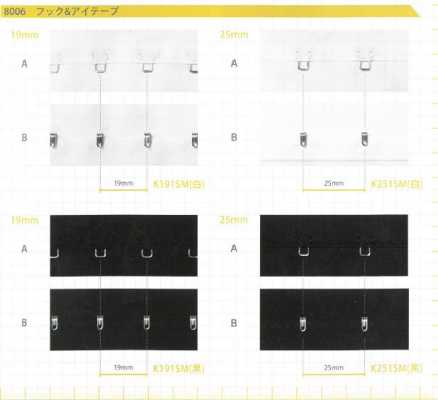
Hook-and-eye tape is a sew-on accessory material used to fasten an opening in a garment, with hook-shaped hooks and receiving eyes attached continuously to tape.
Contents7 sections
Definition and Overview
Hook-and-eye tape is an opening-and-closing material with hooks arranged at regular intervals on one side and matching eyes on the other. The left and right tapes are sewn on, and the hooks are fastened by hooking into the eyes. Unlike a zipper, it has a structure that makes partial opening and closing easier.
It is also called hook-eye tape or hook tape. Depending on the product, the hooks and eyes may be on separate tapes, and some products have multiple staggered rows so the fastening position can be adjusted.
Materials and Structure
In general, metal is used for the hook and eye parts, and textile materials such as polyester are used for the tape that holds the components in place. Tape width, hook size, spacing, number of rows, and color vary by product.
The hook is the engaging side, and the eye is the receiving side. In multi-row specifications, the wearer can choose the fastening row according to body shape or garment ease. When used against the skin, the ends of the parts and tape can affect skin feel.
- Single-row specifications are used to secure an opening.
- Multi-row specifications are used to adjust the fastening position.
- Whether the tape is stretchy affects both wearing comfort and ease of handling during sewing.
How to Attach and Sewing Key Points
Normally, the hook-side and eye-side tapes are sewn onto the opening edges of the body panel or similar part by machine or by hand. With the left and right sides closed, check the position, then baste in place so the top edge, bottom edge, and height of each hook do not shift before sewing.
Hook-and-eye tape differs from dot buttons and similar items that are set into the fabric with a setting tool; in principle, the tape is attached by sewing it on. However, since individual hooks may have attachment methods other than sewing, confirm the attachment method separately for each material.
- Decide the sewing position for the tape by taking the seam allowance and facing thickness at the opening edge into account.
- Check the hook orientation and left-right pairing in advance.
- Reinforce the ends with backstitching or bartacks to prevent fraying or lifting.
Main Uses
It is often used for back openings and front openings in lingerie such as bras, underwear, and shapewear. Multi-row specifications that allow size adjustment are suitable for garments that require a close fit.
It is also used for openings in costumes, dresses, and women's apparel. Because the opening hardware is less visible from the outside, it may be chosen for areas where a zipper is difficult to use or where a softer appearance is desired.
Points to Note When Selecting
Select the part size, number of rows, and tape strength based on the force applied to the use area, fabric thickness, opening length, and washing method. In areas repeatedly subjected to strong sideways load, reinforcement of the sewing thread and fabric side should also be considered.
Because metal parts are used, after sewing check for hook deformation, poor engagement, and seam failure. For products that undergo needle inspection, it is important to confirm not only broken needles but also the material specifications and operating conditions of the needle detector in advance.
Differences from Similar Terms
Spring hooks, hook and eye closures, and skirt hooks are materials that are often attached as individual hook parts. Hook-and-eye tape differs in that the hooks and eyes are fixed continuously to the tape in advance, allowing multiple points to be sewn on together.
Snap tape is a material with snaps attached continuously to the tape. Hook-and-eye tape fastens by hooking, whereas snap tape fastens by pressing the male and female sides together, so the feel of operation and the holding mechanism differ.
Frequently Asked Questions
Can hook-and-eye tape be attached by setting?
General hook-and-eye tape is attached by sewing the tape portion onto the fabric. The attachment method differs from press-button products that are fixed to the fabric with a setting tool or press machine. Since individual hooks may have different attachment specifications, check the specification sheet for each material.
How do you check the left and right sides and orientation of hook-and-eye tape?
Determine the opening direction as seen from the front of the product, and confirm it by actually engaging the hooks and eyes in the closing direction. Before sewing, lay the left and right tapes side by side and baste them with the top edges and the height of each hook aligned, which helps prevent unevenness or twisting at the opening edge.
What should be checked when selecting hook-and-eye tape?
Check the hook size and spacing, number of rows, tape width, stretchability, thickness of the fabric to be used, and required holding strength. For uses that contact the skin, skin feel is also important. For products that will be washed or dry-cleaned, also confirm the durability of the tape and metal parts in advance.





