


Snap Tape
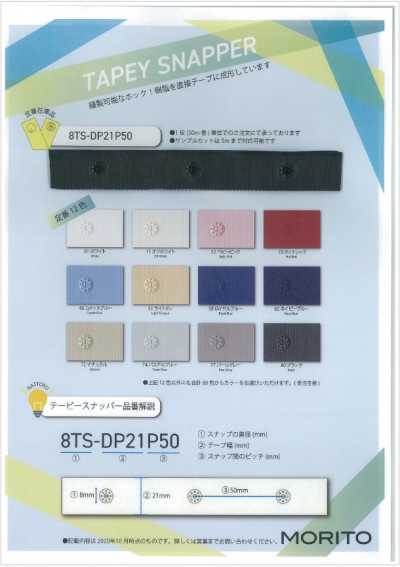
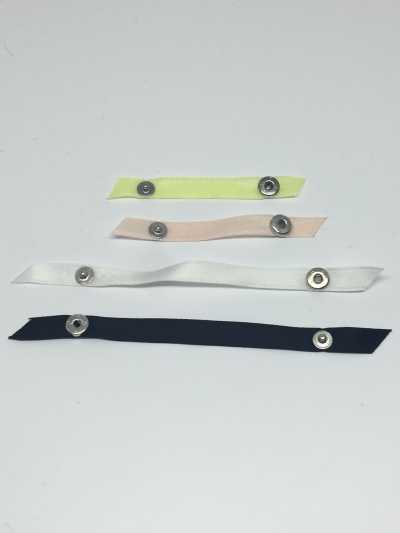
Snap tape is a tape-shaped fastener with snap buttons attached at regular intervals on the male and female sides, used as an accessory material to create a continuous opening and closing section by sewing it on.
Contents6 sections
Definition and Overview
Snap tape is an apparel accessory material with male snaps on one side of the tape and female snaps on the other side prepositioned in advance. The left and right tapes are sewn on, and the matching snaps are pressed together to open and close. A key feature is that it helps eliminate the step of attaching each snap one by one.
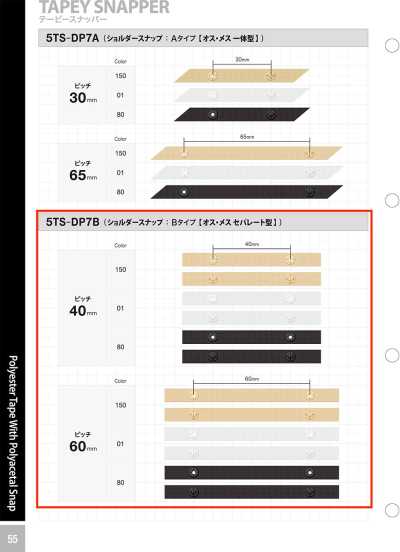
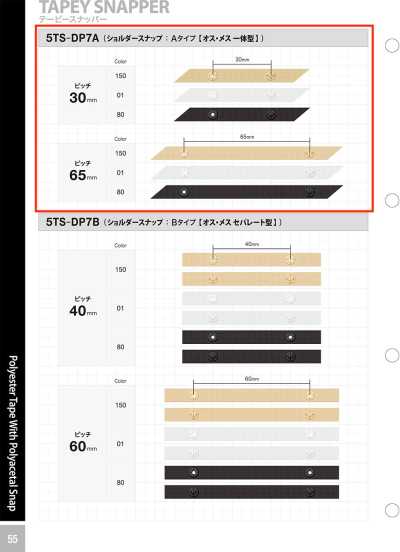
In catalogs, items with multiple snaps arranged at regular intervals may be counted as blocks. In such cases, the number of blocks and the number of snap pairs are not always the same, so the specification sheet should be checked for the number of pairs and the arrangement.
Materials and Structure
Generally, it has a structure in which resin or metal snaps are fixed to a woven or knitted tape. The snaps are made up of a matching male and female pair. On some products, the area around the snaps is reinforced with a backing cloth for better stability during sewing.
Plastic snap tape is a name used mainly for snap tape using resin snaps. However, usage of the name varies by seller and worksite, so the material, needle detector compatibility, and washing conditions must be checked in the individual specifications.
- The tape section is the base material for sewing on.
- The male and female sides are used as a left-right pair.
- The spacing between snaps affects ease of opening and closing as well as appearance.
How Sizes Are Indicated
Sizes are shown by tape width, overall length, snap size, snap spacing, and number of pairs or blocks. For example, tape width refers to the total width including the portion that can be used as seam allowance, and it should be checked separately from snap size.
Selection should take into account not only the required opening and closing length but also the extra length needed for finishing the ends. Depending on the cutting position, the male and female sides may no longer line up, so overlap the left and right tapes and confirm the matching snap positions before cutting.
How to Attach and Main Applications
Basically, place the tape along the seam allowance side of the opening edge and sew it so the snaps are not easily visible from the front. If you temporarily fasten the left and right sides in the closed state and then confirm the top and bottom positions and snap engagement before sewing, misalignment can be reduced.
It is used for areas that need to open and close with relatively short operation, such as baby clothing, underwear, care garments, bedding items, and costumes. While it can be used for continuous openings and closings, the required holding strength and durability against repeated opening and closing must be considered.
- Secure the start and end of sewing with backstitching or a similar method.
- Check the needle drop position so the machine needle does not sew through the snap body.
- Stitch or finish the ends so the tape does not fray.
How to Choose and Points to Note
On thin fabrics or highly stretchable fabrics, the fabric may stretch or tear under the force applied during opening and closing. If necessary, reinforce the attachment area with facings, pressing cloth, interfacing, or similar materials, and use specifications suited to the fabric thickness and snap holding strength. On thick fabrics, the snaps may not engage properly, so check opening and closing on an actual sample.
If metal parts are included, rust or discoloration may occur depending on humidity, sweat, washing, and storage conditions. For products subject to metal detection, confirm in advance whether there are metal parts and whether the specification is needle detector compatible. Even with resin parts, perform durability checks for breakage, cracking, or detachment.
Hook-eye tape is a tape with hook-shaped hooks and loops arranged in a row. Its fastener structure, appearance, and closing feel differ from snap tape. In addition, sewn-on snaps are individual snap components sewn on one by one, and are distinguished from snap tape, which is connected in tape form.
Frequently Asked Questions
Can snap tape be cut and used?
In many cases, it can be cut to the required length, but depending on the cutting position, the left and right snap positions may no longer match. Check the arrangement of the male and female sides in the closed state, and cut with allowance left for seam allowance and end finishing. Measures to prevent fraying at the cut edges are also necessary.
Can snap tape be used on thick outerwear?
It may be usable, but depending on the thickness of the fabric and quilt batting, the snaps may not engage fully and opening and closing may become difficult. Check the thickness of the attachment area, the required holding strength, and the pulling direction on an actual sample, and consider a different fastener or reinforcement specification if needed.
Can snap tape be needle detected?
Items that include metal snaps are generally detected during needle inspection. On the other hand, even when composed only of resin snaps and tape, whether it can be handled as needle detector compatible depends on the product specifications. Please confirm in advance according to the needle inspection standard and foreign matter control procedures.





