


Moiré Ribbon
Moiré ribbon is a decorative ribbon with a lustrous pattern resembling ripples on the water's surface, applied to narrow woven fabrics such as taffeta.
Contents5 sections
Definition and Overview
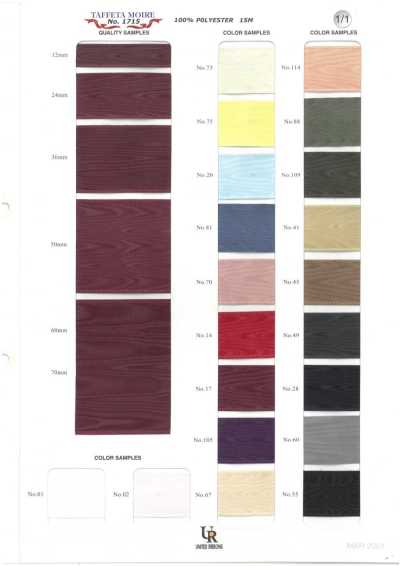
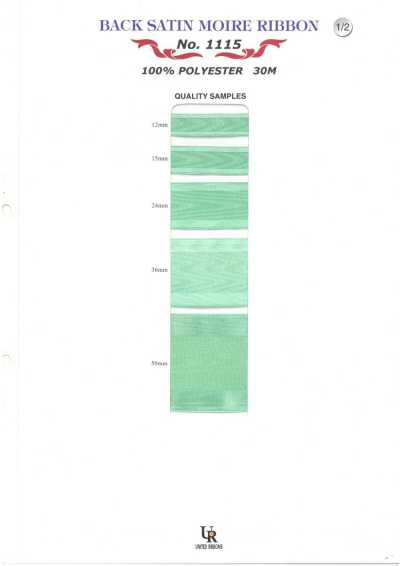
Moiré ribbon is a ribbon with a wavy glossy pattern that resembles ripples on water or wood grain. The shading changes depending on the viewing angle and how light hits it, creating depth while still appearing solid. It is also called watermarked ribbon.
Here, moiré refers to a pattern expressed as a decorative design. It differs in meaning and handling from moiré as an undesired interference pattern caused by poor adhesion of fusible interlining, even though the name is the same.
Materials and Structure
In many cases, the base of moiré ribbon is a dense, firm narrow woven fabric such as plain-weave taffeta, in which warp and weft threads cross alternately. Of woven, knitted, and braided types, it is generally a woven ribbon.
The pattern is not the woven pattern itself, but may be created by processing the surface of the fabric with pressure or heat to produce differences in light reflection. As a result, the sheen and appearance of the pattern may change due to strong friction or creases.
How to Read the Width and Main Applications
Widths are shown in millimeters or centimeters, and selected according to the application. Narrow widths are used for tags, accessories, and wrapping bows, while wider widths are used for waist ribbons, hat decorations, corsages, and garment embellishments.
In apparel, it is used for belts and trimming on formal wear and dresses, as well as decoration on uniforms and stage costumes. When making a raised ribbon bow, estimate the required amount including the finished knot size, the length of the hanging ends, and the finishing of the ends.
- Check the finished width.
- Even with the same color name, the appearance of the sheen may differ depending on the width or lot.
- When cutting, align the pattern direction and the front and back sides before use.
Selection and Handling Precautions
When selecting, confirm the color, width, firmness, thickness, front and back, and strength of the pattern with the actual product. If sewing it on, it is reassuring to check with a sample whether needle holes or seam puckering will be noticeable, and whether there is any color or sheen difference from the main fabric.
General woven ribbons have little stretch, but they may stretch slightly on the bias or ripple due to pulling during sewing. The ends fray easily, so apply a finish suited to the material, such as folding under, checking whether heat cutting is possible, or using a fray-preventing finish.
Shrinkage from washing, color fading, and changes to the treated surface vary depending on the material and dyeing or processing conditions. If the product will be washed, perform a preliminary test, and when ironing, use a pressing cloth and start at a low temperature while avoiding strong pressure.
Frequently Asked Questions
What is the difference between moiré ribbon and satin ribbon?
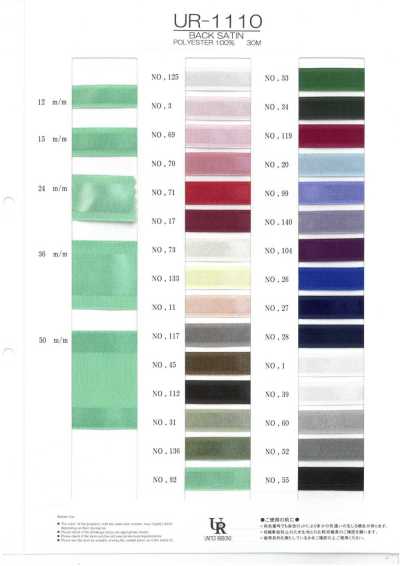
Moiré ribbon is characterized by a glossy pattern like ripples on water. Satin ribbon is characterized by a smooth, continuous sheen created by satin weave and similar structures. Both are used for decoration, but moiré ribbon has shading created by its pattern, giving it a more classic and dimensional impression.
How should the ends of moiré ribbon be finished?
Because it is a woven fabric, the cut edges tend to fray. Fold in and finish any sections that can be sewn in, and consider a bias cut or a narrow double fold for visible ends. Heat cutting may cause melting or discoloration depending on the material, so be sure to test on a scrap piece before doing it.





