Pocket Lining Count
Pocket lining count is a commercial classification used to distinguish pocket lining and similar materials, and is generally used as a guideline for textile thickness, density, and applications.
Contents6 sections
Definition and Overview
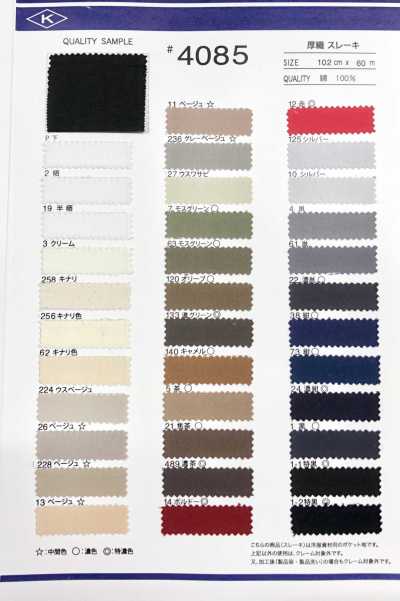
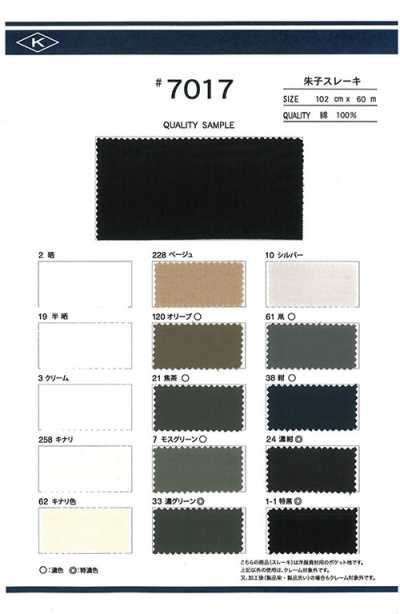
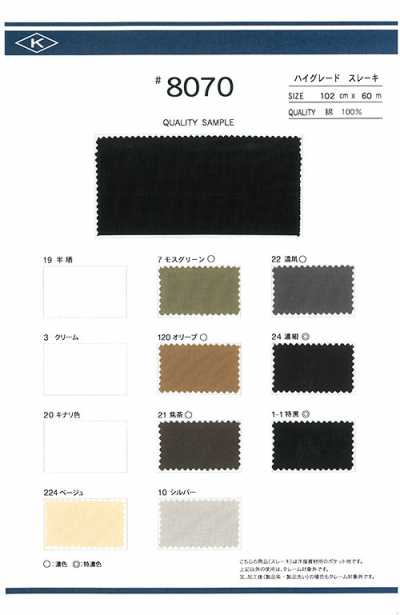
The count of pocket lining is the classification indicated by “No. ○” assigned to pocket lining. Pocket lining is a woven fabric mainly used for trouser and jacket pocket bags, and the count is a customary guideline when choosing the firmness and applications of the fabric.
However, the count is not a common standard that uniformly defines material composition, weave structure, fabric weight, density, and the like. Even with the same count, designs differ by manufacturer and supplier, so it is important not to judge quality or performance by count alone.
Usable Areas and Role
Pocket lining classified by count is used for pocket bags such as front pockets, back pockets, and coin pockets. Because these areas receive friction on the inside of the outer fabric, they must withstand the load from stored items and help stabilize the pocket opening and the garment shape.
For trousers, it may also be used for waist facings and fly extensions in addition to pocket bags. In jackets and uniforms as well, the count of the pocket lining is considered according to the pocket specification, the thickness of the outer fabric, and the required durability.
Materials and Types
Pocket lining includes items mainly made of cotton, blends with polyester, and materials containing rayon. In addition to plain weave, structures such as twill weave may also be used, and depending on the material and weave structure, resistance to wear, slipperiness, texture, and changes after washing differ.
The count is not the fabric name but a classification name. Therefore, when ordering, in addition to the count, confirm the composition, weave structure, fabric weight, density, fabric width, color, and finish, and if necessary check the hand and thickness with an actual sample.
How to Choose and Sewing Precautions
For thin outer fabrics, pocket lining that is less likely to show through on the face side and less likely to become bulky at overlapped sections is suitable. On the other hand, for products such as workwear, denim, and heavy trousers, where pockets are likely to bear a heavy load, select it with resistance to abrasion and tearing in mind.
If the shrinkage rate and tendency to fade differ greatly between the outer fabric and the pocket lining, it may lead to puckering, seam distortion, and color transfer after washing. Before mass production, conduct sewing and washing tests, and confirm the strength around the seams, including the bar tacks at the pocket opening.
- For dark-colored outer fabrics, confirm color transfer when wet.
- For white or light-colored outer fabrics, confirm the transparency and color influence of the pocket lining.
- Before cutting, align the grain and suppress stretching and twisting at the pocket opening.
Differences from Similar Terms
“Pocket lining” refers to the fabric itself used for pocket bags and similar parts, while “the count of pocket lining” is the commercial name used to classify that pocket lining. The count is not a unit that indicates yarn thickness like yarn count, and by itself it cannot identify the material or the fabric’s performance.
Also, fabric weight refers to the weight per unit area, and density refers to the number of warp and weft yarns within a given dimension. Even when specifying a count, listing these values and quality standards together helps reduce misunderstandings.
Frequently Asked Questions
Is a larger pocket lining count always thicker?
The relationship between count size and thickness or strength is not a universal rule for all pocket lining. Because the positioning of the count may differ by supplier or manufacturer, compare by checking the composition, fabric weight, density, thickness, and test results.
Is it enough to write only the pocket lining count in the specification sheet?
In some cases, the fabric cannot be sufficiently identified by count alone. In addition to the count, stating the composition, weave structure, fabric weight or density, fabric width, color, finish, and the strength and washing conditions required for pocket bags can reduce ordering discrepancies.