Rubber Patch
A rubber patch is a secondary material made by molding rubber-like resin to create raised logos or designs, and attaching it to clothing, bags, and more by sewing or adhesive.


Contents5 sections
Definition and Overview
A rubber patch is a decorative and identification patch made by molding raised and recessed logos, letters, and designs using soft resin, silicone, or similar materials. Taking advantage of its three-dimensional appearance and sharp outlines, it is used for brand identification, application labeling, and design accents.
On the production floor, it may be called a PVC patch, rubber badge, or silicone patch. However, these do not always have the same material, hardness, or manufacturing method. When ordering, do not judge by the generic name alone; confirm the actual material and specifications.
Position in Product Manufacturing
After deciding the logo appearance and attachment location in the planning stage, a rubber patch is separately produced as an accessory and attached to the product in the sewing process or secondary processing process. Its defining feature is that it is not directly printed onto the fabric, but added later as an independent part.
The specification sheet should list the finished dimensions, thickness impression, number of colors, direction of the raised and recessed areas, surface gloss, back-side specification, and attachment position. For sewn-on items, also specify seam allowance and whether sewing holes are present, and confirm in advance whether the shape can be handled by the sewing factory.
- Sewn-on specification: Fix by sewing around the edge or at specified points.
- Adhesive specification: Since heat or adhesive is used, compatibility with the outer fabric must be checked.
- Integrated molded specification: The raised and recessed design, color changes, and outer shape are produced based on a mold.
Order Process and Practical Points
Prepare the submitted data so that the outline, color-by-color areas, fine details of the letters, and raised and recessed instructions are clear. Thin lines, small cutout lettering, and narrow spacing may be difficult to reproduce by molding, so before mass production, check legibility and feel with a prototype or physical sample.
Before ordering, share the fabric to which it will be attached, the area of use, the frequency of washing and abrasion, and the expected temperature conditions. On highly stretchable or lightweight fabrics, the weight or stiffness of the patch may cause the fabric to sag, so the sewing method and reinforcement need to be considered.
- Prepare specification drawings showing the front, back, and side views.
- Set the standard color and acceptable color difference range.
- To confirm how it looks after attachment, approve a sample attached to the outer fabric.
- Clearly state left-right and top-bottom orientation, as well as the allowable range for the attachment position.
Quality Considerations and Differences from Similar Terms
Inspection items include color unevenness, flash, flattened raised areas, distorted outline, sticky surface, and lifting or peeling at the sewn area. Resistance to washing, abrasion, bending, and heat varies depending on the material and attachment method, so evaluation methods and acceptance criteria should be defined in advance according to the product application.
Badge is a broad term for decorative parts that generally includes embroidery and woven materials, while a rubber patch refers to one made by molding a resin-like material. Leather patches use leather or synthetic leather, and paper patches use paper-based materials, so they differ in texture, durability, and handling.
Frequently Asked Questions
Are rubber patches and PVC patches the same?
PVC patch is sometimes used as a name for a rubber patch made with vinyl chloride resin, but rubber patch is a broader general term. Since silicone-made items and others may also be called rubber patches, it is important to confirm the material name, hardness, surface finish, and attachment method individually when ordering.
How are rubber patches attached to garments?
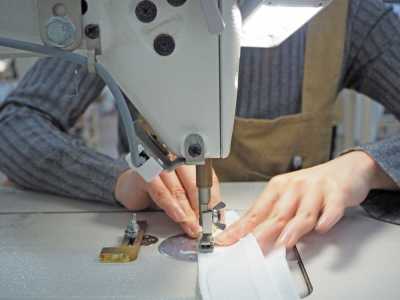
In addition to sewing around the edge or at specified points with a sewing machine, there is also a method that uses the adhesive layer on the back. With adhesive alone, holding strength may change depending on the fabric's water-repellent finish, texture, stretch, and washing conditions. Before mass production, make a prototype on the actual outer fabric and confirm the fixed state, including after washing.
- Search products for "Rubber patch"
- Products with material "Polyvinyl Chloride"
- Products with material "Rubber"
- Products with material "Silicone"
- Products for style "For Outerwear/blousons/coats"
- Products for style "For Sports"
- Products for style "Outdoor"
- Products for style "For Uniforms/Workwear"
- Products for style "For Bags"
- Browse Sewing And Processing products