Sanada-himo
Sanada-himo is a general term for thin, flat, durable narrow woven cords made by closely arranging warp yarns and securing them with weft yarns.
Contents6 sections
Definition and Overview
Sanada-himo is a narrow cord woven into a flat band shape. In general, it has a structure in which warp yarns are densely arranged to show more of the surface and secured with weft yarns, making it easy to achieve firmness and strength despite its thinness. It is also known as a cord used to tie tea ceremony boxes.
The name may be used not only for traditional woven textiles, but also as a product name for flat cords that incorporate a Japanese-style design or appearance. In practice, do not judge by the name alone; check the weave, whether it has a core, the blend ratio, width, and thickness.
Materials and Structure
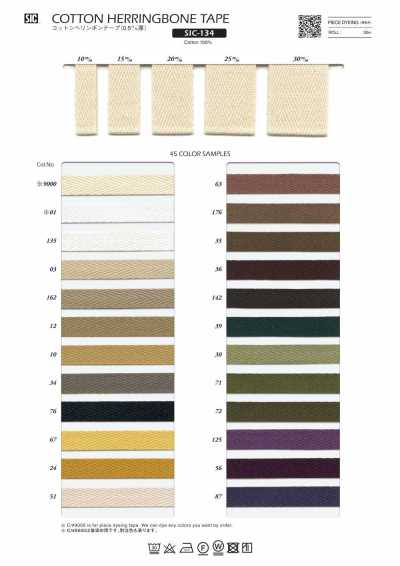
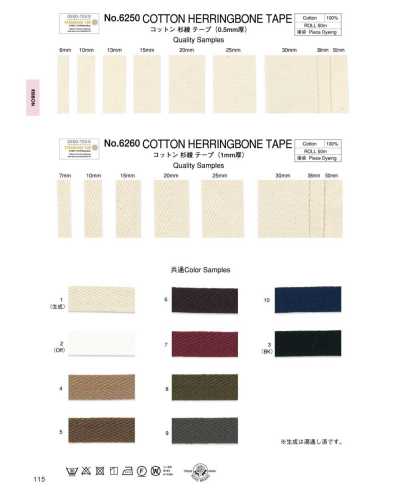
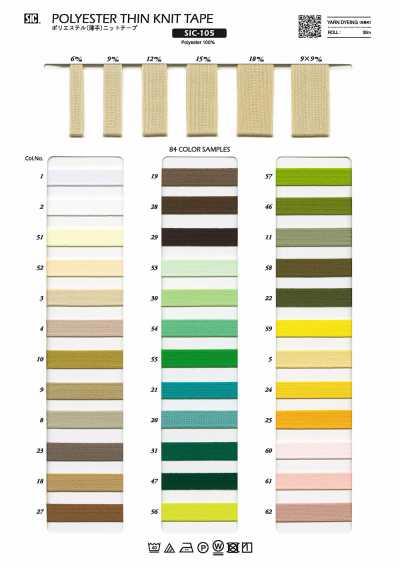
Traditional Sanada-himo uses silk or cotton, but some products today use polyester depending on the application. Depending on the material, yarn thickness, and weave density, the luster, stiffness, resistance to friction, moisture absorbency, and changes during washing will differ.
Sanada-himo is not made by braiding yarns diagonally like braided cords; it is a woven textile made from warp yarns and weft yarns. It also differs from round cords with a circular cross section, and its flat shape is used to keep knots stable or to serve as a decorative line.
- Warp yarns are the yarns that run in the length direction of the cord.
- Weft yarns run in the width direction and secure the warp yarns.
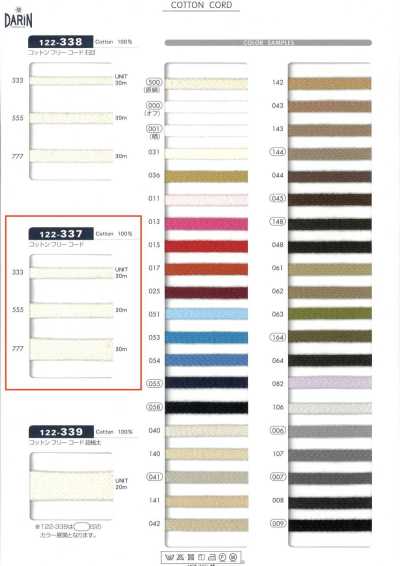
- Japanese-style flat cords with a core inserted in the length direction may be treated as Sanada-himo style, and their structure may differ from traditional Sanada-himo.
Checking Width and Specifications
The size of Sanada-himo is generally expressed by the finished width in millimeters or centimeters rather than by diameter like a round cord. Thickness, stiffness, weave density, and how the pattern appears also affect the application, so it is important to check not only the width but also an actual sample.
For patterned products, designs such as stripes and checks may be expressed through weaving. When cutting for use, in addition to the required usable length, plan the fabric consumption including the length needed for tying, folding back, and finishing the ends, as well as the position of the pattern and left-right differences.
Main Applications
In addition to tying tea ceremony boxes and craft boxes, it is used for Japanese-style accessories, pouches, drawstring bags, costumes, and as tie cords or decorative elements for fashion accessories. Because it is flat, does not add bulk easily, and makes woven patterns easy to show, it is also suitable for areas where a Japanese-style detail is desired.
In apparel, it is used for waist and neckline tie cords, bag handles and decorations, and accents around labels. However, when using it in areas that bear continuous load, confirm not only appearance but also tensile strength, sewing method, and durability against wear separately.
Selection and Handling Notes
When selecting, check the width required for the application, flexibility, ease of tying, surface slipperiness, pattern, and how the ends will be finished. Items containing cotton or silk may shrink or change texture with moisture, and even synthetic fibers are affected by heat and friction, so washing and abrasion tests are performed before productization.
Cut ends may fray or the yarns may come loose. Set an end-finishing method suitable for the material, such as anti-fray treatment, folding in, or stitching down. Heat-finishing methods may be used for synthetic fibers that melt with heat, but for natural fibers or blended materials, suitability must be confirmed.
Frequently Asked Questions
What is the difference between Sanada-himo and braided cord?
Sanada-himo is a flat, narrow woven textile made by interlacing warp yarns and weft yarns. Braided cord is made by combining multiple bundles of yarn, and some have a three-dimensional cross section such as round or square. Sanada-himo is a candidate when you want to show a flat design or want a thin tie.
Does Sanada-himo shrink when washed?
The degree of shrinkage varies depending on the material, weave density, dyeing, and finishing treatment. In particular, items containing natural fibers may change in dimension and texture when exposed to moisture. When used for clothing or bags that are washed, confirm washing performance both for the accessory alone and in the finished product state before mass production.
How should the ends of Sanada-himo be finished?
Finish the ends with anti-fray liquid, folded stitching, or stitching down. Heat cutting may be possible for products made mainly of synthetic fibers, but discoloration, hardening, or appearance defects due to melting may occur. Confirm the appropriate method through the material specification and prototypes.