Karagumi
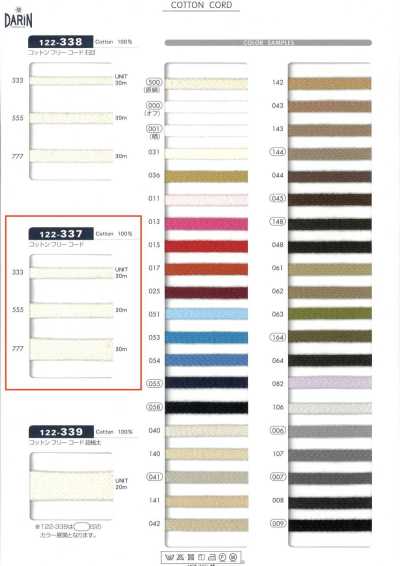
Karagumi is a type of braided cord made by crossing multiple yarns, and it is used as a material for decoration and tying cords, making use of its raised weave pattern and moderate thickness.
Contents6 sections
Definition and Overview
Karagumi is the name for braided cords made by combining yarns. Unlike fabrics, which are made by crossing warp and weft yarns at right angles, Karagumi forms continuous braid stitches as multiple yarns cross diagonally.
Materials and Structure
In traditional applications, silk yarn may be used, but in practice it is also made from cotton, rayon, polyester, and other materials depending on the application. Depending on the material, yarn thickness, twist, and braid density, the luster, firmness, resistance to friction, and ease of tying will vary.
Karagumi can have different cross-sections and appearances depending on the braiding method, such as a flat shape or a shape close to round. Diagonal braid stitches are easy to see on the surface, and unlike a simple twisted cord made by twisting yarn, its pattern and thickness are created by the crossing of the yarns.
How Width and Thickness Are Expressed
Flat Karagumi is often specified by width, while round types are often specified by diameter or thickness. However, because the dimensions of braided cord can change depending on how it is compressed and the tension applied, it is important to check not only the standard values but also the actual cross-section, firmness, and knot size.
When ordering, share the finished width or diameter, as well as the material, color, braid pattern, required length, and the method for finishing the ends as specifications. For uses where it is threaded through hardware, it is also necessary to check the inner diameter of the hardware and the thickness when the braided cord is folded back.
- Flat braid or round braid
- Finished width or diameter
- Braid density and firmness
- Use for tying, threading, or sewing
- Method for preventing fraying at the ends
Main Applications and How to Choose
Karagumi is used for ties, decorative cords, bag cords, and accessories related to Japanese clothing. When emphasizing decorative appeal, and when emphasizing functions such as tying, tightening, or hanging, the suitable thickness and firmness will differ.
For sections subject to load, check not only tensile strength but also whether knots are less likely to slip and whether the material is less likely to fuzz with repeated friction. For applications that require safety or load performance, do not substitute decorative braided cord; choose a material with specifications suitable for the application.
Handling and Precautions
Because braided cord has a braid structure, pulling it strongly may cause it to stretch in the length direction or change in thickness or width. When sewing it on, do not pull it more than necessary, make a prototype under the same conditions as the finished product, and check for waviness and dimensional changes after sewing.
The cut ends may loosen and fray. Depending on the material, consider end finishing methods such as heat cutting, securing with stitching, or wrapping with tape. Shrinkage, color transfer, and changes in texture due to washing or getting wet will depend on the material and dyeing conditions, so washing tests as a product are necessary.
Frequently Asked Questions
What is the difference between Karagumi and twisted cord?
Karagumi is braided cord made by crossing multiple yarns, and continuous braid stitches appear on the surface. Twisted cord is mainly made by twisting yarn bundles, so a spiral twist pattern is its characteristic. Because the appearance, thickness, stretch, and knot shape differ, check according to the application.
Does Karagumi shrink when washed?
The degree of shrinkage or stretching differs depending on the material, yarn twist, braid density, dyeing, and finishing. For products that are washed with water, it is important to perform washing tests not only on the braided cord alone but also in the sewn-on state, and to check for changes in length, color fading, and fraying at the ends.