


No. 25 Embroidery Floss
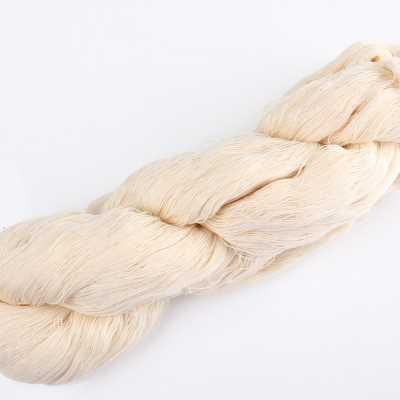
No. 25 embroidery floss is an embroidery skein yarn made by loosely aligning six fine strands, usually with cotton as the main material, and can be separated into the required number of strands for use.

Contents7 sections
Definition and Overview
No. 25 embroidery floss is an embroidery thread generally called embroidery floss, used by separating it into six strands. It is often sold in skein form, and the number of strands used can be adjusted according to the design lines, filled areas, and the fineness of the fabric weave.
Material, Twist, and Structure
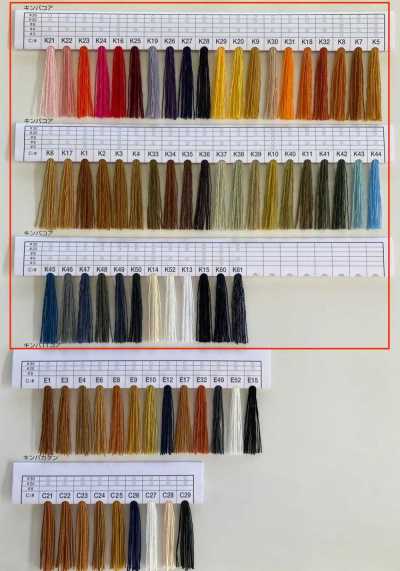
It is mostly made of cotton and has a structure of six dyed fine threads loosely aligned together. Since each thread can be pulled out and used from one strand up to six strands, the same color can be used to vary the fineness of lines and the thickness of embroidered areas.
If you cut the thread while it is still bundled and then try to separate it, it is likely to tangle, so the basic method is to take the needed length and gently pull out one strand at a time. Aligning the separated strands before threading the needle helps reduce twist irregularity.
How Thickness Is Expressed
The name “No. 25” does not mean the same thing as the usual thread count used to indicate thickness. No. 25 embroidery floss is often treated as an embroidery floss designation or product type name, so its number alone cannot be used to directly compare thickness with other sewing threads or embroidery threads.
The actual appearance depends on the number of strands used, the material, the twist, the weave density of the fabric being stitched, and the size of the needle eye. In specifications and kits, it is important to specify not only the use of No. 25 embroidery floss but also how many strands are to be used, such as “2 strands” or “3 strands.”
Main Uses
It is used for cross-stitch, French embroidery, outline stitch, satin stitch, and more. One or two strands are suitable for fine lettering, outlines, and delicate expressions, while multiple strands are suitable for filled areas, thick lines, and expressions that require strong color.
In garments, it is used for small decorative embroidery, names or initials, and decorative stitching around appliqués. It has a different purpose from sewing machine thread and is usually not used as the upper or bobbin thread for structural sewing.
Selection and Sewing Considerations
Select the material, color, and number of strands according to the fabric color, weave, and intended environment. For garments and products that will be washed, perform test stitching and washing tests on the same fabric in advance to check for color fading, color transfer, shrinkage, and the appearance of the embroidered area.
If the thread is too long, fuzzing, twisting, and a loss of sheen due to abrasion are more likely to occur. During embroidery, adjust the thread twist as needed and avoid using a needle that is too thick for the fabric or applying excessive force to reduce enlarged needle holes and puckering of the fabric.
- Adjust the thickness by the number of strands used, not by the name No. 25.
- For washable items, combine the fabric and thread to check color fastness.
- For thin or open-weave fabrics, consider using fusible interlining or an embroidery stabilizer.
Differences from Similar Terms
Embroidery thread is a general term for thread used in embroidery, and No. 25 embroidery floss is one of its representative types. Sashiko thread is generally thicker and more twisted, making it suitable for sashiko that picks up the fabric weave more broadly. Lace thread is a thread intended for crochet and similar uses, and its purpose and thickness notation are different.
“Six strands” is used both as another name for No. 25 embroidery floss and to indicate stitching with all six strands threaded through the needle. In ordering and instructions, listing No. 25 embroidery floss as the thread type and the actual number of strands separately helps prevent misunderstandings.
Frequently Asked Questions
How many strands should No. 25 embroidery floss be used with?
It depends on the design, the fineness of the fabric weave, and the line thickness you want. Fewer strands are used for fine outlines and delicate lettering, while more strands are used when you want to fill in areas firmly. Even if no specification is given, it is important to test-stitch on the actual fabric to check the appearance.
Is the “25” in No. 25 embroidery floss the same as the count used for sewing machine thread?
No, it is not the same. The “25” in No. 25 embroidery floss is often used as a way to name embroidery floss and does not directly correspond to constant-weight or constant-length count systems. When comparing thickness with sewing machine thread or hand-sewing thread, check not only the count name but also the purpose, structure, and actual number of strands used.
What should be noted when using No. 25 embroidery floss on garments?
For washable garments, check in advance for color fading and color transfer between the thread and the fabric, as well as shrinkage. Also, because embroidered areas tend to have less stretch, consider how to use the embroidery hoop, stabilizer, and design density for knit or stretchy fabrics. Avoid long float threads that can easily catch during wear.





