Taffeta Ribbon
Taffeta ribbon is a narrow woven fabric with a fine, densely woven, lightweight texture and moderate firmness, used for garment decoration, tying, and as tape.
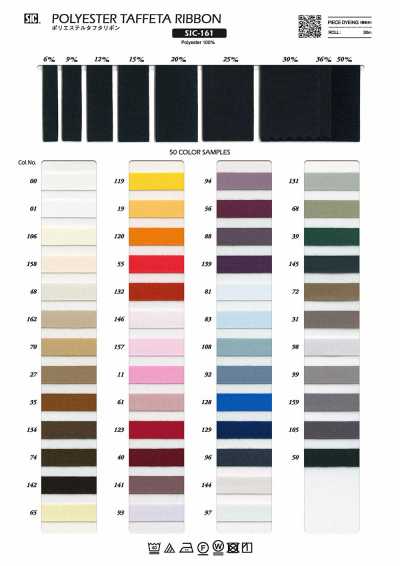
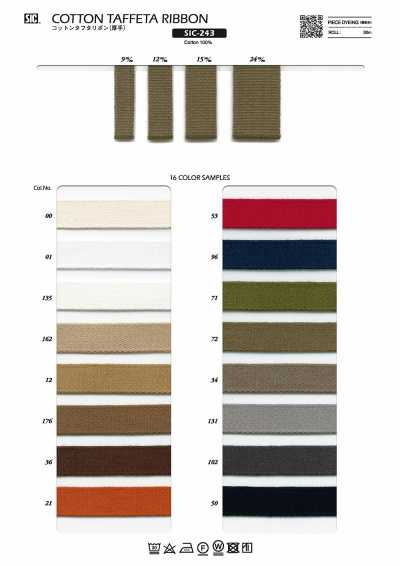
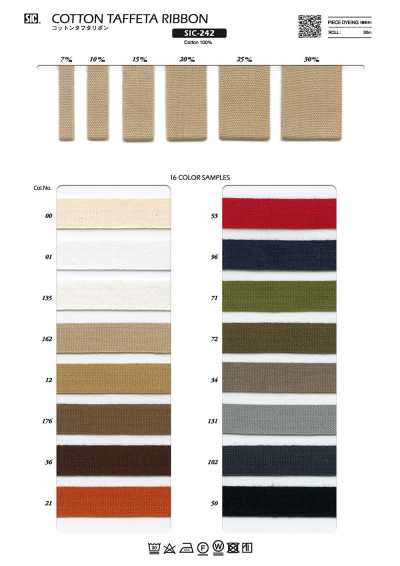
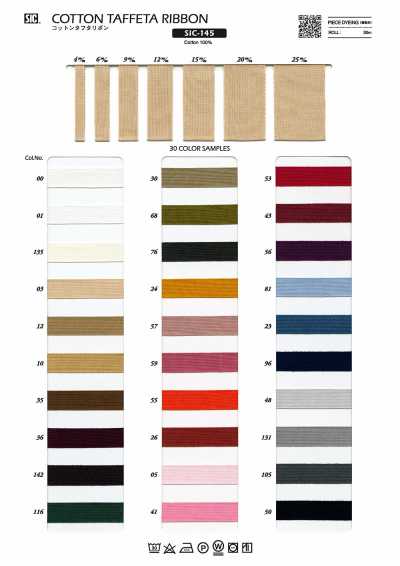
Contents6 sections
Definition and Overview
Taffeta ribbon is a narrow woven fabric that makes use of taffeta’s distinctive firmness, smooth feel, and subtle sheen. It is used as a decorative material for apparel, and some are also used as sewing tape; in such cases, it may be called taffeta tape.
“Taffeta” is originally a name related to the texture and weaving method of a thin, tightly woven fabric. For that reason, the material, thickness, sheen, and appearance of the ridges on the surface of taffeta ribbon vary by product.
Materials and Construction
Most are woven fabrics, based on plain weave in which warp and weft yarns intersect alternately. High-density weaving helps it keep its shape and makes it easier to create some outline when tied. Its structure and stretch differ from knitted or braided ribbons.
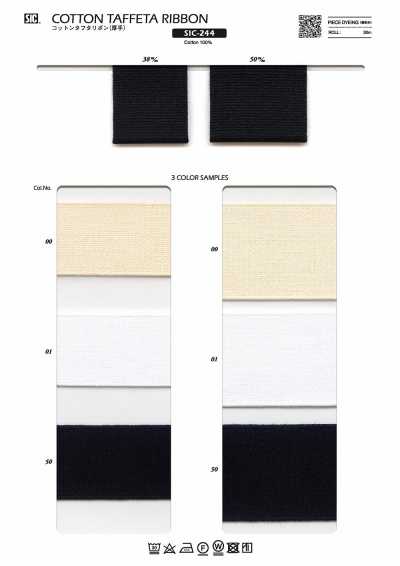
Materials include polyester as well as cotton and cotton-linen blends. Polyester versions are relatively smooth and make it easier to achieve color and sheen, while cotton and cotton-linen versions have a natural look and a more casual impression. Those with thicker weft yarns may show horizontal ridges.
How Width Is Expressed and Main Applications
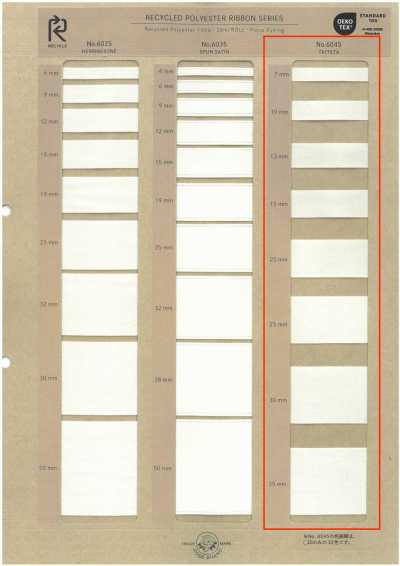
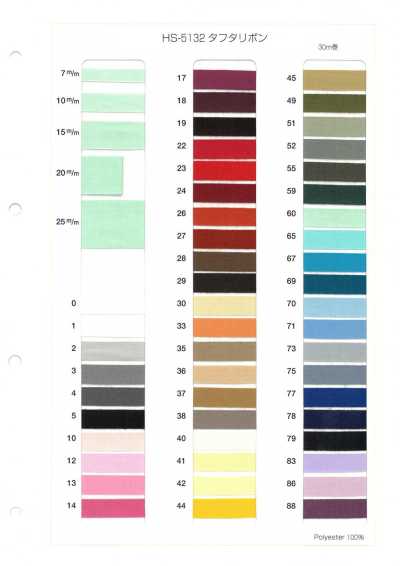
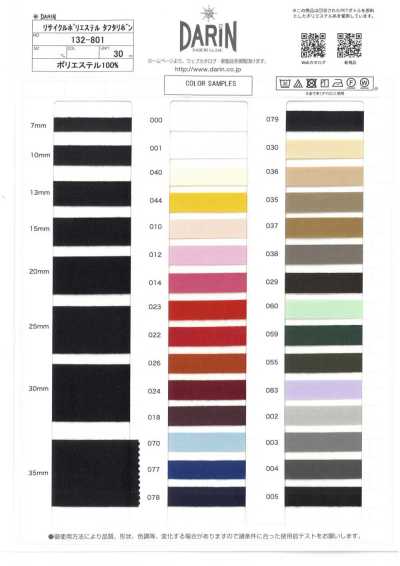
Width is generally indicated in millimeters. Narrow widths are suited to small ribbon bows and around tags, while wide widths are suited to waist accents and decorative tape. Even at the same width, appearance and ease of tying vary depending on thickness and weave density, so it is important not to choose by width alone.
It is used for accents on blouses, shirts, and pants, gift wrapping, corsages, hair accessories, and costume decoration. When sewn on, specifications are determined including surface sheen, color coordination with the base fabric, and the method of finishing the edges.
- Narrow widths are easy to use for fine decoration, loops, and knots.
- Medium to wide widths are suitable for belt-like decoration and showing seam transitions.
- Types with horizontal ridges change appearance depending on the light.
Selection and Handling Notes
Depending on the application, check the material, width, thickness, firmness, sheen, and washing method. When used in garments, differences in shrinkage and color transfer between the main fabric and accessories can affect the finished product, so it is reassuring to conduct a washing test with the item sewn together before full production.
Woven taffeta ribbon generally has little stretch, but it may deform easily in the bias direction. Since cut edges may fray if left unfinished, consider folding the edge, using a fray-prevention treatment, or whether heat sealing is suitable, depending on the material. Heat cutting may not be suitable for materials other than polyester.
Differences from Similar Terms
Satin ribbon is characterized by a smooth, strong sheen from satin weave, and it tends to look softer than taffeta ribbon. Grosgrain ribbon often has distinct horizontal ridges and substantial thickness, and its ridge strength and firmness differ from taffeta ribbon.
While taffeta can refer to fabric in general, taffeta ribbon refers to an accessory material woven in a narrow width. In addition, taffeta tape is sometimes used as a term with sewing applications in mind, but the distinction in naming varies by seller and application.
Frequently Asked Questions
Can taffeta ribbon be washed?
Whether it can be washed depends on the material, dyeing, and processing. When sewn onto clothing, check for shrinkage, wrinkling, color fading, color transfer, and deformation in the combined state with the main fabric, not just the ribbon alone. You must follow the care label for each product.
How should the ends of taffeta ribbon be finished?
Methods include folding and sewing the edge, using a fray-prevention agent, or hiding the edge inside depending on the application. Heat cutting is used for some synthetic fibers, but with natural fibers or blended materials there is a risk of scorching or hardening, so always test on a scrap piece first.