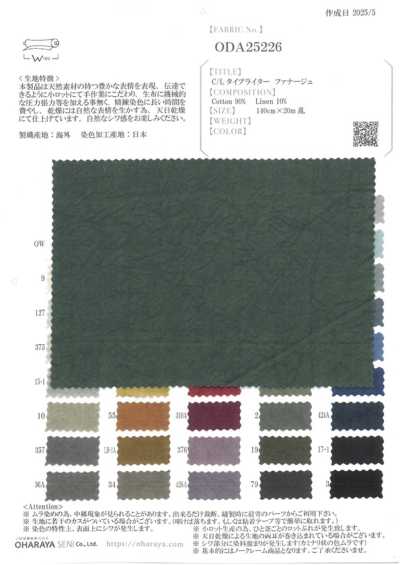
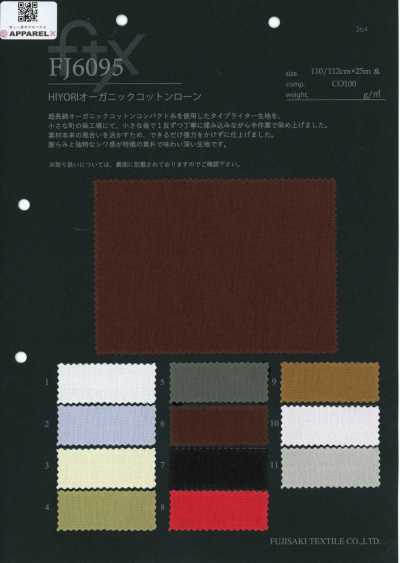
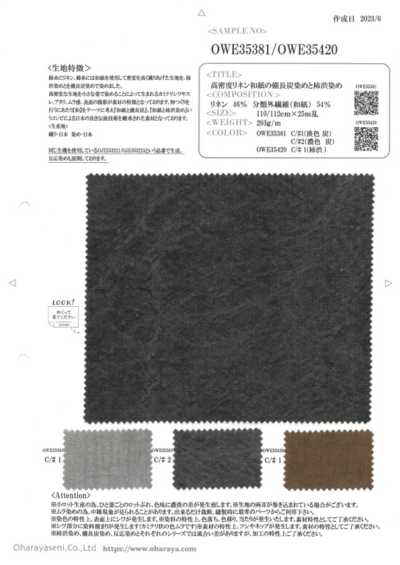
Dye Unevenness
Dye unevenness is a condition in which the dyed color of a textile or product appears uneven in lightness, darkness, or hue from part to part, and it may be treated either as a defect or as an intended effect.
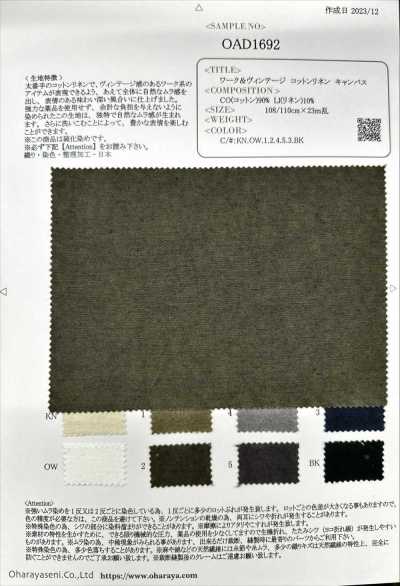
Contents6 sections
Definition and Overview
Dye unevenness is a condition in which differences in dye pickup, the absorbency of the material, the state of the textile surface, and the conditions of dyeing and processing cause dark and light areas, or areas that appear to have different hues, within the same textile. It can appear as patches, stripes, speckles, and in other forms.
In general, it is a problem in textiles where a uniform color is desired, but in fabrics with a natural off-white look, materials with slub yarn or fuzz, or twisted melange yarn, it may also be described as a design feature that expresses natural shading or depth. At the time of purchase, it is important to distinguish between an intended appearance and an unevenness issue in quality.
Characteristics and Appearance
Textiles with dye unevenness have color variation, so they can create a rustic feel, a vintage look, or a hand-crafted appearance that uniform dyeing does not offer. When material-specific texture such as neps, slub, or fuzz is added, the light and dark areas may become more noticeable.
On the other hand, in solid, polished apparel, sets, uniforms, and similar items, partial light and dark areas can impair the appearance quality. Since visibility changes depending on the type of lighting and the viewing direction, it is important to check not only laid-flat samples but also conditions close to the actual use environment.
Main Applications
Dye unevenness as a design feature is used for casual shirts, blouses, dresses, skirts, pants, outerwear, bags, and similar items. In materials with a natural-fiber look or surface variation, it is easy to create expression even in a single color, and it is used across seasons.
In lightweight materials for spring and summer, it tends to emphasize lightness and a natural texture, while in brushed materials and heavy materials for autumn and winter, it is easier to create a deep color tone. However, even with the same name, the strength and position of the unevenness differ from roll to roll, so the product appearance should be checked in advance.
Selection and Handling Notes
When adopting it as a design feature, do not judge only from a sample roll; if necessary, check the degree of shading, the directionality, and the appearance after cutting using a roll close to the planned mass-production lot. For products using multiple rolls, share with the production partner how cutting and sewing will be managed, including color differences between rolls.
When cutting, consider the placement so that differences in shading do not appear extreme between the left and right body panels or the front and back body panels. Because color differences may be emphasized at seaming sections, it is effective to lay the parts out and check them together. Since this is not a pattern, appearance management is needed from a different perspective than pattern matching.
Whether color changes due to washing or friction, or color transfer occurs when wet, varies depending on the material, dye, and processing. The presence and degree of shrinkage are also a separate quality item from dye unevenness. Follow the care instructions and check handling conditions such as separate washing for dark-colored items.
- For applications that require color uniformity, check for the presence of shading, stripes, and speckles during inspection.
- Even when promoting design appeal, clarify the acceptable range of unevenness in samples and specifications.
- When pre-washing fabric or washing before sewing, check the appearance of the color and the shrinkage rate together.
Differences from Similar Terms
Color unevenness is sometimes used as another term for dye unevenness, but it may more broadly refer to uneven appearance caused by painting, printing, or color differences in the material itself. Dye unevenness is an expression that mainly focuses on the dyeing process and the appearance after dyeing.
Lot differences refer to differences in color or texture from roll to roll due to differences in production time or dye lots. By contrast, dye unevenness often refers to a state in which light and dark areas appear uneven within the same roll or the same product. Colorfastness is the durability of color against washing, friction, light, and similar factors, and it is evaluated separately from color uniformity.
Frequently Asked Questions
Is dye unevenness a defective product?
In textiles whose specification calls for a uniform color, it may be treated as a quality issue. On the other hand, in materials with slub yarn or slub texture, or in off-white processing, the light and dark areas may be intentionally left as part of the material's appearance. It is necessary to check the acceptable range in the product description, sample, and specifications.
What should be noted when cutting textiles with dye unevenness?
Before cutting, spread out the textile and check the positions and direction of the light and dark areas. Arrange the layout so that color differences are not noticeable in large left-right body panels or front-back panels, and lay out the parts to be sewn together to confirm how they will look. If multiple rolls are used, also pay attention to color differences between rolls.
Does dye unevenness become stronger after washing?
The appearance after washing varies depending on the fiber type, dye, after-processing, and washing method, so there is no single answer. Some materials change in appearance through product washing or friction. Before mass production, conduct washing tests and check after sewing, and handle the product in accordance with the care label.