Scale Pattern
A scale pattern is a geometric motif formed by continuously arranging repeating units shaped like triangles or semicircles, reminiscent of the scales of fish or snakes.
Contents6 sections
Definition and Overview
A scale pattern is a repeated motif formed by shapes resembling scales. In Japanese patterns, it generally refers to a design made by continuously arranging triangles vertically or horizontally, with an arrangement of isosceles triangles being typical. On fabric, it is expressed through prints, woven patterns, Jacquard, and quilt stitching.
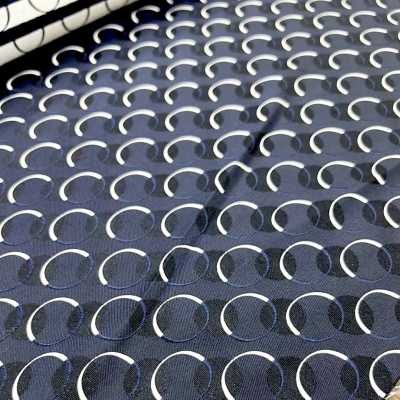
The terms scale pattern and fish-scale pattern are also used with the same meaning. However, in product and design naming, patterns of overlapping semicircles like fish scales may also be included, so the shape of the pattern should be checked with an image or swatch.
Pattern Structure and Types
Triangular scale patterns are composed by arranging triangles facing the same direction with each row offset, or by repeating triangles turned upside down. Depending on the color scheme, triangle size, and whether outline lines are used, the impression can range from traditional to sharp and modern.
The type that overlaps semicircles or arcs may be called a scale pattern in English. Because it may be treated separately from triangular scale patterns, specifying whether the pattern is triangular or semicircular, as well as the direction and repeat, in purchase orders and specifications helps prevent misunderstandings.
- Triangular scales: a common Japanese pattern structure made by repeating triangles.
- Semicircular scales: a structure that overlaps semicircles or arcs to resemble fish scales.
- Single-color scales: a structure expressed in a color close to the ground color or in one color to keep the pattern subtle.
- Color-block scales: a structure that changes color by row or unit to emphasize the rhythm of the pattern.
Main Uses and Seasonal Suitability
Scale patterns are used not only in traditional clothing but also in blouses, shirts, skirts, dresses, costumes, bags, and textiles for interiors. Small patterns are easy to use as all-over prints, while large patterns can create a strong visual focal point for a single garment.
The pattern itself is not limited to any season, but the impression changes depending on the material and colors. When used on lightweight fabric in pale colors, it tends to create a light spring-summer look, while brushed fabric, deep colors, and glossy woven patterns can also work well for autumn-winter or formal uses.
Fabric Selection and Cutting Notes
For a scale pattern, choose the pattern size and drape of the fabric to suit the item size and silhouette. Fine all-over patterns blend easily with designs that have gathers or tucks, while large patterns can change appearance easily if the pattern is broken up by seam lines or darts, so checking on the pattern is necessary.
Fabrics with a clear triangle direction are treated as directional patterns. Arrange all parts in the same direction, and decide in the specifications whether the collar, placket, pocket, facing, and other parts should follow the same pattern direction or be intentionally changed. Even patterns that do not seem awkward when turned upside down may show direction depending on the depth of the colors.
Because the points or rows of the triangles can stand out if they shift at the center front, side seams, or seam lines of the body, pattern matching is performed. Confirm the repeat size, fabric width, and required pattern direction, and allow extra material compared with solid fabric. Before cutting, check the pattern position within the roll and left-right symmetry.
Differences from Similar Terms
A scale pattern is the name for a repeated pattern that evokes scales, and it is a type of geometric pattern. Geometric patterns are a broad category that includes triangles, circles, grids, and lines, so not all geometric patterns are scale patterns.
Kikkō is a pattern made by repeating hexagons, and its basic shape differs from the triangles or semicircles of a scale pattern. Asanoha is a radiating repeated pattern based on a hexagon. Do not judge by the pattern name alone; it is important to check the unit motif and how it repeats.
Frequently Asked Questions
How much extra material is needed when cutting fabric with a scale pattern?
It depends on the repeat size, the direction of the pattern, and the range over which pattern matching is done on the body or pockets, so there is no fixed rule. Directional patterns and large patterns often require more allowance than solid fabric. Use the fabric width and pattern to confirm the necessary pattern positions before marking.
How can you tell a scale pattern from Kikkō?
A scale pattern repeats triangles, semicircles, or similar shapes to look like scales. Kikkō is based on hexagons that resemble a tortoise shell. The two are sometimes used together as Japanese patterns, but the shapes and the way they are repeated are different.