Japanese Cotton
Japanese cotton is a term for indigenous cotton that has been cultivated and used in Japan, and it is a material used to take advantage of the fiber's simple appearance and soft texture.
Contents6 sections
Definition and Overview
Japanese cotton refers to indigenous cotton that has long been cultivated in Japan and used for clothing, futon filling, and other purposes. In current fabric trading, the term may also be used broadly for cotton grown domestically, so the variety, place of production, and blend ratio should be confirmed individually.
Japanese cotton indicates a type of fiber and does not refer to a weave structure such as plain weave or twill, nor to fabric thickness or a dyeing method. Even with the same Japanese cotton, the finish can vary greatly depending on the spinning method, weaving or knitting, and finishing process.
Texture and Function
Materials made with Japanese cotton are generally characterized by a simple, warm appearance derived from fiber irregularity and natural fuzz. They are suited to projects that make use of a natural look or a handmade appearance rather than materials that pursue uniformity and strong luster.
They have the water absorbency and moisture absorbency of cotton, but air permeability, durability, and firmness vary depending on yarn thickness, twist, density, and structure. It is important not to judge performance from the Japanese cotton label alone, but to check the fabric specifications and test data as well.
- They may contain short fibers, and yarn unevenness or neps may appear as part of the texture.
- Their texture differs from materials intended to achieve the uniformity and smoothness of combed long-staple cotton.
- In projects that make use of the natural color of cotton flowers, such as undyed brown or green tones, the color appearance may vary from piece to piece.
Main Applications
It is used for items close to the skin or clothing with a natural feel, such as shirts, blouses, dresses, homewear, underwear, and scarves. It can be designed from lightweight to medium-weight fabrics, but strength and sheerness for the intended use must be checked for each fabric.
With its soft texture and moisture absorbency, it is used not only for spring and summer clothing but also for year-round items intended for layering. It is also sometimes used as a material for household goods and bedding products that make use of woven texture.
Selection and Handling Notes
When selecting, check not only the blend ratio of Japanese cotton but also yarn count, whether it is single yarn or plied yarn, weave or knit structure, fabric weight, density, and finishing process. For samples, evaluate fuzzing, sheerness, seam slippage, and dimensional change after washing under conditions close to actual use.
Cotton materials may shrink due to washing, moisture, and heat. Before cutting and sewing, confirm the shrinkage rate of the roll and, if necessary, perform pre-washing or straightening. For products, follow the care label and consider washing dark colors separately to prevent color transfer.
In fabrics where short-fiber fuzz or yarn unevenness is noticeable, thin needles or overly strong thread tension may make the seams unstable. Perform test sewing and set the needle size, sewing thread, and stitch density appropriate to the fabric thickness to reduce puckering.
Differences from Similar Terms
Cotton refers to the fiber obtained from cotton plants in general, while Japanese cotton is a term mainly for indigenous types that have been cultivated and used in Japan. On the other hand, organic cotton is a concept related to cultivation management and does not directly mean Japanese cotton or cotton produced in Japan.
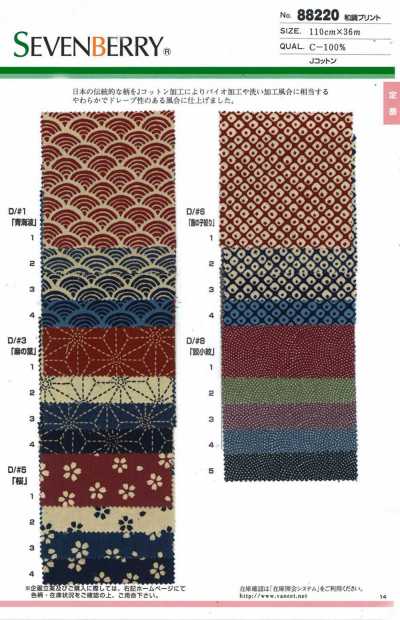
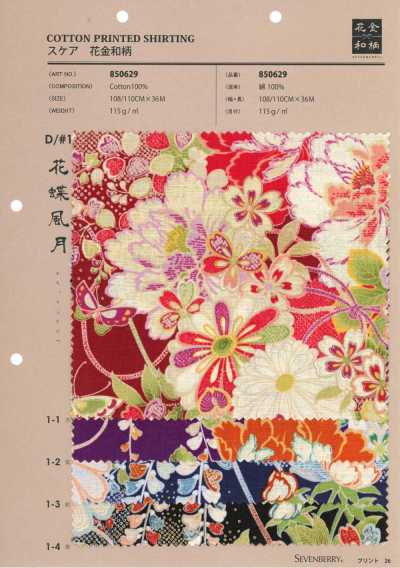
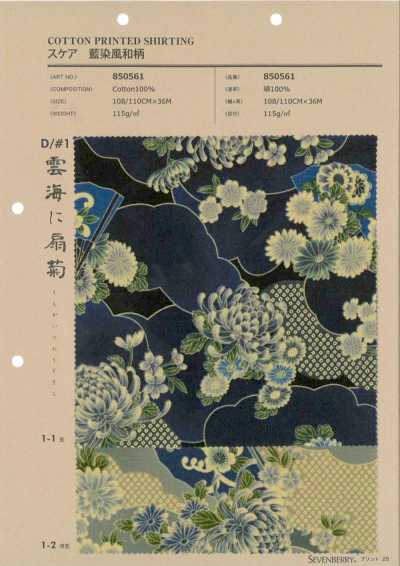
Even cotton fabrics woven domestically or cotton materials with Japanese-style patterns are not necessarily made from Japanese cotton. "Made in Japan," "Japanese-made fabric," and "Japanese pattern" should be distinguished and checked as separate pieces of information concerning place of manufacture, design, and raw material.
Frequently Asked Questions
Are Japanese cotton and cotton produced in Japan the same?
Not necessarily. Japanese cotton refers mainly to indigenous cotton types that have been cultivated and used in Japan, while cotton produced in Japan may be used as information about the place of production. Do not judge from the label alone; confirm the raw material variety, cultivation area, and blend ratio.
Does Japanese cotton fabric shrink easily?
Not only Japanese cotton, but fabrics made mainly from cotton may change in size after washing or drying. The degree of shrinkage varies depending on the weave or knit, density, finishing process, and washing conditions, so shrinkage must be checked for each roll. Before mass production, it is reassuring to make trial pieces after pre-washing and conduct wash tests.
Is Japanese cotton organic cotton?
Japanese cotton alone does not mean organic cotton. Japanese cotton is mainly a term related to the cotton lineage and history of use, while organic cotton refers to a defined cultivation and management method. If certification labeling is used, confirm the raw material proof and the scope of certification.