


Cable Knitting
Cable knitting is a knitted pattern mainly used in flat knitting, in which stitches are crossed to create raised, rope-like lines and motifs.
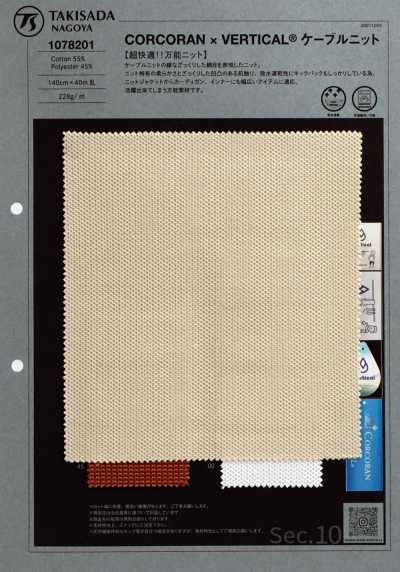
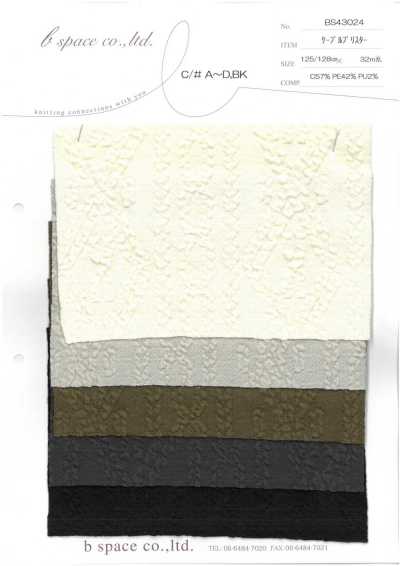
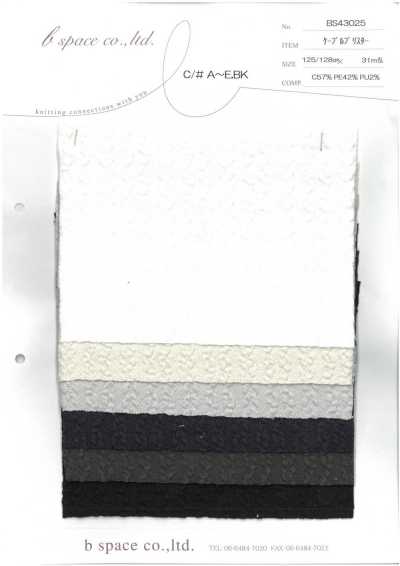
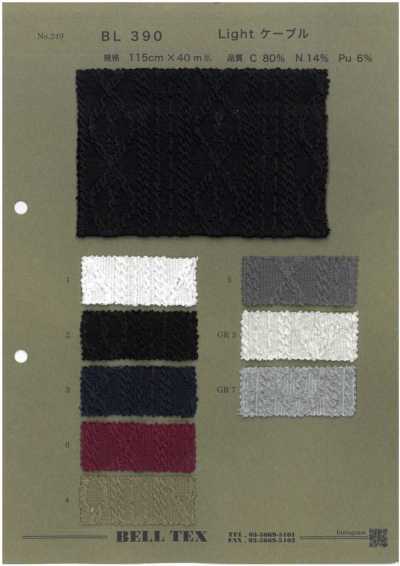
Contents6 sections
Definition and Overview
Cable knitting is a knitting method that creates raised rope-, chain-, or lattice-like patterns by crossing part of the stitches over and under each other. By varying the direction of the crossings, the number of stitches, and the spacing, a wide variety of patterns can be expressed.
It does not refer to the material name of the fabric, but to the pattern or structural expression that appears on the surface of the knitted fabric. It is commonly seen in sweaters made by flat knitting, but it can also be used in knit fabrics and small items.
Features
Because the stitches overlap, clear texture and shading appear on the surface, creating a rich, substantial look with depth. Even in a single color, the pattern remains easy to see, and it tends to create a rustic, traditional, and distinctive impression.
Because yarn gathers at the crossing sections, the fabric tends to feel thicker and heavier than a flat knitted fabric made with the same yarn and gauge. However, warmth, elasticity, and moisture absorption vary depending on the yarn material, thickness, gauge, and fabric structure.
Main Applications
It is often used for autumn and winter sweaters, cardigans, and vests. It is also suitable for knit accessories such as hats, scarves, and gloves, and partial use can add a textured accent to collars, front bodies, sleeves, and other areas.
In addition to using cable knitting across the entire fabric, it is combined with ground structures such as rib knitting and jersey knitting to adjust the appearance of the pattern and the thickness. The larger the crossings in the pattern, the more three-dimensional it becomes, but the stronger the pattern emphasis and sense of weight also become.
Selection and Handling Notes
When planning, confirm the material, yarn thickness, gauge, stitch density, and cable size. Since knitted fabric stretches differently depending on direction, and the elasticity of the pattern section also changes due to the crossings, it is important to confirm any changes in wearing dimensions through prototypes.
For washing, follow the care label appropriate to the material. In particular, wool and similar materials may shrink or felt due to friction, heat, or moisture. To prevent distortion, the common method after washing is to avoid twisting strongly, reshape to dimensions, and dry flat.
For cut-and-sewn cable knit fabric, confirm the pattern placement and the left-right appearance. Because the seam allowance can easily become thick due to the texture, and feeding may become unstable because of the stepped pattern, perform test sewing and adjust the presser pressure and sewing conditions as needed.
Differences from Similar Terms
Aran knitting is a name often used for a traditional knit expression that combines multiple raised patterns such as cable knitting, diamond patterns, and honeycomb patterns. Cable knitting refers specifically to the rope-like pattern created by crossing stitches.
Jacquard knit is a general term for knit fabrics that express patterns through changes in colored yarns or knitting structures. Cable knitting can also be expressed by machine knitting, but unlike Jacquard knits, which are mainly based on color patterns, it is characterized by its three-dimensional effect created primarily by crossing stitches.
Frequently Asked Questions
Is cable knitting warm?
Cable knitting tends to create thickness in the fabric through the crossings, so it is often used in autumn and winter clothing. However, warmth is not determined by the cable pattern alone. It is necessary to check the material, such as wool, the amount of yarn, the fabric density, and the back structure together.
Are cable knitting and Aran knitting the same?
They are sometimes treated as if they mean the same thing, but strictly speaking they are different. Cable knitting refers to rope-like patterns created by crossing stitches, while Aran knitting is often used to describe an expression that combines multiple three-dimensional knit patterns, including cable patterns.
Can cable knit products be washed at home?
Whether home washing is possible is determined not by whether it is cable knit, but by the material and the product's care label. Even when the label says washable, the common method is to turn the item inside out, use a laundry net, keep the spin cycle short, and dry flat to prevent distortion and pilling.





