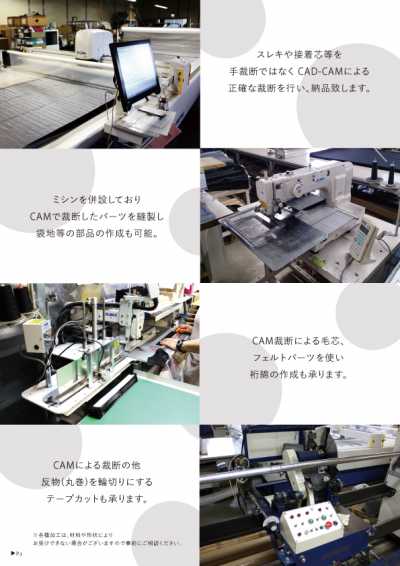
Embroidery Digitizing
Embroidery digitizing is the process of creating data for machine embroidery by setting the number of stitches, stitch order, stitch direction, thread colors, and other details for the embroidery machine based on the design.


Contents6 sections
Definition and Overview
Embroidery digitizing is the work of converting artwork such as logos and designs into sewing instructions for embroidery machines that cannot read the original directly. The data creator designs the stitch type and stitching method while considering the outlines, filled areas, and overlaps to be expressed.
Here, digitizing is different from punching holes in fabric with a needle or needle punching that entangles nonwoven material. It is not the process of actually embroidering, but the preliminary design work needed to reproduce machine embroidery stably.
Role in Product Development
In general, the design and embroidery position and size are determined during the planning stage, and test stitching is done after digitizing. The appearance and effect on the fabric are checked through test stitching, the data is revised, and then it is finalized as production data.
Embroidery may be applied after sewing, but it may also be processed while the parts are still separate. It is important to decide early how it will fit into the sewing process, taking into account the product shape, the method of hooping, and the portions that will be hidden after assembly.
Workflow and Required Instructions
When placing an order, provide not only artwork with as clear an outline as possible, but also the finished dimensions, the fabric to be used, the embroidery position, and color specifications. Since reduced small text and lines may be difficult to reproduce, it is important to share information at actual size.
The appropriate stitches and underlay stitching vary depending on fabric thickness, stretch, pile, and the density of the weave or knit. The type of stabilizer for embroidery and the method of fixation also affect sinking, stretching, and puckering of the embroidery.
- Artwork data and finished size
- The area to be embroidered and its position on the product
- Type of fabric, thickness, stretch, and surface condition
- Thread color specifications and the approach to color changes
- Test-stitch samples to be checked before mass production
Quality and Ordering Notes
When checking quality, confirm not only that it matches the design but also the legibility of the letters, smoothness of the outline, thread overlap, thread breakage, and shrinkage from stitching. Care is especially needed with lightweight or stretch fabrics, where the embroidered area can easily draw in or ripple.
Even with the same design, embroidery data may need adjustment if the fabric or finished dimensions change. The feasibility of data creation, the number of revisions, how test stitching will be checked, and the scope of data management should be confirmed with the processor before ordering.
Differences from Similar Terms
Embroidery refers to the overall process of stitching patterns with thread, while embroidery digitizing refers to the process of designing the data for it. Tatami embroidery and chain stitch embroidery are terms related to embroidery expression and stitch type, and they are the items specified and designed during digitizing.
Printing is a process of transferring and fixing patterns onto fabric using ink or similar materials, and it differs from embroidery in surface texture, thickness, and the level of detail that can be expressed. The processing method is chosen based on the intent of the design, the material, and wearing and washing conditions.
Frequently Asked Questions
What kind of artwork data is needed for embroidery digitizing submission?
Prepare artwork that shows the outline and colors clearly, along with the actual finished size, embroidery position, fabric information, and thread color specifications. In some cases, image data may be acceptable, but editable design data is useful for accurately communicating details and text.
Can embroidery data made once be used on any fabric?
In some cases the same data can be used, but if the fabric thickness, stretch, pile, or finished dimensions change, adjustments may be needed to prevent drawing in or burying. It is important to check test stitching on the fabric that will be used for mass production.
Can small letters and thin lines also be embroidered?
Whether it is possible depends on the shape of the letters, finished size, fabric, thread used, and other factors. Very small text or overly thin lines may become blurred or have unclear outlines, so simplifying the design or adjusting the size should be considered.