


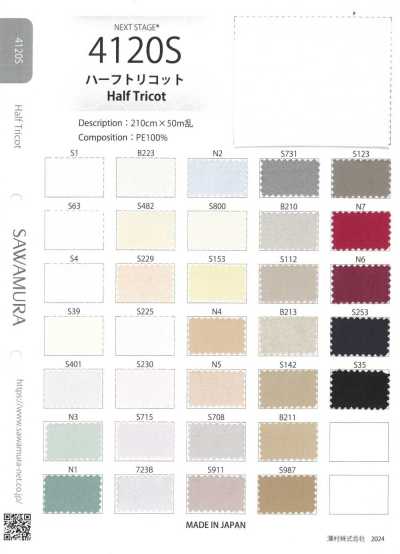
Half Tricot
Half tricot is a type of warp knit fabric with a simpler structure than tricot knitting. Vertical ribs and diagonal stitches appear on the surface, making it possible to produce a relatively stable lightweight fabric.
Contents6 sections
Definition and Overview
Half tricot is one type of warp knit structure in which many yarns are laid out in the lengthwise direction and knitted. Also called lock knit, it is handled as a structure with less yarn movement than standard tricot. It is not a fabric in which warp and weft yarns are interlaced like woven fabric.
In warp knit fabrics, stitches run vertically, so their stretch behavior and handling when cutting differ from those of circular knit jersey and the like. Because the performance of half tricot varies greatly depending on the material, yarn thickness, knitting density, and finishing process, it is important not to judge quality by the structure name alone.
Texture and Appearance Features
The surface clearly shows vertical ribs and fine diagonal stitches, giving the knit a relatively neat appearance. It is often used for light to medium-light fabrics, and the smoothness, crisp feel, and sheen can be adjusted depending on the yarn used.
In general, it tends to be less stretchy than circular knit and less likely to lose its shape. On the other hand, when stretch and recovery are required, it is necessary to check individually for the presence of elastic yarn such as polyurethane, the blending ratio, and the knitting density.
- Knitted appearance with easily visible vertical ribs
- Tends to stay relatively stable in shape even when thin
- With filament yarn, it tends to be smooth and drape well
- Because it is a knit, the stretch differs by direction.
Main Applications
Its thinness, stability, and feel against the skin make it suitable for linings, innerwear, lingerie, and sportswear. Types combined with elastic yarn are also used for swimwear and garments that require fit, but suitability for a given application depends on the material composition and performance, not on the structure name alone.
When used as the outer fabric for lightweight clothing, check for sheerness, drape, and the way the surface looks. When used as a lining, consider in advance its slipperiness against the outer fabric, tendency to generate static electricity, and the thickness at sewn seams.
Selection and Handling Notes
When selecting, check the blend ratio, fabric weight, width, stretch direction, stretch recovery rate, and sheerness. In particular, it is important to understand the direction with less stretch and align it with the grainline of the pattern and the direction of force during wear. If necessary, conduct sewing tests and washing tests using actual fabric.
The degree of shrinkage and deformation caused by washing varies depending on the type of fiber and the finishing process. Before cutting and sewing, let the fabric rest by relaxing the roll, and in mass production, check the water shrinkage and shrinkage rate. Follow the care label or test results for each fabric for washing method and iron temperature.
During sewing, seams may wave or puckering may occur in the direction that stretches easily. Choose a needle suitable for the fabric, such as a ballpoint needle, and adjust thread tension, presser foot pressure, and differential feed. For fine knits, also check for needle holes and skipped stitches.
Differences from Similar Terms
Tricot is the general term or structure name for representative warp knit structures, and half tricot is treated as a related structure. The two may look similar in appearance and stability, but the look and stretch differ depending on yarn movement, knitting density, and material.
Jersey and circular rib are knit fabrics made mainly by circular knitting. These tend to stretch easily in the crosswise direction and are often suitable for soft cut-and-sew garments, whereas half tricot differs in having the vertical ribs characteristic of warp knit and relatively stable properties.
Frequently Asked Questions
Which direction does half tricot stretch?
The stretch behavior varies depending on the material, knitting density, and use of elastic yarn, but in general it has directionality different from circular knits. Do not judge it only by the warp and weft directions in the specification; actually pull the fabric to confirm the stretch direction and recovery, and reflect that in the pattern grainline.
Does half tricot shrink in home laundering?
Whether it shrinks and by how much depends on the material, such as polyester or nylon, finishing processes such as heat setting, and washing conditions. Fabric testing before cutting is necessary, and in mass production, pattern design that takes shrinkage into account and appropriate care label settings are required.
What should you be careful about when sewing half tricot?
Be careful about waviness, needle holes, and skipped stitches in the direction that stretches. Choose a fine needle or ballpoint needle according to the fabric, and adjust thread tension and presser foot pressure. For stretch types, also consider sewing methods that allow the seam to follow the stretch during wear.





