Interlining
Interlining refers to the collective term for auxiliary materials used inside clothing and fashion accessories to help retain shape, add strength and body, and improve the finish of specific parts.

Contents6 sections
Definition and Overview
Interlining is an auxiliary material used by layering it on the inside of the outer fabric or lining to support the shape and stability of parts such as collars, plackets, facings, and waists. It gives body, firmness, and shape retention that are difficult to achieve with the outer fabric alone, and suppresses stretching and distortion during sewing and wear.
There are interlinings that are attached with adhesive and those that are sewn in place, and they differ in base fabric structure, material, thickness, firmness, stretch, and type of adhesive resin. Interlining is not simply a material for making things stiff; it is a material for adjusting a product's silhouette and comfort.
Main Types and Their Differences
Interlining is classified by how it is applied and by the structure of the base fabric. Fusible interlining bonds to the outer fabric with heat and pressure, so it is easy to use in mass production and makes it easy to achieve stability in specific areas. Non fusible interlining is sewn in without adhesive, and is a method that makes it easier to take advantage of the outer fabric's texture and three-dimensional feel.
Base fabrics include nonwoven interlining, woven interlining, and knit interlining. Nonwoven interlining uses a sheet-like fiber base and generally has less directionality in cutting. Woven interlining can make use of the grain of the fabric, and knit interlining is a type that follows stretch fabrics more easily.
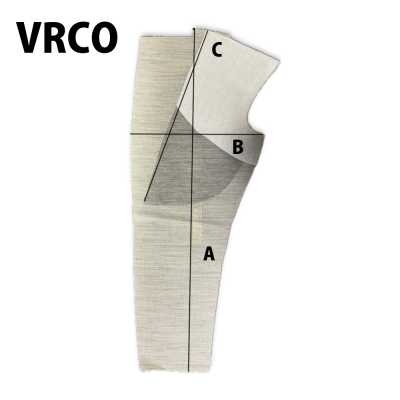
Haircloth interlining mainly uses wool and other materials, and is used for three-dimensional tailoring. Bass interlining is used for areas that require firmness, and Domett interlining is suited to adding thickness and cushioning. Linen interlining, felt interlining, and buckram are also used depending on the desired firmness and fullness.
- Fusible interlining: interlining that is bonded with heat and pressure.
- Non fusible interlining: non-adhesive interlining that is sewn in place.
- Nonwoven interlining: has relatively little directionality and is used for a wide range of applications.
- Woven interlining: makes use of grain and the stable feel of woven fabric.
- Knit interlining: used when followability to stretch materials is important.
How to Choose and How to Find It in Product Listings
Selection is based on the outer fabric's thickness, stretch, sheerness, texture, and the product's applications. For thin or light-colored outer fabrics, consider interlining that makes fading and show-through less noticeable. For stretch materials, consider stretch interlining that does not easily interfere with the outer fabric's stretch. Interlining that is too stiff may spoil the outer fabric's natural drape.
Collar interlining and shirt interlining are used to shape collars, waist interlining is used for stability around the waist, and tie interlining is used to adjust the fullness of the knot and blade tip. Facings, front interlining, hem interlining, and partial interlining are used to reinforce only the necessary areas while preserving the overall texture of the product.
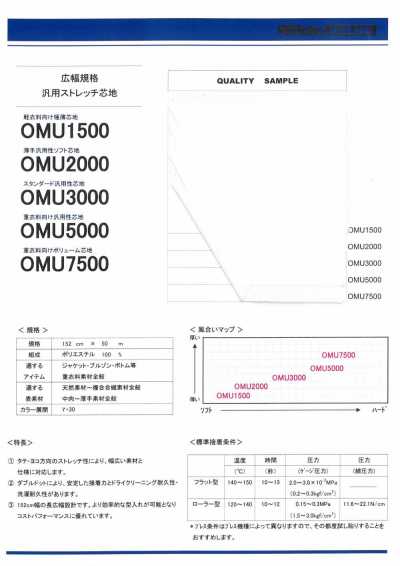
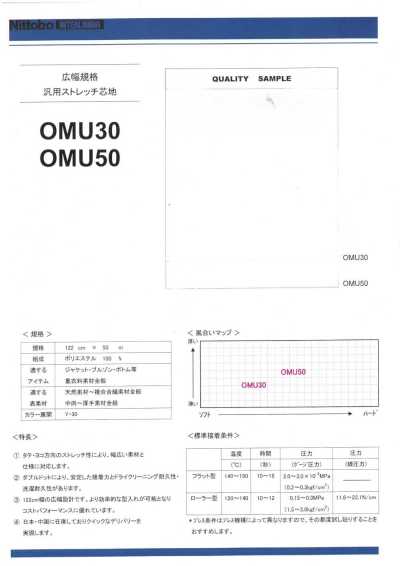
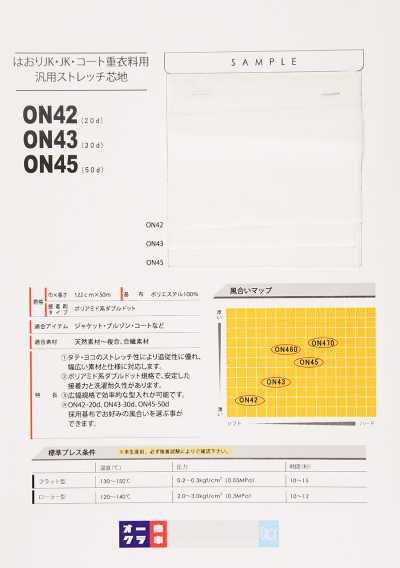
In product listings, first narrow down by interlining type such as fusible interlining, woven interlining, nonwoven interlining, and knit interlining. Then check width, thickness and texture, material, stretch, and applications, and choose candidates that can be trial-bonded under the same conditions as the outer fabric.
Handling and Sewing Notes
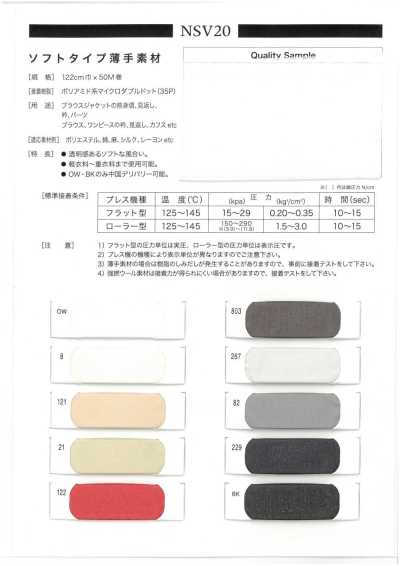
Fusible interlining is bonded according to the temperature, time, and pressure specified for each interlining. However, proper conditions also vary depending on the outer fabric, pressing machine, and bonding area, so it is important to perform a trial bond with the outer fabric before full production and check the appearance and bonding condition.
After bonding, allow it to cool sufficiently before handling, and check peel strength if necessary. If the conditions are insufficient, interlining lift or bubbling can occur, while excessive heat or pressure can cause shine, fading, bleed-through, and shrinkage in the outer fabric.
When cutting, for directionally oriented interlinings such as woven interlining, align the grain and stretch direction with the pattern instructions. In the sewing process as well, pay attention to differences in level, thickness, and misalignment between areas with interlining and without interlining, and adjust the needle, thread, and presser settings.
Differences from Similar Terms
Quilt batting is a material inserted between garments to provide warmth and bulk, and its purpose differs from interlining, which mainly supports shape. Insulation often refers to batting materials used for warmth, and is distinguished from the interlining classification.
Lining is a material that covers the inside of a garment and provides smoothness, ease of putting on and taking off, and protection of the outer fabric. Interlining is often used in partial areas where it is not visible from the outside, and its main purpose is shape retention and reinforcement. Embroidery interlining is an interlining used to stabilize fabric during embroidery, and its application differs from garment tailoring interlining.
Frequently Asked Questions
How do you choose between fusible interlining and non fusible interlining?
Fusible interlining makes it easy to stabilize the outer fabric by heat bonding and is widely used for collars, plackets, and facings. Non fusible interlining does not bond to the outer fabric, so it is considered when you want to preserve the outer fabric's texture and a three-dimensional finish. Choose according to the product specifications, outer fabric, and sewing equipment.
How can you prevent fading or interlining lift?
Choose an interlining and adhesive resin that match the outer fabric's thickness and surface texture, and perform a trial bond before mass production. If the temperature, time, or pressure is too low or too high, fading, bleed-through, bubbling, or peeling may occur. Check not only the bonded result, but also the appearance after cooling and after washing.
- Search products for "Interlining"
- Products for style "For Shirts/blouses"
- Products for style "For Outerwear/blousons/coats"
- Products for style "For Pants"
- Products for style "For Skirts And Dresses"
- Products for style "For Jackets/Suits"
- Products for style "For Formal Wear"
- Products for style "For Costumes/dresses"
- Browse Interfacing products