Mil-spec
Mil-spec is a general term for military specifications and standards that define the performance, test methods, materials, dimensions, and other requirements mainly for procurement items used by the U.S. Department of Defense.
Contents6 sections
Definition and Overview
Mil-spec is a general term for specifications and standards that define requirements for procuring products used by the military. Depending on the item, materials, construction, dimensions, performance, test methods, labeling, and other details may be tightly defined.
In the apparel and clothing materials field, the term may be used to refer to fabrics, tapes, cords, and other items that emphasize military-derived durability and functionality. However, this expression alone does not indicate compliance with a standard.
How to Think About Materials and Construction
Mil-spec is not a material name or a type of weaving, knitting, or braiding. Requirements such as strength, abrasion resistance, flame resistance, and weather resistance are set according to the intended application for materials such as nylon, polyester, and cotton, as well as constructions such as plain weave, twill weave, and braided cord.
For example, high-density woven fabric made from high-strength nylon, or woven tape designed to withstand load, may be treated as military-derived specifications. Even with the same material, performance changes if the yarn usage, density, thickness, finish, or test conditions differ.
- You cannot judge compliance with military specifications by material name alone.
- Distinguish between products that reproduce a military look or specification and products that actually comply with the standard.
- Check the required performance using the specification number, edition, and test report.
How Width and Thickness Are Described
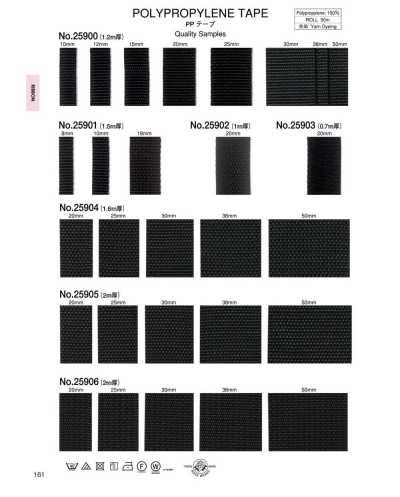
For tape, check the specifications by width, thickness, length, weight, breaking strength, and other factors. For cords and braided cords, outer diameter, whether there is a core, braid construction, elongation, and breaking strength are important. The term mil-spec alone does not specify width, thickness, or tolerances.
In product design, dimensions are determined based on the inner diameter of the fitting to be threaded through, sewing allowance, fold-back amount, and how the load is applied. When replacing an existing specification, compare not only the actual width and thickness but also hardness, elongation, and surface friction.
Main Applications and How to Choose
Materials that reference military-derived specifications or design are used for bags, outdoor apparel, workwear, uniforms, belts, straps, pull tabs, and more. It is important to define the required performance for the application before selecting the material and construction.
For load-bearing tape and cords, check not only breaking strength but also the strength in actual use, including sewn sections. For decorative tape used in apparel, hand feel, sewability based on thickness, skin feel, and appearance after washing are also selection criteria.
- For load-bearing applications, check the working load, sewing method, and combination with hardware.
- For outdoor applications, check changes caused by ultraviolet light, moisture, and abrasion.
- For apparel applications, check differences in shrinkage rate from the fabric, color transfer, and colorfastness.
- If compliance with a standard is required as a procurement condition, clearly specify the applicable standard and confirm it with the supplier.
Handling and Differences from Similar Terms
Elongation and shrinkage of tape and cords, fraying at the ends, and wash durability differ depending on the material and construction. Ends of synthetic fiber products may be heat treated, but depending on the material there is a risk of melting, discoloration, or hardening, so a preliminary test is necessary.
Paracord is a term for cord originally derived from parachute cord, and it is not mil-spec itself. Webbing is a general term for a strong, flat woven tape, and it is a separate concept from whether or not it conforms to military specifications.
Frequently Asked Questions
Are all materials labeled mil-spec compliant with military specifications?
No. It is sometimes used as a sales term indicating military-derived materials, construction, design, or appearance. When compliance with a standard is required, confirm the applicable standard number, scope, edition, test results, and whether there is a certificate on an item-by-item basis.
Can mil-spec tape and cords be washed?
Whether washing is possible is not determined by the mil-spec label. It depends on the material, dyeing, finishing such as water repellency, core material, end treatment, and sewing specifications. Before production, conduct a wash test in combination with the base fabric and check for shrinkage, color transfer, fraying, and hardening.