Motif Lace
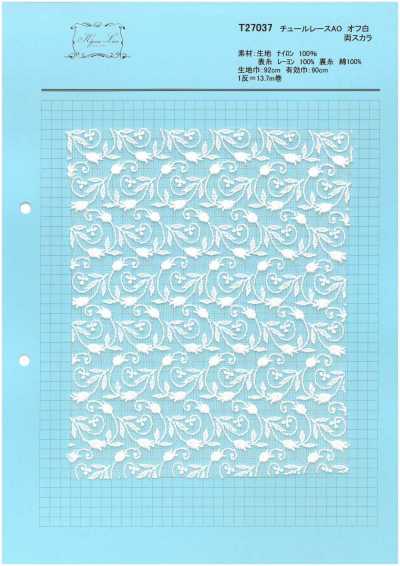
Motif lace is an independent lace decorative piece shaped like flowers, leaves, geometric patterns, and the like, used by sewing it onto garments and fashion accessories to add design detail.
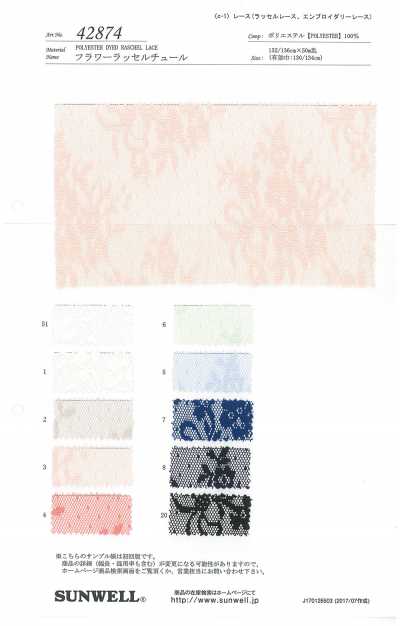
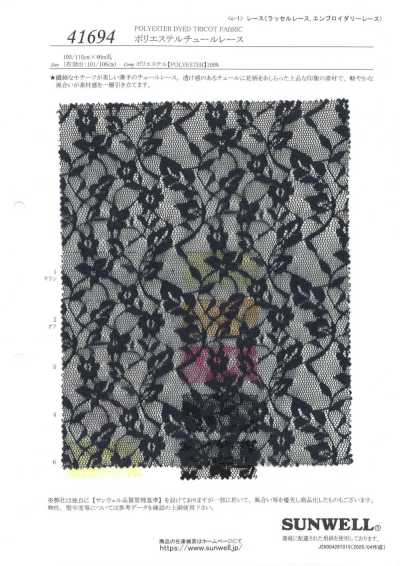
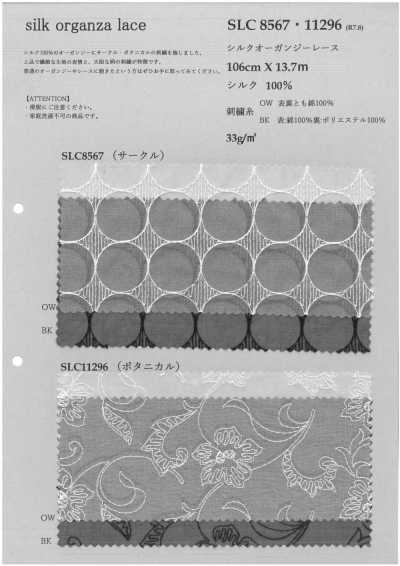
Contents6 sections
Definition and Overview
Motif lace differs from continuous striped lace and allover lace fabric with a pattern spread across the entire surface; it is lace used in separate pattern units, as if a single motif has been cut out. It can be placed at any position on a garment and is suited to partial decoration.
It comes in shapes such as flowers, leaves, ribbons, and heraldic styles, and is used either alone or by combining multiple motifs. Some products are cut along the edge, while others are made by cutting out the required motifs from continuous-pattern lace.
Construction and Materials
Motif lace includes pieces with patterns expressed by embroidery, pieces made by processing machine-made lace motif by motif, and pieces with outlines emphasized by cord. Depending on whether fine yarns or a ground fabric support the area around the motif, the sheerness and ease of handling vary.
Common materials include polyester, nylon, rayon, and cotton, and gloss, suppleness, dyeability, and durability vary depending on the fiber type and processing. Stretch cannot be determined from the material name alone; check the use of elastic yarn and the knitted structure individually.
Appearance Characteristics and Main Applications
Three-dimensional embroidery, cord outlines, and sheerness created by openwork sections produce an expression different from flat prints. Depending on motif size, density, and yarn thickness, the look can be adjusted from delicate to striking.
It is used as an accent on dresses, blouses, skirts, lingerie, and children's clothing, as well as on collars, necklines, cuffs, hems, and around pockets. In fashion accessories such as bags and hair ornaments, it is sewn onto a base or layered with other materials.
- When placing motifs symmetrically, check the direction of the motif and the left-right shape.
- When layering over sheer fabric, check how the base color affects the appearance of the pattern.
- For three-dimensional motifs, also consider the thickness and snagging after sewing.
How to Choose and Handling Precautions
When selecting, check not only the finished size but also the motif outline, thickness, stiffness, edge finishing, and sewing position. If a heavy motif is attached to a lightweight fabric, the fabric may sag easily, so reinforce it with a backing or interfacing if necessary.
If a non-stretch motif is attached to a stretch outer fabric, it may restrict the stretch of the outer fabric during wear. When attaching it to a stretch area, it is necessary to consider specifications such as limiting the sewing area or sewing without stretching the outer fabric.
Cut motifs may fray from the edges of the pattern. Cut carefully so as not to damage the outline, and finish the thread ends as needed. Follow the product care label for washing, and consider using a laundry net to avoid snagging and friction.
Differences from Similar Terms
Motif lace is a term for using an independent pattern as decoration. Galloon lace refers to striped lace, and allover lace refers to lace with a pattern that continues across the full fabric width. Because the application and shape differ, distinguish them according to the required placement and fabric consumption.
Appliqué refers to a processing and decorative technique in which pieces such as fabric or lace are sewn onto another fabric. Motif lace can be one of the materials used for appliqué, but it differs in that it is the name of a material or component.
Frequently Asked Questions
How is motif lace sewn on?
The general method is to sew it on finely along the outline of the pattern. Avoid the sheer areas and three-dimensional areas, and secure only the necessary parts for a natural finish. Make sure the start and end of stitching are secured so they do not unravel, and check for puckering or distortion in the outer fabric.
Does motif lace fray when washed?
Depending on the outline processing, yarn type, sewing method, and friction during washing, threads at the edges may come out or fray. Extra care is needed especially when using cut-out pieces. Follow the product care instructions and consider using a net and a gentle wash cycle.
Can motif lace be attached to stretch fabric?
It can be attached, but if the motif itself does not stretch, it may prevent the outer fabric from stretching. Avoid areas where stretch is needed, or reduce the number of fixed points. In a sample test, check for tightness during wear, wavy seams, and lifting of the motif.