Printed Label
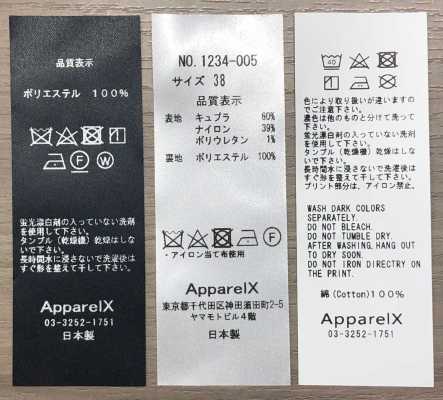
A printed label is a label trim in which information such as the brand name, size, composition, and care instructions is printed onto a fabric or tape-like base material and sewn onto a garment.
Contents6 sections
Definition and Overview
A printed label is a garment label in which text and designs are expressed by printing. In addition to brand identification, it may include size, care information, and country of origin, and is attached at positions suited to the product specifications, such as the neckline, side seam, or waist area.
While woven labels express text and patterns by weaving yarns, printed labels place information on the surface of the base material with ink or similar methods. They are well suited to fine text and multicolor designs, but durability and hand feel vary depending on the combination of printing method and base material.
Position in the Product Process
Printed labels are specified during the planning stage, with the content, dimensions, color, and attachment position decided in advance, and ordered as an accessory. Because the label content relates not only to design but also to care information and retail labeling requirements, it is important to share the details across planning, production control, and quality control.
In mass production, it is common to sew pre-cut labels onto the body panels or other parts during the sewing process. For products that undergo garment washing, garment dyeing, or post-processing, the printed label should be checked after processing to confirm that it does not discolor, peel, or transfer color.
- Finalize the labeling data and sewing specifications
- Check skin feel, visibility, and ease of sewing with a sample
- Approve the wording and print condition with a physical sample before mass production
- Inspect the attachment position and durability after sewing and after washing
Instructions When Ordering
When placing an order, clearly specify the finished dimensions, folding method, cut shape, base color, print color, front and back, quantity, and packaging format. The required allowance and folding specifications differ between insertion into the seam allowance and sewing along all four sides or both ends, so they must be aligned with the sewing specification sheet.
For submitted data, check for typographical errors in text, size notation, composition, and correspondence with the care symbols. Small text, thin lines, and pale color combinations can be hard to read, so it is important in practice to confirm legibility with a full-size proof sample.
Quality and Sewing Considerations
For quality inspection, check for print fading, bleeding, misregistration, color differences, stains, and cutting misalignment. Resistance to washing, friction, perspiration, and dry cleaning should be confirmed according to the intended product use conditions and labeling content, and special attention should be paid to color transfer when used with dark fabrics or light-colored garments.
For neck areas and innerwear that come into direct contact with the skin, the hardness of the base material, fraying at the edges, and the feel of the sewing thread can affect comfort. If the sewn position overlaps a thick seam allowance, it may cause step marks or sewing defects, so the sewing factory should agree in advance on the attachment method.
Differences from Similar Terms
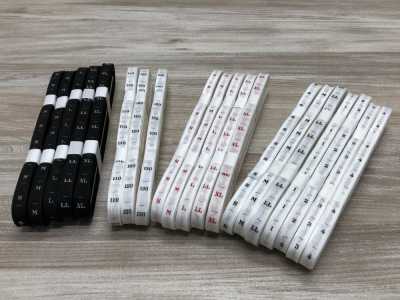
A woven label is a label that expresses text and patterns through a woven structure, and its method of presentation differs from that of a printed label. Printed labels may be suitable for fine text and multicolor expression, while woven labels more easily provide a woven texture and dimensional feel.
A size label is a label whose main purpose is to display size. Printed label refers to the printing method, and a size label can also be made by printing. Tagless printing refers to a specification in which the label is not sewn on and is instead printed directly on the inside of the product, so it is a different process.
Frequently Asked Questions
How should printed labels and woven labels be used differently?
Printed labels are a good option when handling fine text, multicolor logos, or information-rich labeling. On the other hand, woven labels are chosen when emphasis is placed on woven texture or dimensional feel. Decide by comparing the intended location of use, skin feel, and durability against washing and friction using a physical sample.
What should be confirmed before ordering a printed label?
Confirm the labeling content, dimensions, base material, base color, print color, folding method, cut shape, attachment position, and quantity. In particular, text related to care information should be checked against the latest labeling content. Also confirm the readability of the text, colors, and post-wash condition with a full-size sample.
Can printed labels be used on garments that will be garment washed or garment dyed?
They may be usable, but it is necessary to confirm the compatibility of the processing conditions with the label base material and ink. Because processing may cause print fading, peeling, discoloration, color transfer, or shrinkage of the base material, testing should be conducted under the same conditions as actual production before mass production.