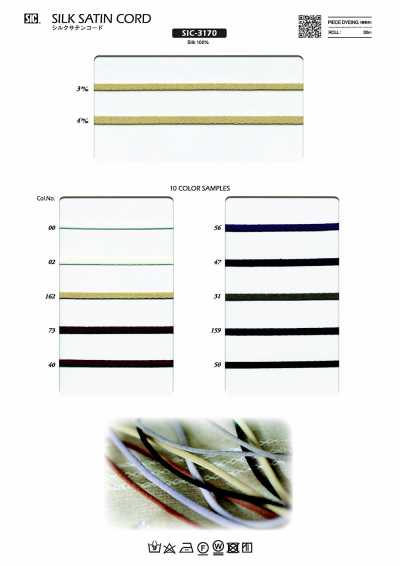
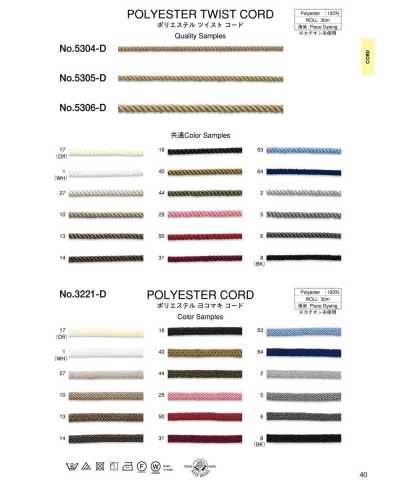
Satin Cord
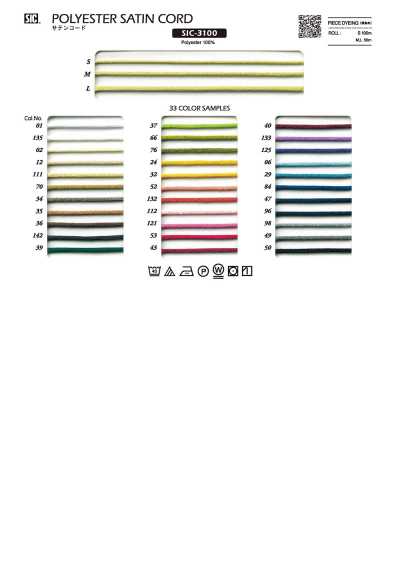
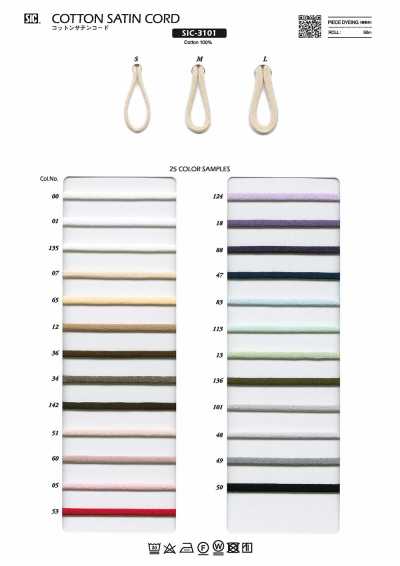
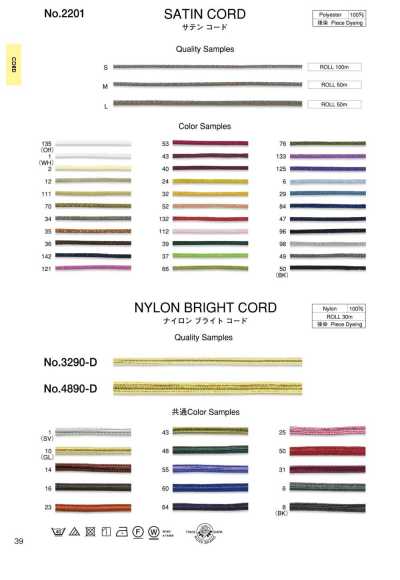
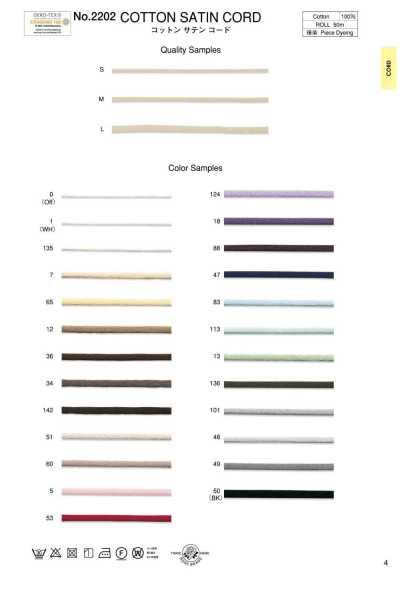
A satin cord is a narrow cord with a satin-like smooth luster on the surface. It comes in round cord and flat cord forms, and is used for decoration, tying, and loops.
Contents6 sections
Definition and Overview
Satin cord is a cord characterized by a glossy, smooth surface. It is also called rat tail, and in apparel it is used for decorative knots, lacing at necklines and backs, hanger loops, and more. It is also used as a material for accessories and wrapping.
The term satin is mainly used to describe appearance or texture, and does not necessarily mean it is made only with satin weave. Depending on the product, it may be made by weaving, knitting, braiding, or similar methods, so the structure and manufacturing method should be checked in the specification sheet.
Materials and Structure
Materials include polyester, cotton, and silk. Polyester products tend to provide vivid color and luster more easily, cotton products have a relatively subdued look, and silk products are characterized by a soft hand and natural sheen. Strength, slipperiness, and behavior during washing differ depending on the material.
The shape is broadly divided into round cord, with a cross section close to circular, and flat cord, with more width. Round cord makes it easier to create three-dimensional knots, while flat cord is a shape that is easier to show as a surface. Whether it has a core and its internal structure also affect firmness, resistance to flattening, and ease of tying.
Checking Thickness and Dimensions
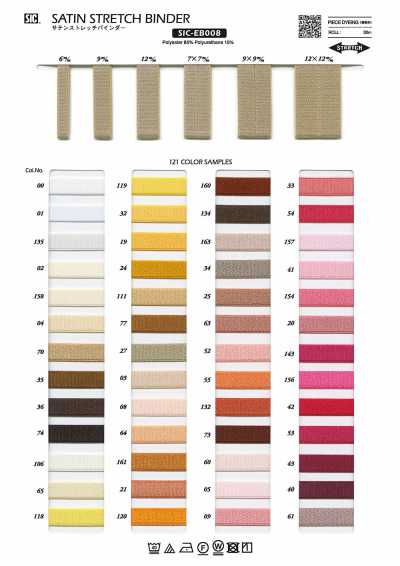
Round cord is generally indicated by diameter or thickness, while flat cord is indicated by width. However, because soft cord can change dimensions depending on how it flattens during measurement and on tension, it is important to check not only the stated dimensions but also the actual cross section, thickness, and stiffness.
When using it for loops or threading, confirm the inside diameter of the hole it must pass through, the size of the knot, and the thickness of the sewn-in section through a prototype. Set the required length to include losses from knotting and sewing in, and allow extra length according to the application before cutting.
- Check round cord by diameter and flat cord by width.
- Depending on whether it has a core or is hollow, its flattening behavior and thickness when sewn in differ.
- Even at the same thickness, the knot size and slipperiness change depending on the material and structure.
Main Applications and Selection
It is used for lacing on dresses and stage costumes, ribbon tying on blouses, piping core, and decorative loops. For the intended use, select it by considering the desired sheen, required strength, frequency of retightening, and whether it will touch the skin.
For applications involving strong pulling or load-bearing, do not choose based on appearance alone; check specifications such as tensile strength. When using it for piping, confirm through a sewing sample in advance that the cord diameter is not too large for the fabric thickness and seam allowance.
Handling and Sewing Precautions
Satin cord made from synthetic fibers may melt or deform with heat, so if the end is to be heat-treated, check the material and test it in an inconspicuous area. For cotton and silk, end finishing by heat treatment may not be suitable, so consider folding in, stitching to secure, or using fray-prevention agents.
Cord may stretch due to diagonal force or knots, and washing or moisture may cause shrinkage or changes in texture. For products that are washed with water, conduct washing tests on both the cord alone and the finished product, and check for color transfer, fraying, and end slippage.
Frequently Asked Questions
What is the difference between satin cord and satin ribbon?
Satin cord is a thin material in a round or flat cord shape, and is easy to use for tying cords, loops, and piping cores. Satin ribbon generally refers to a flat, wide tape-like material. However, there are also flat satin cords, so check the cross-sectional shape and dimensions as well as the name.
How should the ends of satin cord be finished?
Choose the end finishing method according to the material. Synthetic fibers that melt with heat may be suitable for hot cutting or heat treatment, but care is needed to avoid discoloration or hardening. For cotton and silk, use stitching to secure, folding in, or fray-prevention agents, and check that the ends do not unravel after washing.