Accordion Cord
Accordion cord is a narrow, flat decorative braid with continuous ridged chevrons on the surface, used as a trim material for edging clothing and accessories, patterning, and cord embroidery.
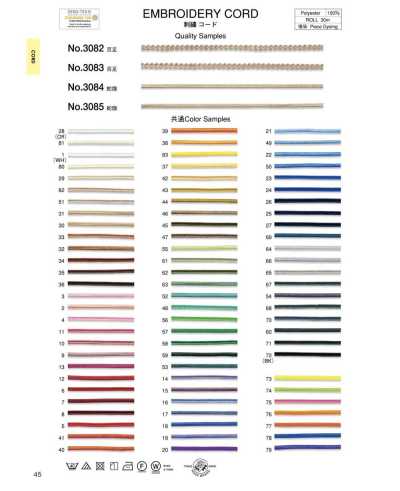

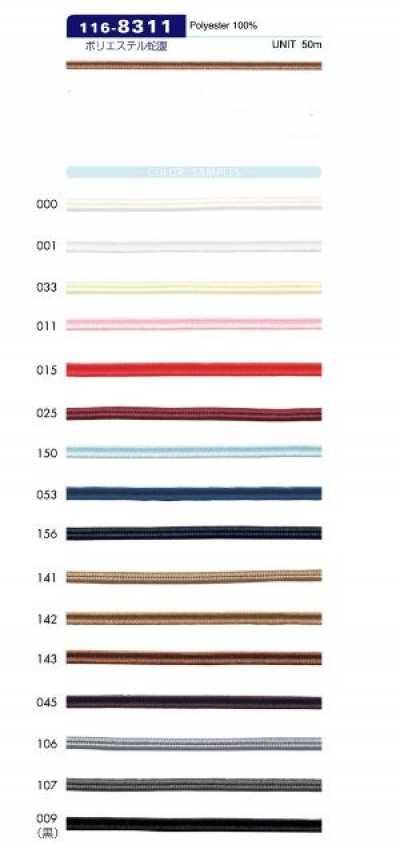
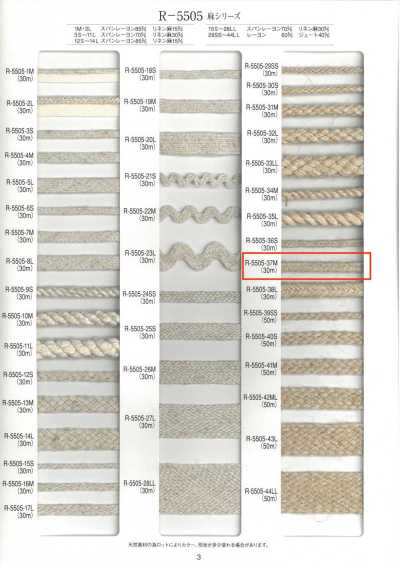
Contents6 sections
Definition and Overview
Accordion cord is a flat decorative braid that is cord-like and narrow, yet not overly round in cross section. Continuous ridges and valleys like an accordion appear on the surface, allowing the sewn line itself to serve as a design element. It is also called soutache or soutache cord.
In general, it is suited to uses where it is arranged not only in straight lines but also in curves and spirals to create outlines and patterns. Because it gives depth and dimension even at a narrow width, it is used as a decorative element in place of embroidery or in combination with embroidery.
Materials and Construction
Materials include cotton, rayon, and linen, and the sheen, suppleness, and rustic look vary depending on the material. There are also heathered styles made by combining multiple materials, as well as metallic styles in gold or silver tones.
Accordion cord is a type of braid shaped into a narrow width by twisting or braiding yarn. Its defining feature is a continuous mountain-like rib on the front side, and its appearance and applications differ from cords mainly intended for tying, such as flat cord or round cord.
How Width and Thickness Are Described
Specifications are mainly given by width, and some products are as narrow as approx. 2 millimeters. However, the appearance and sewn finish vary depending on rib height, thickness, and how easily it compresses, so it is important not to judge its decorative quality by width alone.
When ordering, confirm the finished width, cross-sectional thickness, front and back sides, color, sheen, and required length. If following a curve, it is safer to test-sew first to check ease of bending and how much wrinkling or lifting appears on the inside.
- Confirm whether the width is measured in the finished state or as the maximum width including the ribs.
- Since the expression of thickness differs by product, check the cross section with an actual sample.
- If the continuous pattern has a direction, align the surface appearance before cutting.
Main Applications
It is used for trimming jackets, dresses, stage costumes, and folk-style garments. In addition to emphasizing outlines such as collars, front edges, cuffs, and pocket openings, it can also be sewn onto the garment body to create curved patterns or cord-embroidery-like decoration.
Outside apparel, it is also used to decorate bags, hats, accessories, and interior items. Because it is narrow, it is a useful trim material that adds accent through color contrast or sheen without greatly increasing the decorated area.
Selection and Handling Notes
Select it according to the thickness, texture, and washing method of the textile being used. If a thick cord is sewn onto a thin textile, the textile is prone to puckering, and forcing a stiff cord along a sharp curve can cause lifting or twisting. Choose sewing thread that blends with the cord color, and sew it into the valleys of the ribs to make it less visible.
Cut ends may fray or become fuzzy, so process them according to the specification, such as sewing them in or finishing the ends. Because shrinkage, color fading, and changes in sheen during washing differ depending on the material and finishing, test the sewn condition in advance if the product will be washed after production.
- Do not pull strongly while sewing; secure it at its natural length.
- For curved sections, baste closely and adjust the direction of the ribs and any twisting.
- Use a pressing cloth when ironing, and follow the temperature indicated for the material.
Frequently Asked Questions
What is the difference between accordion cord and piping?
Can accordion cord be sewn onto curves?
In many cases it can be used on curves, but the smaller the curve radius, the more likely wrinkles or lifting will appear on the inside. Baste it closely and sew without pulling. Before mass production, it is important to check it under the actual fabric and sewing conditions.
What should be noted when washing accordion cord?
Shrinkage, stretching, color fading, and changes in sheen due to washing vary depending on the material and finishing. Differences in shrinkage between the main fabric and the cord can cause waviness. For products that will be washed, check the appearance and fraying at the ends after sewing and testing.
- Search products for "accordion cord"
- Products with material "Cotton"
- Products with material "Rayon"
- Products with material "Linen"
- Products for style "For Costumes/dresses"
- Products for style "For Formal Wear"
- Products for style "For Bags"
- Products for style "For Interiors"
- Browse Ribbon, Tape, Cord products