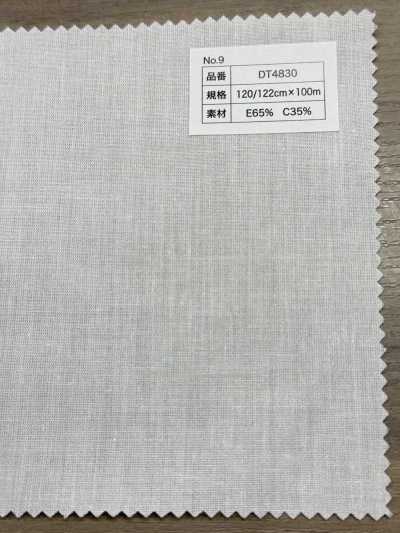
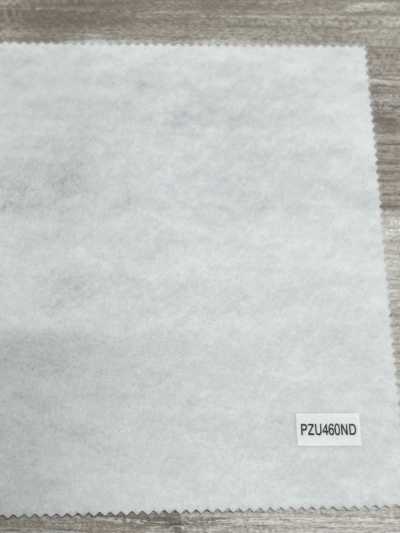
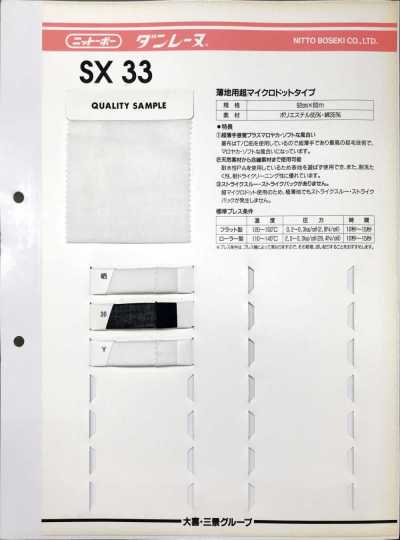
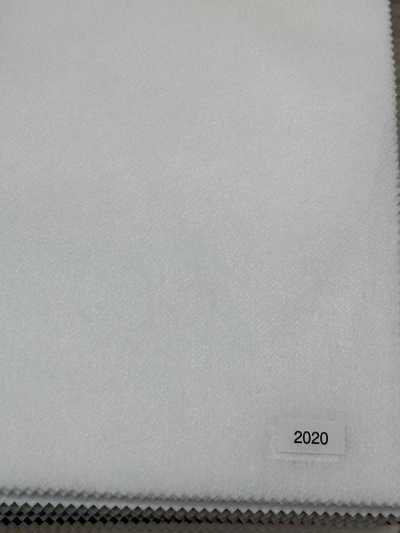
Dot Fusible Interlining
Dot fusible interlining is a fusible interlining in which heat-melt adhesive resin is applied in dots on one side of the base fabric and bonded to the outer fabric with a press to add shape and strength.
Contents6 sections
Definition and Overview
Dot fusible interlining is a fusible interlining in which adhesive resin is applied in regular dots to the base fabric of woven fabric, nonwoven fabric, knit fabric, and other materials. By controlling heat, pressure, and time, it is bonded to the back side of the outer fabric to give the garment shape stability and firmness.
Compared with methods that apply resin over the entire surface, the flexibility of the base fabric is more likely to remain between the dots, so it is less likely to impair the hand of the outer fabric. However, the finished result after bonding varies depending on the combination of base fabric, resin, outer fabric, and press conditions.
Areas of Use and Role
It is mainly used on areas such as the front body, facing, collar, cuffs, placket, pocket opening, and belt sections where it is necessary to suppress stretch or adjust the outline. By applying it only to specific areas, shape retention can be added only where needed.
In jackets and coats, it is used to stabilize the front body and facing. In shirts and blouses, it is used to shape the collar and cuffs. For lightweight garments, it is important to choose a thin, soft type so that sheerness, stiffness, and bonding marks do not stand out.
Materials and Types
The base fabric of dot fusible interlining may be woven interlining, nonwoven interlining, or knit interlining made from polyester, cotton, rayon, and other materials. Woven interlining tends to provide stability through the grain, nonwoven interlining tends to have relatively little directional difference, and knit interlining tends to blend well with outer fabrics that have stretch.
Adhesive resin differs in bonding performance and hand depending on the dot size, spacing, amount, and melting temperature range. Double dot is a fusible interlining in which the resin is made into a two-layer structure or otherwise adjusted to control conformity to the outer fabric and bonding performance, and it is treated separately from dot fusible interlining, which is simply a dot-applied adhesive interlining.
- Types for lightweight fabrics are soft and help preserve the drape of the outer fabric.
- Types for medium-weight fabrics are used to stabilize shapes in areas such as facings and plackets.
- Types for heavy fabrics are used where shape retention is needed for coat fabrics and similar materials.
- Stretch-compatible products are designed to avoid restricting the stretch of the outer fabric.
How to Choose and Compatibility with the Outer Fabric
When selecting, check the thickness, stretch, surface texture, degree of sheerness, and the required firmness and body of the outer fabric together. If the interlining is too heavy, the original suppleness of the outer fabric may be lost; if it is too light, it may not achieve the purpose of reinforcement or shape retention.
Outer fabrics with surface finishes such as brushed, textured, coated, or water-repellent finishes may not bond well if the resin does not sufficiently interlock. For lightweight, pale-colored, or glossy outer fabrics, check whether the outline of the resin or bleed-through appears on the front side.
Before full production, perform test bonding using the actual outer fabric and interlining, and evaluate peel strength, stiffness, appearance, and the condition after washing or cleaning. Differences in shrinkage between the outer fabric and interlining must also be checked, as they can cause interlining lift or waviness.
Bonding and Sewing Precautions
Bonding is carried out by adjusting the conditions of the adhesive press machine used, based on the temperature, pressure, and time specified for each interlining. If the temperature is too low or the time is too short, bonding will be insufficient; if too high, it may cause shine, discoloration, shrinkage, or resin bleed-through on the outer fabric.
After bonding, cool the material and stabilize the resin before cutting or sewing. If it is moved strongly before it has cooled enough, the bonded surfaces may shift or peel. During sewing, adjust the needle, thread, and feed conditions according to the added thickness and stiffness created by bonding.
After bonding, inspect for bubbling caused by local lifting, edge peeling, and any strike-through onto the outer fabric. Dirt on the press machine belt and uneven pressure can also cause appearance defects, so equipment condition and working conditions must be continuously controlled.
Frequently Asked Questions
What is the difference between dot fusible interlining and fully bonded interlining?
Dot fusible interlining has adhesive resin arranged in dots, so it tends to preserve the softness and breathability of the base fabric relatively well. Fully bonded specifications have a larger bonding area and can provide a stronger unified feel, but depending on the outer fabric, the hand may become stiffer or bonding marks may appear.
Can dot fusible interlining be used with stretch materials?
Yes, but for outer fabrics with stretch, choose something that can follow the stretch of the outer fabric easily, such as knit interlining or stretch-compatible dot fusible interlining. If a non-stretch interlining is used, it may cause tightness during wear, waviness near the seams, or peeling at the bonded surface, so test bonding should be performed, including under stretch.
What are the main causes of interlining lift after bonding?
The main causes are improper press temperature, pressure, or time; poor compatibility between the outer fabric and the adhesive resin; and differences in shrinkage between the outer fabric and interlining. Processing agents on the outer fabric, fuzz, and uneven pressure on the press surface also have an effect. Conduct tests with varying conditions on the actual fabric and check through after washing as well.
- Search products for "Dot fusible interlining"
- Products with material "Cotton"
- Products with material "Polyester"
- Products with material "Rayon"
- Products for style "For Shirts/blouses"
- Products for style "For Outerwear/blousons/coats"
- Products for style "For Pants"
- Products for style "For Skirts And Dresses"
- Products for style "For Jackets/Suits"
- Browse Interfacing products