Stretch Interfacing
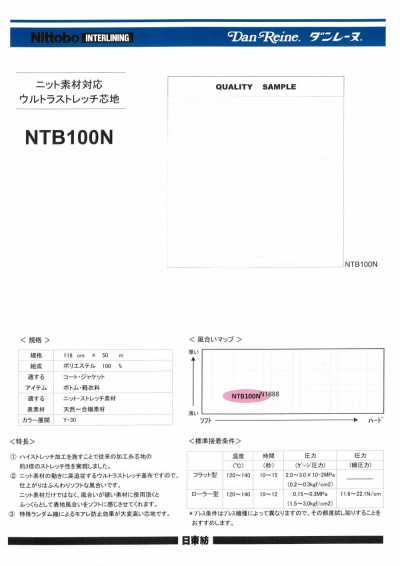
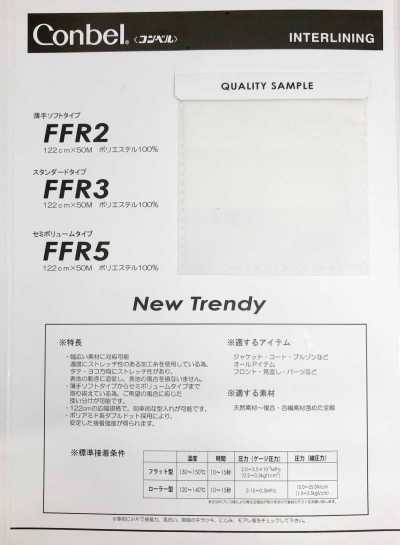
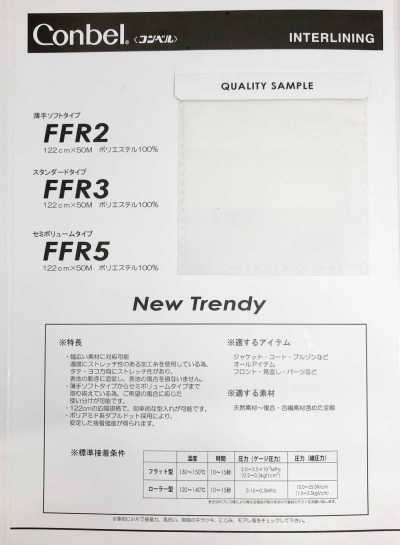
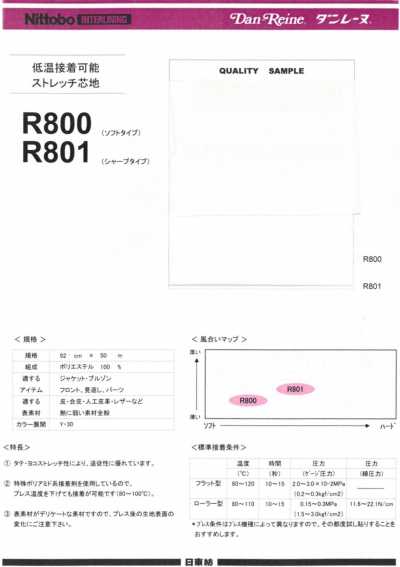
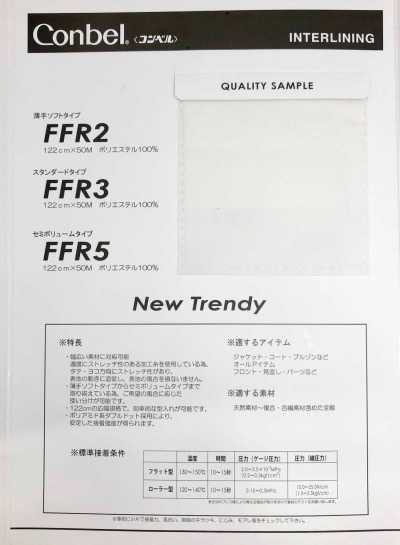
Stretch interfacing is an interfacing material that follows the movement of stretchable outer fabric while shaping areas such as collars and facings and providing the necessary body and stability.
Contents6 sections
Definition and Overview
Stretch interfacing is interfacing material used to reinforce without significantly restricting the stretch of the outer fabric. It is often used as fusible interlining and bonded to the back side of the outer fabric with heat and pressure. It is intended to balance the texture of stretch materials, mobility when worn, and the product’s shape retention.
Even stretch interfacing does not always stretch equally in all directions. Because the stretch direction, amount of stretch, and recovery differ by type, it is necessary to check the stretch direction of the outer fabric and the cutting direction when selecting it.
Areas of Use and Function
Main areas of use include shirt and cut-and-sew collars, collar stands, plackets, facings, cuffs, pocket openings, and waistbands for bottoms. By inserting interfacing only in specific areas, it helps suppress stretching and deformation at sewn edges and makes it easier to retain shape after wearing and washing.
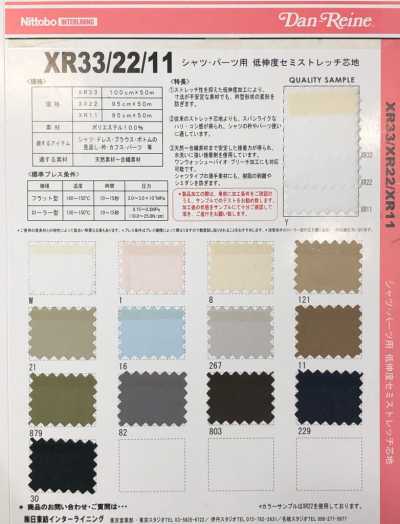
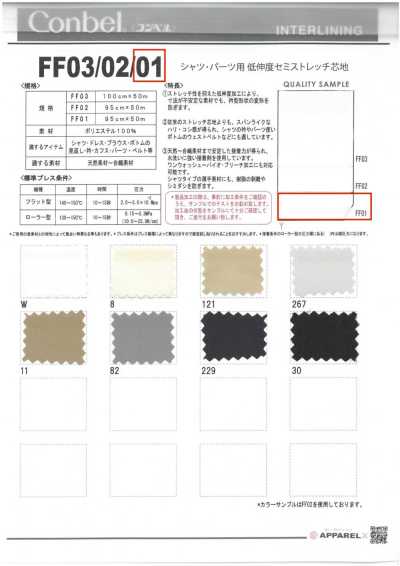
When you want to preserve the stretch of the outer fabric overall, the method is to use it narrowly only where needed. On the other hand, when the purpose is to stabilize areas that stretch easily, low-stretch semi-stretch interfacing may also be used to adjust the balance between conformability and shape retention.
- Collars and collar stands: shape the outline and reduce distortion when worn.
- Plackets and facings: suppress stretching and waviness at opening areas.
- Cuffs and pocket openings: prevent loss of shape from repeated use.
- Waistbands: stabilize the band area while accommodating the stretch of the outer fabric.
Materials and Types
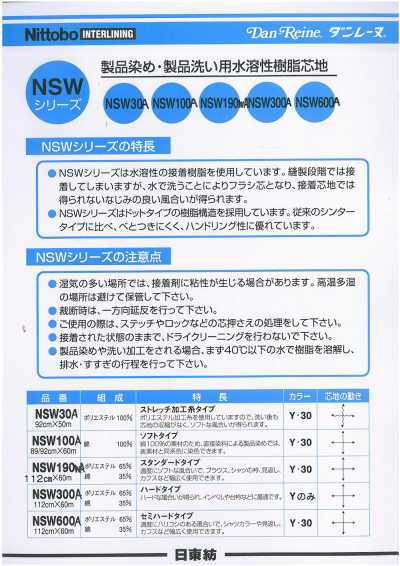
Stretch interfacing includes types based on nonwoven, woven, and knit substrates. The substrate structure, yarn use, and type of adhesive resin affect the stretch direction, softness, firmness, surface appearance, and hand after bonding.
Many are made with polyester, and stretch is imparted through structure, processing, and the use of elastic fibers. Options range from soft types for lightweight fabrics to relatively firm types suitable for shirt collars and waistbands, and low-stretch semi-stretch products are also an option.
How to Choose and Bonding Precautions
If the interfacing stretches more or less than the outer fabric, waviness, puckering, and discomfort when worn may result after bonding. Choose an interfacing with conformability close to the stretch direction, thickness, fabric weight, and surface character of the outer fabric, and with a thickness and firmness that will not impair drape.
Set the bonding conditions according to the adhesive resin of the interfacing and the heat resistance of the outer fabric. If temperature, time, or pressure is insufficient, it may cause peeling; if excessive, it may cause gloss, shrinkage, changes in hand, or adhesive bleed-through. It is important to perform trial bonding and washing tests before mass production.
When cutting, specify the stretch direction of the interfacing in the specification sheet and align the direction for left and right parts. In sewing, pay attention to the difference in stretch between interfaced and non-interfaced areas; if necessary, adjusting feed amount and presser pressure can help reduce seam shrinkage and puckering.
Differences from Similar Terms
Fusible interlining is a general term for interlining that is bonded to the outer fabric with adhesive resin. Stretch interfacing is often included under fusible interlining, but it is distinguished by its stretch properties or conformability to the outer fabric. The name focuses on response to stretch, not simply on whether it is fusible.
Knit interfacing refers to interfacing with a knit structure, and some types have stretch. However, not all knit interfacing has the same stretch properties. Woven interfacing has a woven structure, and ranges from types suited to controlling stretch and shaping to types that provide conformability.
Frequently Asked Questions
Is it always necessary to use stretch interfacing with stretch fabric?
Not necessarily. It is generally used only in areas that need shape stability, such as collars, plackets, facings, and pocket openings. In designs that stop the stretch of the outer fabric to create shape, low-stretch semi-stretch interfacing or standard fusible interlining may be more suitable.
What causes the outer fabric to become wavy after stretch interfacing is applied?
The main causes are differences in stretch between the outer fabric and interfacing, mismatch in cutting direction, and improper temperature, time, or pressure during bonding. Cut the outer fabric and interfacing in the same direction, and after trial bonding, check both the stretched state and the natural state to review the conditions and the interfacing.
When should semi-stretch interfacing be chosen?
It is chosen when a certain level of conformability to the outer fabric is needed while also requiring more firmness and shape retention than stretch interfacing provides. It is considered for uses such as shirt collars, parts, and waistbands for bottoms, where the goal is to stabilize the shape of the area without allowing too much stretch.