Fusible Construction
Fusible construction is a construction method in which fusible interlining coated with heat-meltable adhesive resin is pressed onto the back side of the outer fabric to help retain the garment’s shape, reinforce it, and adjust its body and stiffness.
Contents6 sections
Definition and Overview
Fusible construction is a construction method in which fusible interlining is pressed onto the back side of the outer fabric while controlling heat, pressure, and time. The interlining reinforces the outer fabric and helps prevent the garment from losing its shape after sewing, while creating the intended structure and hand.
Unlike haircloth interlining construction, in which the interlining is secured by hand basting or stitching, this method is characterized by fixing the interlining through adhesion. Because fusible interlining is used, it is also called fusible interlining construction and is used for a wide range of mass-produced apparel items.
Parts Used and Their Role
Fusible interlining is used in areas where shape retention is needed, such as collars, plackets, cuffs, facings, pocket openings, and waistbands. In lightweight fabrics, it helps suppress sheerness and stretch, while in heavy fabrics it also helps stabilize seam allowances and reinforce edges.
In jackets and coats, it is used in the front body, lapels, collars, and other areas, affecting the overall appearance. However, full interlining, applied to the entire garment, and partial interlining, applied only to necessary areas, differ in wearing comfort, drape, and ease of handling during sewing.
- Maintain the shape of collars and cuffs
- Reinforce plackets, facings, and pocket openings
- Stabilize areas that stretch easily
- Adjust the firmness, body, and thickness of the outer fabric
Interlining Materials and Types
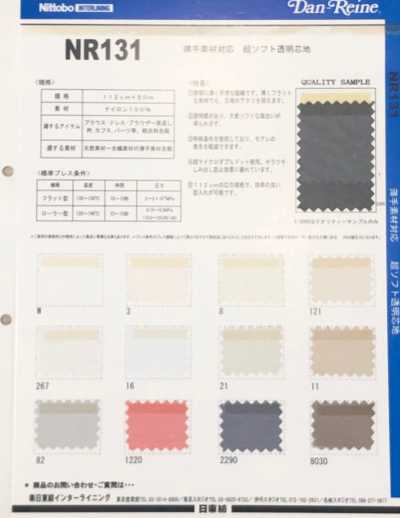
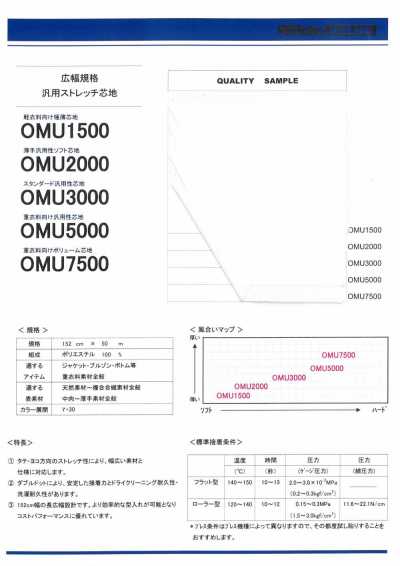
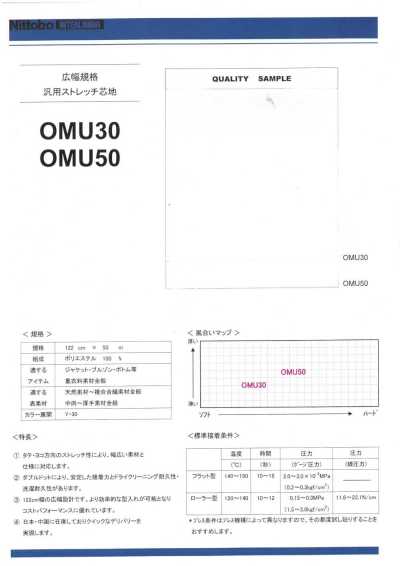
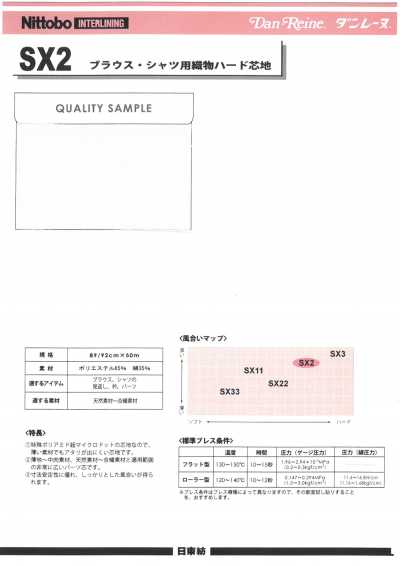
Fusible interlining includes nonwoven interlining, woven interlining, and knit interlining. Nonwoven interlining may have relatively little directional stability and is easy to handle, woven interlining makes it easier to take advantage of the stability of woven materials, and knit interlining is used with consideration for compatibility with stretch materials.
The surface of interlining may include dot interlining, in which adhesive resin is applied in granular form. Since adhesion and hand vary depending on the type of resin, how it is applied, the thickness of the interlining, and its density, selection is based not only on the interlining type but also on its combination with the outer fabric.
Selection and Compatibility
If you choose interlining that is significantly harder or thicker than the outer fabric, the outline of the interlining may show through the surface, or the garment's original drape may be lost. Check the thickness, stretch, brushed or textured surface, and weave density of the outer fabric, and choose one that matches the required firmness and softness.
For thin, delicate outer fabrics, a lightweight and soft interlining that is less likely to affect the surface is suitable. For stretch materials, consider stretch interlining that is less likely to interfere with stretch direction and recovery. It is important to check the appearance, stiffness, and curved areas after sewing using samples.
- Check the balance of thickness, firmness, and color between the outer fabric and interlining
- Check the interlining's compatibility with the stretch direction of the outer fabric
- Check compatibility with surface finishes such as brushed surfaces, texture, and coating
- Assume the product care method, such as washing or dry cleaning
Adhesion and Sewing Precautions
Adhesion requires temperature, pressure, time, and cooling suited to each interlining. If the conditions are insufficient, peeling or interlining lifting may occur easily, and excessive heat or pressure can lead to surface shine, shrinkage, resin strike-through, or changes in hand.
Before mass production, perform test bonding with the actual outer fabric and interlining, and check not only after bonding but also after sewing and after washing or dry cleaning. For curved collars and lapels, the grain line and stretch direction of the interlining affect the finished result, so the cutting direction must also be controlled as a specification.
Frequently Asked Questions
What is the difference between fusible construction and haircloth interlining construction?
Fusible construction is a method in which interlining with adhesive resin is fixed by heat and pressure bonding. Haircloth interlining construction refers to a method in which haircloth interlining and similar materials are attached by sewing or handwork. Fusible construction makes the process easier to stabilize, while haircloth interlining construction has the characteristic of making it easier to adjust structure depending on how the interlining is set.
What causes lifting or bubbles after applying fusible interlining?
Possible causes include insufficient or excessive adhesion conditions, poor compatibility between the outer fabric and the resin, moisture in the outer fabric or interlining, and insufficient cooling. Since results also vary depending on the lot and fabric finishing, it is necessary to record temperature, pressure, and time, and conduct adhesion and washing tests with the actual fabric.
Can fusible construction be used for stretch fabric?
Yes, but it is necessary to select an interlining and adhesion conditions that will not interfere with the stretch of the outer fabric. Using interlining with a different stretch direction or one that is too stiff may cause puckering or discomfort when worn. Be sure to check the appearance when stretched before sewing, including the area where the interlining will be applied.