Grid Ruler
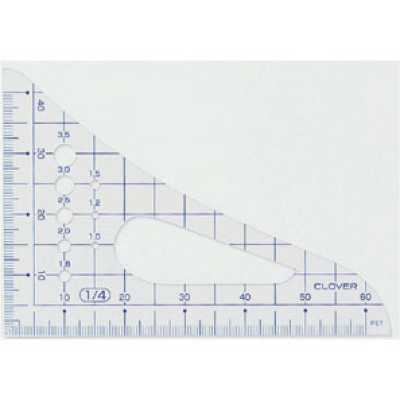
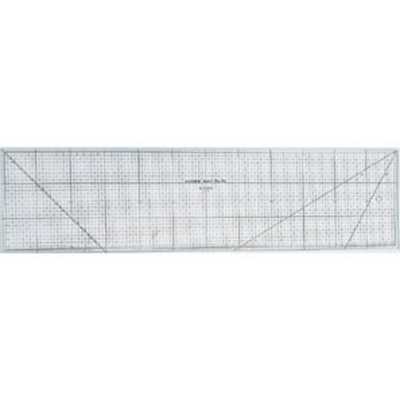
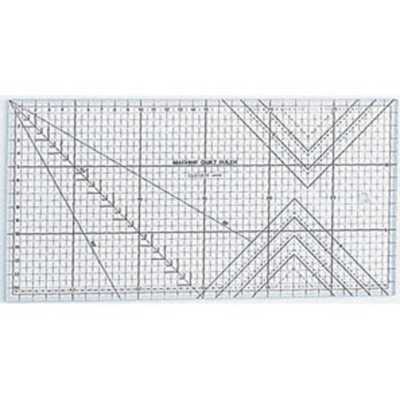
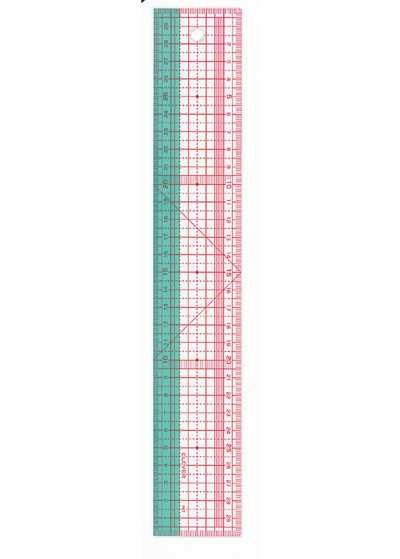
A grid ruler is a ruler with grid lines in addition to scale markings, used for measuring fabric and patterns, drawing parallel and perpendicular lines, and assisting with cutting lines and marking.

Contents5 sections
Definition and Overview
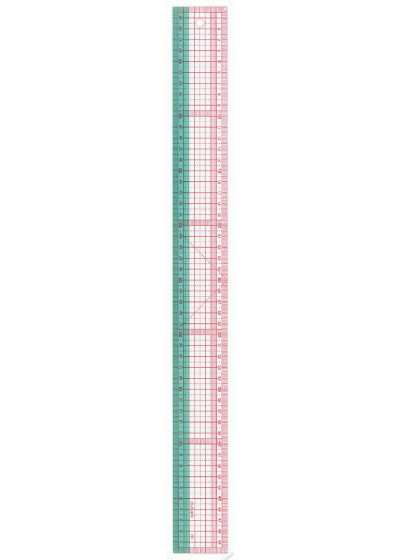
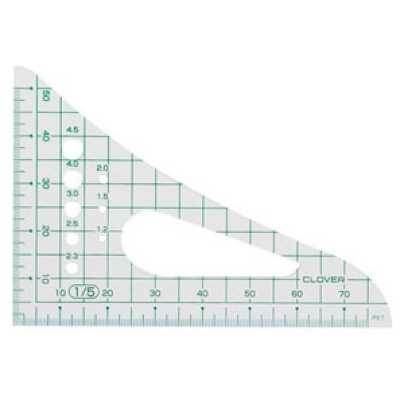
A grid ruler is a measuring and drafting tool with vertical and horizontal grid lines and angle guides printed on a transparent, plate-shaped ruler. It is used to measure dimensions while looking at the lines beneath fabric or pattern pieces, and to check parallel and perpendicular lines when drawing lines.
Unlike a standard straight ruler, it lets you position a reference line to match the grid, making it suitable for evening out seam allowance widths, forming right angles at corners, and marking the same spacing at multiple points.
How to Use
Align the grid’s vertical or horizontal lines with the fabric grain or the pattern reference line, and read the scale for the required dimensions. When drawing cutting lines or marking lines, hold the ruler firmly with one hand so it does not shift, and use tailor’s chalk, a tracing wheel, or a similar tool as appropriate for the application.
For small parts such as patchwork, accessories, and doll clothes, a shorter ruler that is easy to handle is convenient. On the other hand, for pattern adjustments or drawing long straight lines, choose a length that can cover the required line in one pass.
- Draw parallel lines while measuring seam allowance width
- Check right angles and parallel lines on patterns
- Mark a fixed distance from the fabric edge
- Arrange placement based on the pattern or grainline
Types and How to Choose
Grid rulers vary in length, width, grid fineness, whether they have angle markings, and transparency. Choosing one that is slightly longer than the maximum dimension you need to measure reduces the number of times you have to reposition it and helps minimize line deviation.
For checking lines on lightweight fabrics, patterned fabrics, or patterns, a transparent type that makes the area underneath easy to see is convenient. When used together with a rotary cutter, check that it resists damage from the blade, whether it has a non-slip feature, and whether its width allows you to hold it while keeping your fingers away from the blade.
- A short, easy-to-maneuver size for small items
- A longer, wider type for pattern work
- Fine grid lines that are easy to see for detailed marking
- With angle markings when angle checking is also needed
Care and Safety Notes
Wipe away chalk dust and dirt on the surface lightly with a soft cloth. Solvents and strong detergents may damage the printed scales and grid lines, so check the appropriate care method for the material before use. Also avoid storing it in hot places or under direct sunlight.
When using a rotary cutter, hold the ruler in a stable position and pay attention to the direction in which you pull the blade toward you and where you place your fingers. If the edge of the ruler chips, or if the grid or scale becomes hard to read, review its use because accuracy in measuring and cutting may be affected.
Frequently Asked Questions
What is the difference between a grid ruler and a regular ruler?
A regular ruler is mainly a tool for measuring length, but a grid ruler is characterized by making it easier to mark parallel lines, perpendicular lines, and evenly spaced marks based on the grid lines. When drafting patterns, adding seam allowance, or positioning on fabric, aligning the grid makes it easier to check for deviations in the work.
Can a grid ruler be used with a rotary cutter?
Some grid rulers can be used together with a rotary cutter, but not all rulers are suitable for cutting. Check their resistance to blade damage, whether they have a non-slip feature, and the thickness of the ruler. When cutting, secure the ruler firmly and keep your fingers away from the blade’s path.