Hook
A hook is a general term for a fastener that uses a paired set of parts made of metal or other materials to secure openings in clothing and fashion accessories.
Contents6 sections
Definition and Overview
Hook is a general term for a fastener that uses a paired set of parts, such as a projection, hook, or receiver on one side and a receiver on the other, to secure an opening. It is used at front openings, necklines, waists, and other areas where you want opening and closing functionality while keeping the front side as discreet as possible.
Among materials used to fasten openings, buttons are fastened by passing through a buttonhole, and zippers close a continuous opening with teeth and a slider. A hook has a structure that fixes a small fastening point, and depending on the application, it is available in sew-on and snap-on types.
Main Types and Differences
Hooks include those attached by hand sewing, those fixed to fabric with a dedicated setting tool, and those attached continuously to tape. Choose the structure according to appearance, required holding strength, frequency of opening and closing, and fabric thickness.
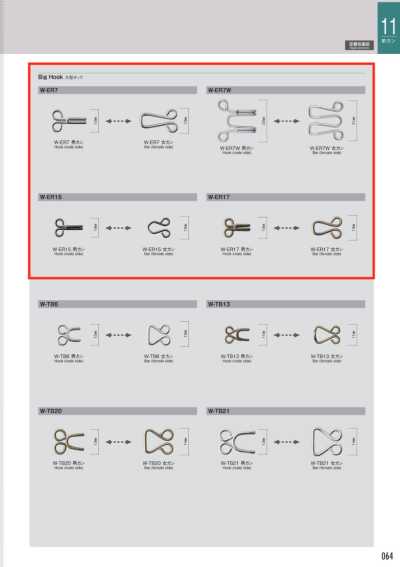
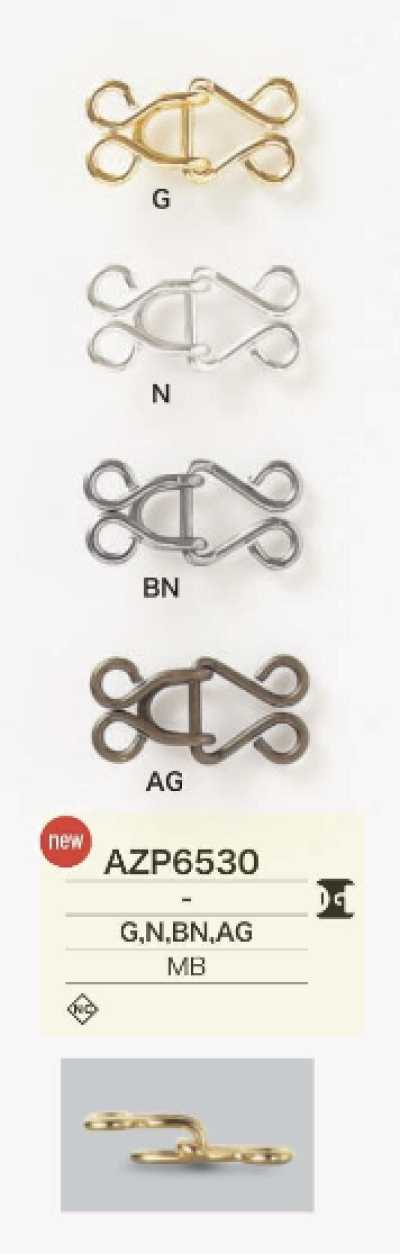
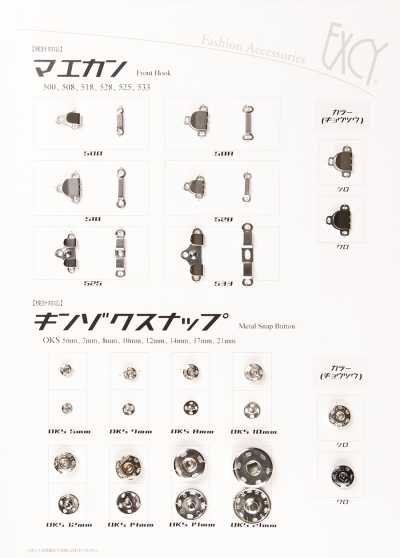
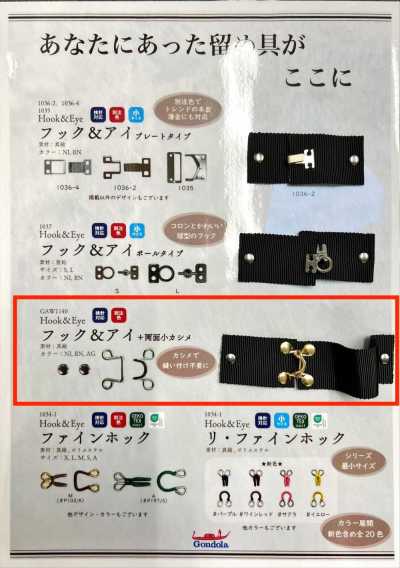
- A hook and eye closure is a hook-shaped fastener used for front openings and around the waist of pants and skirts.
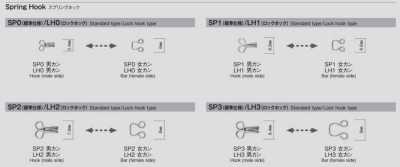
- A spring hook uses spring action for attachment and removal and is used for a relatively small, discreet finish.
- A collar hook has a shape suitable for fastening the neckline of coats and other garments, and is used to secure the overlapping front.
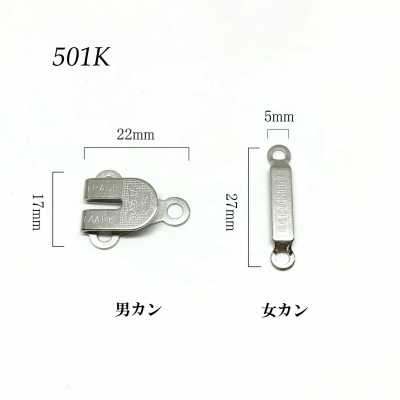
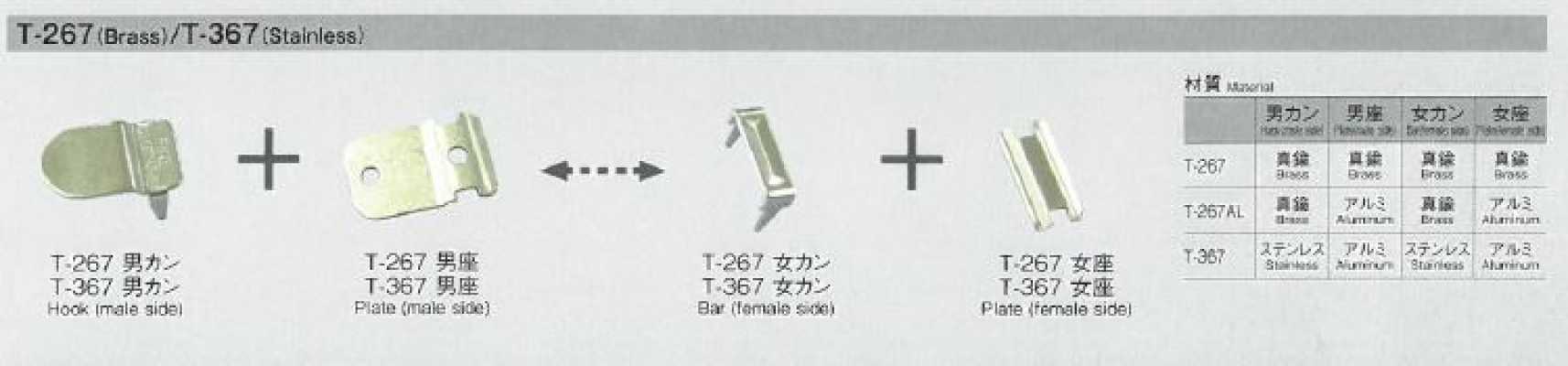
- Male and female hooks are hook-shaped fasteners that pair a male side and a female side, and are mainly used for opening and closing around the waist.
- Hook-and-eye tape is a type in which the hook and receiver are attached continuously to tape. Clasps and fur hooks are used differently according to design and application in costumes and fur products.
How to Choose and How to Find Them in Product Listings
When selecting one, check the fabric thickness at the fastening point, the step formed by overlapping layers, the opening direction, and the required holding strength. It is important to choose a small type that will not damage thin fabrics, and a type suited to the applicable fabric thickness and fixing method for thick fabrics or areas under stress.
The materials are often made of brass or other metals, and the surface finish changes the color tone and impression. For applications close to the skin, also check specifications such as nickel-free. If it will be visible on the front side of a garment, matching the color, gloss, and shape with other hardware creates a sense of unity.
In product listings, it is easier to find the right item by narrowing down by hook type, size, material, applicable fabric thickness, and application. First decide whether you need a sew-on or snap-on type, and if necessary also check compatible parts such as washers, gaskets, and setting tools.
Installation and Sewing Precautions
For sew-on types, place the left and right parts accurately at positions where the opening edge will retain sufficient strength. On thin fabrics where stitching may show through the front side, or on highly stretchable fabrics, reinforce with interfacing or reinforcing tape as needed to reduce distortion when pulled.
For snap-on types, use the specified part combination and setting tool for each component. If the leg length does not match the fabric thickness, it can cause poor setting, looseness, or deformation. Before full production, perform a test setting on the same fabric construction and check the fit and pull-out condition.
Metal hooks may discolor or corrode depending on the usage environment, such as washing, sweat, and friction. Check the suitability of plating and anti-rust specifications, and for products requiring needle detection, plan in advance whether needle detector compatible is possible and the post-sewing inspection process.
Differences from Similar Terms
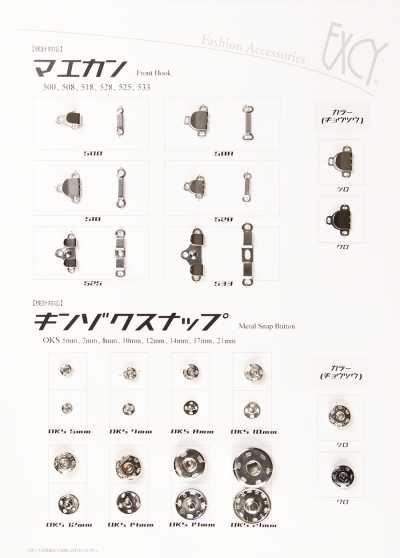
Press fasteners, spring hooks, and jumper hooks are snap-type fasteners used by setting them in place. The term hook may sometimes be used to include these, but in general they differ from hook-shaped fasteners such as hook and eye closures and skirt hooks in part configuration and fastening method.
Magnetic buttons are materials that fasten with magnetic force, and unlike hooks, they do not physically engage a hook or spring. Also, hook and loop fasteners secure by pressing surfaces together, so their opening and closing feel and suitable applications differ from hooks, which are fixed at a point.
Frequently Asked Questions
How do you choose a hook based on fabric thickness?
Judge it not only by the thickness of the fabric itself, but by the finished thickness where facings, seam allowances, interfacing, and other layers overlap. For snap-on types, if the component leg length does not match the applicable fabric thickness, it can lead to poor fixation, so perform a test setting on a sample with the same construction and check looseness and fit.
How do you choose between sew-on hooks and snap-on hooks?
Sew-on types are easier to fine-tune in position and are suitable for openings where you do not want hardware visible on the front side. Snap-on types require dedicated tools, but they may make workability in mass production and control of the fixing method easier. Choose based on the overall combination of design, fabric thickness, production equipment, and required strength.
- Browse Hook products
- Products with material "Metal"
- Products with material "Brass"
- Products with material "Stainless Steel"
- Products for style "For Lingerie"
- Products for style "For Outerwear/blousons/coats"
- Products for style "For Skirts And Dresses"
- Products for style "For Formal Wear"
- Products for style "For Costumes/dresses"
- Browse Hook products