Jacquard Lining
What is Jacquard lining? It is a lining with a pattern expressed through its weave structure using a Jacquard loom or similar, and is used as a textile to add design appeal and smoothness to the inside of clothing.
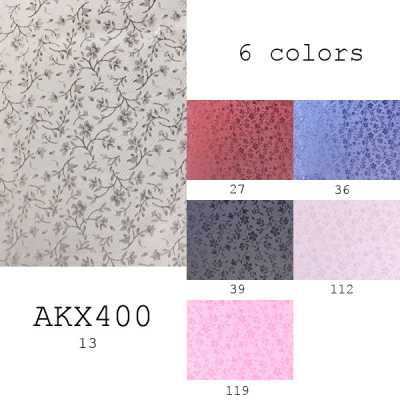
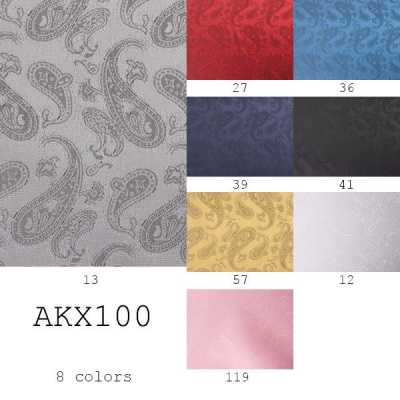
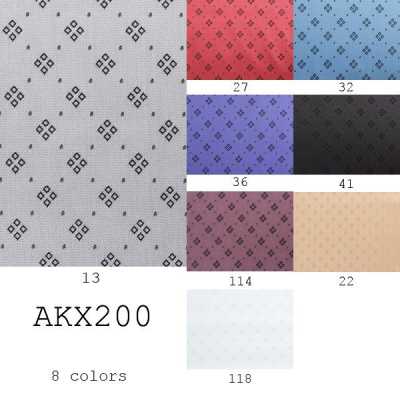
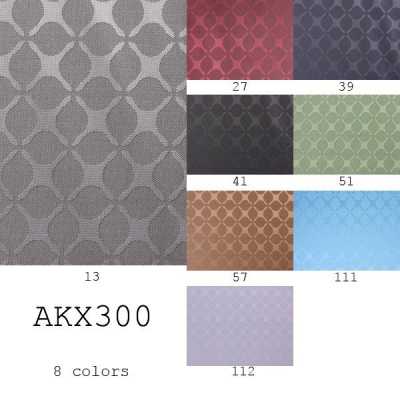
Contents6 sections
Definition and Overview
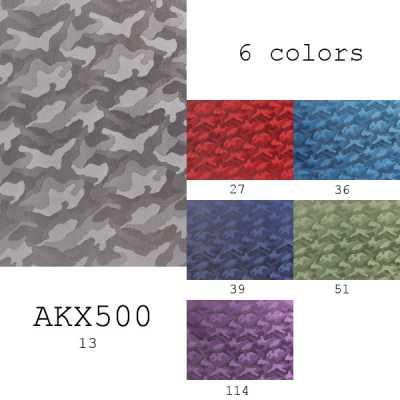
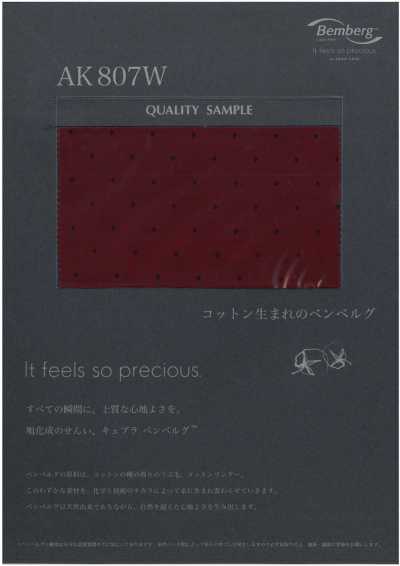
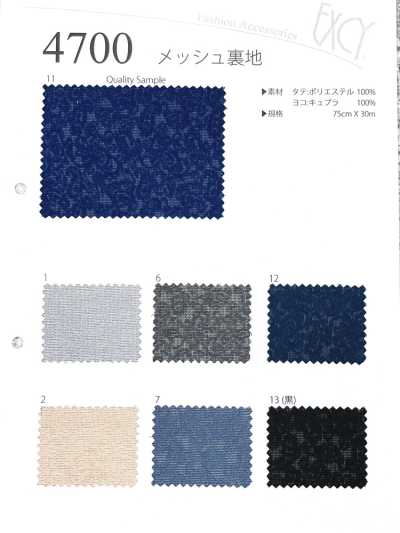
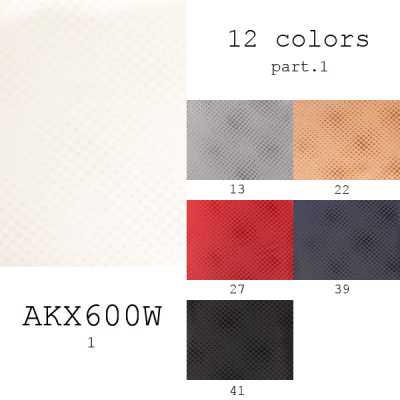
Jacquard lining is a lining in which woven patterns are expressed by controlling the rise and fall of yarns. There are patterns such as paisley, flowers, geometric designs, stripes, and animal motifs woven into the fabric, and unlike prints, the weave structure creates a three-dimensional effect and differences in luster in the pattern.
“Jacquard” does not refer to a material name, but to a technique or weave structure that produces complex patterns. For this reason, Jacquard lining includes options made with different fibers such as cupro, polyester, and rayon.
Areas of Use and Role
It is mainly used for the body lining and sleeve lining of jackets, suits, coats, dresses, and similar garments. By adding a pattern to an interior that is not easily seen from the outside, it serves to enhance the design appeal when putting the garment on or taking it off, or when wearing it open.
As a lining, it is also important that it reduces friction between the outer fabric and the body or inner layers, making the garment easier to put on and take off. In sleeve linings, it is especially related to how easily the arm passes through, so in addition to the pattern, smoothness and appropriate durability should be checked.
- Body lining: Covers the inside of the garment body and improves the interior appearance and comfort.
- Sleeve lining: Used inside the sleeve and helps the arm slide through smoothly.
- Partial lining: May be used as a design feature in visible areas such as a half-lined back or facing sections.
Materials and Types
Jacquard lining expresses woven patterns through differences in yarn color, luster, and weave structure. It ranges from designs where the pattern is kept subtle within the same color family to those with strong color contrast or pattern contrast, and the impression changes depending on the combination with the outer fabric.
Cupro types are sometimes used for linings that require a smooth hand feel. Polyester types may be selected with handling and strength in mind, and hand feel, slipperiness, and static buildup vary depending on blending and finishing.
While printed lining adds dye or pigment to the surface of the textile, Jacquard lining forms the pattern through weaving. However, even with Jacquard weave, appearance and performance vary greatly depending on the material, density, and finish.
How to Choose and Points of Caution
Compatibility with the outer fabric should be checked not only by color, but also by thickness, drape, luster, and how prominent the pattern is. A patterned lining can add an accent to a solid or calm outer fabric, but if the outer fabric itself has a strong pattern or texture, adjust it so the lining pattern does not compete.
With light-colored, thin, or sheer outer fabrics, a dark or large-patterned lining may show through and affect the appearance on the outside. Stack the outer fabric and lining together to check how much it shows through, and if necessary choose one with weaker color or pattern contrast.
If the outer fabric has stretch, using a non-stretch woven lining throughout may lead to tightness or insufficient ease when worn. Check the stretch direction of the outer fabric, the amount of ease, and the stretch of the lining using actual samples, and consider partial use or a stretch lining as well.
Sewing Considerations
Jacquard lining may require attention to pattern direction and distinguishing the face and back. Before cutting, check the grainline, top and bottom of the pattern, and left-right appearance. Where the pattern must be matched at the front body or facing, allow extra material and match the pattern accordingly.
With smooth, thin fabrics, shifting can occur during cutting or sewing, leading to seam waviness or puckering. Choose needles, thread, and feed settings suited to the material, and confirm the finish with a test sew while stabilizing the seam allowance.
In woven patterns, areas with long floats may snag easily. In high-friction areas such as pocket openings, side seams, and underarms, check the structure and strength, and take care not to pull out yarns unnecessarily when finishing seam allowances.
Frequently Asked Questions
What is the difference between Jacquard lining and printed lining?
Jacquard lining is a lining with patterns woven in through the structure of the warp and weft yarns. Printed lining expresses the pattern by dyeing or printing it onto the surface of the textile. Jacquard is characterized by the shading and texture created by the weave structure, but slipperiness and durability must be checked for each material and finish.
Can Jacquard lining be used with stretch jackets?
It can be used, but if only the outer fabric stretches significantly, the woven Jacquard lining may restrict movement. Check the stretch direction of the outer fabric and the required amount of movement through fitting, and consider specifications such as allowing more ease, using it only in part, or combining it with a stretch lining.
Can Jacquard lining be used with sheer outer fabrics?
Yes, but the color or large woven pattern of the lining may show through the outer fabric. Stack the outer fabric and candidate lining together and check the transparency in bright daylight as well. If you want to reduce show-through, one option is to choose a lining with a color close to the outer fabric or with weak pattern contrast.