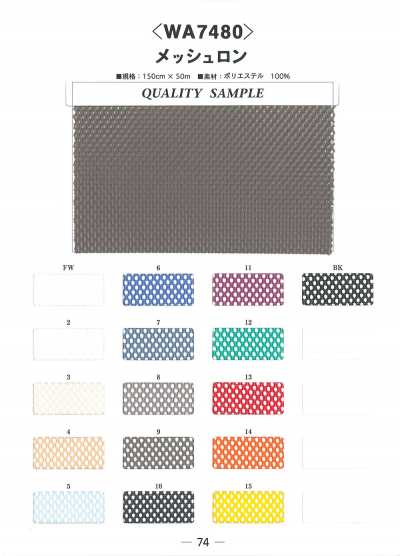
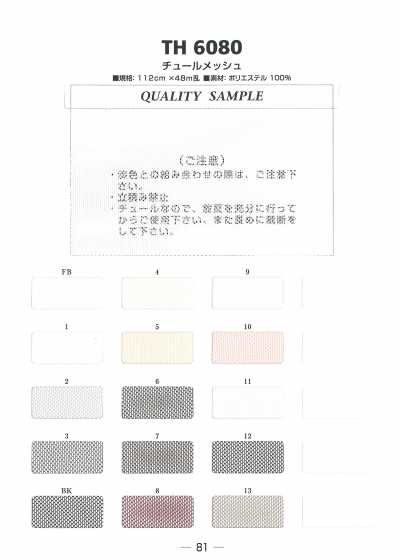
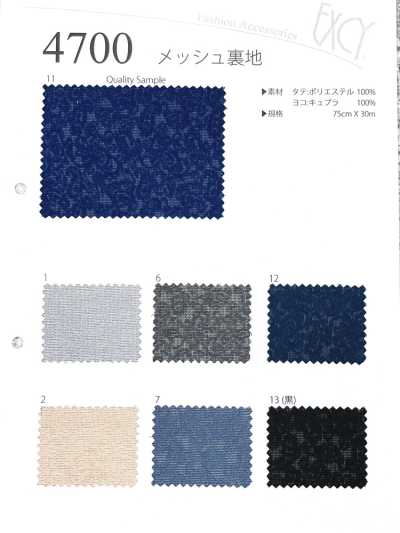
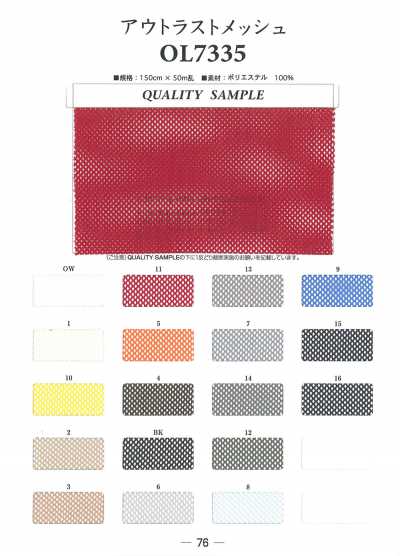
Mesh Lining
Mesh lining is a lining used on the inside of clothing that takes advantage of the breathability and light weight of a mesh structure to reduce stuffiness during wear and reinforce the outer fabric.

Contents6 sections
Definition and Overview
Mesh lining refers to a specification in which a mesh-like textile with holes or gaps is used as lining, or to that textile itself. It is characterized by being more breathable than ordinary woven linings and easier to make lightweight. In addition, mesh is a term that describes structure and appearance, and does not indicate a specific fiber type.
Lining covers the seam allowances and interlinings of the outer fabric and helps improve ease of putting on and taking off as well as appearance. With mesh lining, the focus is on ensuring breathability inside the garment while also serving some of these functions. It may be used as a full lining, or partially in areas such as the back, sides, and around pockets.
Uses and Functions
It is used in blousons, sportswear, uniforms, and outdoor apparel. Placing it in areas such as the back, yoke, and underarms makes it easier for heat and moisture trapped inside the garment to escape. It is also used to create space between the outer fabric and the skin, helping reduce the outer fabric sticking to the body due to sweat.
It may also be used on the inside of pocket bags or ventilation sections. However, because mesh lining is open in structure, seam allowances, interlinings, and the inside of pocket openings are easier to see. In areas where sheerness should be avoided, it is necessary to use another lining together with it or finish it with appearance in mind.
Materials and Types
Many are made of polyester, taking advantage of light weight, quick drying, and ease of handling. Nylon versions also exist, and thickness, strength, feel against the skin, and stretch differ depending on yarn thickness, knitting method, mesh size, and processing. There are also types with added functions such as moisture absorption and antibacterial performance.
Tricot mesh is a type of mesh based on a warp-knitted tricot structure. Mesh lining is a broad term that is not limited to tricot and also includes raschel knitting. Therefore, when placing an order, do not specify only mesh; confirm the structure, blend ratio, fabric weight, and stretch direction.
- Fine mesh is less likely to snag or be sheer, but the amount of breathability varies depending on the specification.
- Coarse mesh provides breathability more easily, but check friction against the skin and outer fabric, as well as interior sheerness.
- Stretchy types may be suitable for knit outer fabrics or high-movement areas.
Selection and Precautions
Compatibility with the outer fabric should be judged not only by breathability but also by slipperiness, stretch, sheerness, and friction. Mesh may be less slippery than ordinary smooth lining, and may be unsuitable for areas that require easy movement, such as sleeve linings or around the knees of pants. It is important to confirm ease of putting on and taking off through prototyping.
If the outer fabric is a stretch material, a lining that does not stretch can interfere with the outer fabric's stretch during wear or place stress on the seams. Match the stretch direction and stretch amount of the outer fabric and lining, and if necessary choose partial lining or a stretchy mesh. For light-colored or thin outer fabrics, also check the color of the lining and how the mesh shows through.
Sewing Precautions
Thin, easily stretchy mesh can shift, ripple, or pucker during cutting or sewing. Align the grain and cut, and set the needle, thread, feed amount, and stitch density to suit the fabric. Because needle holes may stand out, conduct sewing tests in less noticeable areas.
If the presser foot or feed dogs do not grip the mesh structure well, it is necessary to consider using sewing aids or how to finish the seam allowances. Some knitted fabrics are less prone to fraying at the cut edge, but the edge may curl, the openings may widen, or snagging may occur. Stabilize the seam allowances and finish the edges with overlock or similar methods according to the specification.
Frequently Asked Questions
Is mesh lining used only for summer items?
No. It is not limited to summer items. In sportswear, blousons, workwear, and similar garments, it is used year-round to reduce stuffiness inside the garment and maintain light weight. However, in garments where thermal insulation is important, the use area and amount of mesh affect warmth, so the design should include partial use as needed.
Is mesh lining less slippery than ordinary lining?
In many cases, compared with smooth taffeta or satin-like lining, the uneven texture of the mesh makes it feel less slippery. While it helps keep the fabric away from the skin and improves breathability, caution is needed in areas where smooth arm insertion or ease of putting on and taking off is required. Check the actual slipperiness in combination with the outer fabric and inner layers.
What should be noted when attaching mesh lining to a stretch outer fabric?
If the stretch direction or amount differs between the outer fabric and lining, it may feel tight during movement and can lead to seam damage or pulling in the outer fabric. Consider the pattern and sewing specification as a whole, including choosing a lining with stretch or using partial lining in areas with a large range of motion.
- Search products for "Mesh lining"
- Products with material "Polyester"
- Products with material "Nylon"
- Products for style "For Outerwear/blousons/coats"
- Products for style "For Jackets/Suits"
- Products for style "For Sports"
- Products for style "Outdoor"
- Products for style "For Uniforms/Workwear"
- Browse Lining products