Knit Fabric
Knit fabric is a general term for fabric knitted by forming continuous loops with yarn, a material that takes advantage of stretch, softness, and the differences in appearance created by the structure.
Contents6 sections
Definition and Overview
Knit fabric is a general term for knitted fabric made by continuously interlocking yarn loops. Its loop structure makes it easy to stretch and allows it to follow body movement well. In addition to being cut and sewn, it is also used for shaping garments by knitting to shape.
While woven fabric is made by interlacing warp and weft yarns, knit fabric is made of loops. Even with the same material, thickness, stretchability, breathability, and hand feel can vary greatly depending on the knitting method, gauge, yarn thickness, and finishing process.
Main Types and Differences
Knit fabric includes circular knitting, flat knitting, and warp knitting methods, and there are many types depending on the structure and surface appearance. In terms of application, it ranges from lightweight fabrics for underwear and cut-and-sew items to heavier fabrics focused on warmth, as well as materials and sports applications.
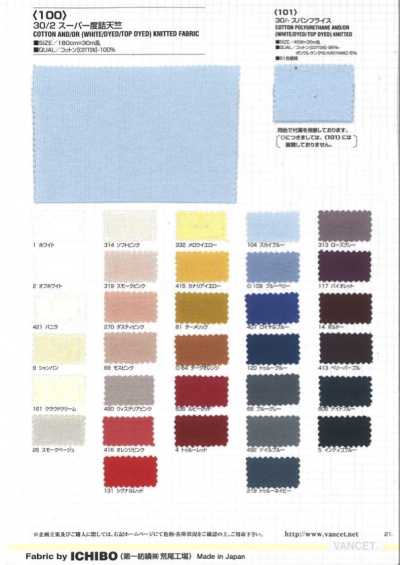
- Jersey is a basic knit with a different appearance on the front and back, and is used for T-shirts and similar items.
- Circular rib has a ribbed surface and stretches well sideways, making it suitable for collars, cuffs, and innerwear.
- Circular interlock knitting has a relatively similar appearance on both sides and is used for products that require smoothness and stability.
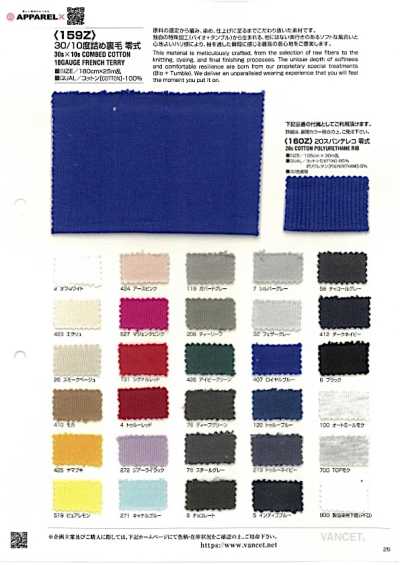
- French terry and brushed French terry are knits with yarn or surface fuzz on the back side, making it easier to achieve warmth and thickness, and they are used for sweatshirts and similar items.
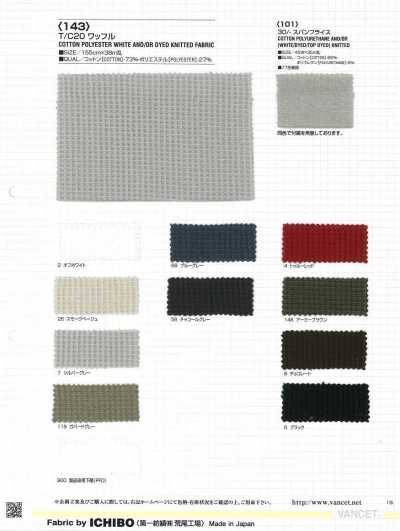
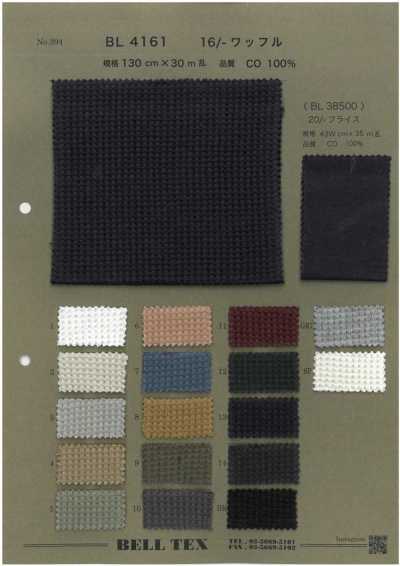
- Pique knit, waffle knit, ponte, spacer knit, tricot, and raschel knitting differ in texture, firmness, thickness, and openness of the knit.
How to Choose and How to Search in Product Listings
Depending on the application, check the structure, blend ratio, fabric weight, fabric width, direction of stretch, and recovery rate. For underwear and cut-and-sew items, skin feel and absorbency are key points; for sports applications, quick-drying performance and durability; for outerwear, thickness, warmth, and shape retention are important selection criteria.
Materials such as cotton, polyester, nylon, rayon, and wool, as well as stretch from polyurethane blends, also affect the final result. When attaching rib knit to the collar, cuffs, or hem, match the stretch amount, recovery, and thickness of the main fabric, and confirm the amount of ease applied during sewing in advance.
In product listings, it is easier to search by starting with the knit type and narrowing conditions by fabric width, fabric weight, material, thickness, stretchability, and application. Estimate the required yardage based on fabric width, pattern direction, and stretch during cutting.
Handling and Sewing Precautions
Knit fabric stretches differently depending on the direction, and if it stretches during cutting or sewing, it can lead to dimensional changes, waviness, and seam puckering. It is important to let the fabric relax by laying it flat, then cut it with the grain and stretch direction aligned.
In sewing, methods such as overlock, coverstitch, and chain stitching that do not hinder the stretch of the fabric are used. Consider a ballpoint needle that is less likely to damage the knit, and adjust the needle hole, thread tension, differential feed, and presser foot pressure through test sewing.
Shrinkage, twisting, pilling, and snagging caused by washing or heat vary depending on the structure and material. Before full production, perform washing tests and check dimensional change, and if necessary, choose pre-washed or shrink-resistant fabric.
Differences from Similar Terms
Cut-and-sew generally refers to clothing made by cutting and sewing knit fabric, or to that field, and its scope differs from knit fabric itself. Flat knitting, meanwhile, generally refers to a method of knitting fabric or products such as sweaters.
Warp knitting is a method of knitting using multiple yarns in the lengthwise direction, and includes tricot and raschel knitting. Circular knitting is a method of knitting in a tubular form, while flat knitting is a method of knitting across the width; both are classifications that make up knit fabric.
Frequently Asked Questions
How is knit fabric different from woven fabric?
Knit fabric is a knitted material made by continuously forming yarn loops, and it generally has a structure that makes stretch and softness easier to achieve. Woven fabric has a structure made by interlacing warp and weft yarns, and tends to hold its shape relatively well. However, the actual properties vary depending on the material, structure, density, and finishing.
How can waviness be prevented when sewing knit fabric?
Feed the fabric without pulling it, and adjust the differential feed, presser foot pressure, and thread tension through test sewing. It is also important to choose a needle that is less likely to damage the knit and a sewing method suited to stretch. For areas that stretch easily, such as necklines and shoulders, use stretch tape as needed.
- Browse Knit products
- Browse Knit products
- Products with material "Cotton"
- Products with material "Polyester"
- Products with material "Nylon"
- Products with material "Wool"
- Products with material "Silk"
- Products with material "Linen"
- Products with material "Rayon"
- Products with material "Lyocell"
- Products with material "Cupro"
- Products with material "Acrylic"
- Products for style "For Innerwear"
- Products for style "For Shirts/blouses"
- Products for style "For Outerwear/blousons/coats"
- Products for style "For Skirts And Dresses"
- Products for style "For Nightwear"
- Products for style "For Sports"
- Products for style "Outdoor"
- Products for style "For Uniforms/Workwear"
- Products for style "For Swimwear"
- Products for style "For Kids"
- Browse Fabric products