Ribbon Embroidery
Ribbon embroidery refers to an embroidery technique, or the decoration created by it, in which a narrow ribbon is threaded through a needle to create raised patterns such as flowers and leaves on fabric.
Contents6 sections
Definition and Overview
Ribbon embroidery is an embroidery technique that uses narrow ribbon instead of embroidery thread. By making use of the ribbon’s surface and folds, petals, leaves, ribbon knots, and other elements can be finished with a plump, dimensional look. It is used for decoration on apparel, fashion accessories, stage costumes, and more.
“Ribbon embroidery” often refers to the finished embroidered expression or the technique itself, not the name of the ribbon material. When sourcing materials, check the material and weave together with the intended use, such as embroidery ribbon, silk ribbon, or satin ribbon.
Materials and Structure
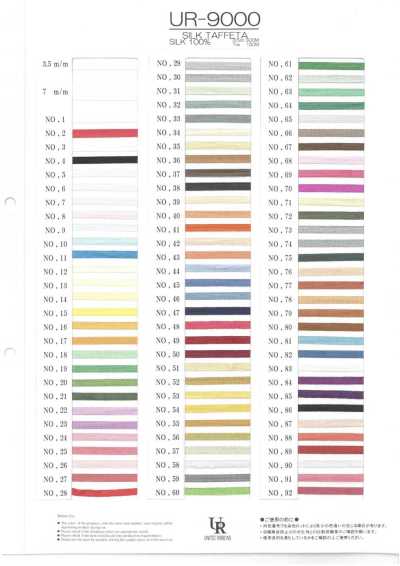
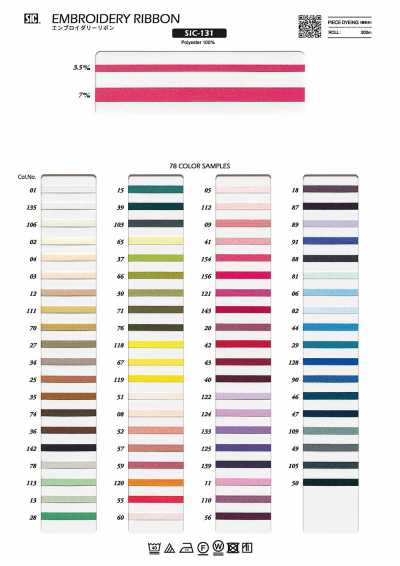
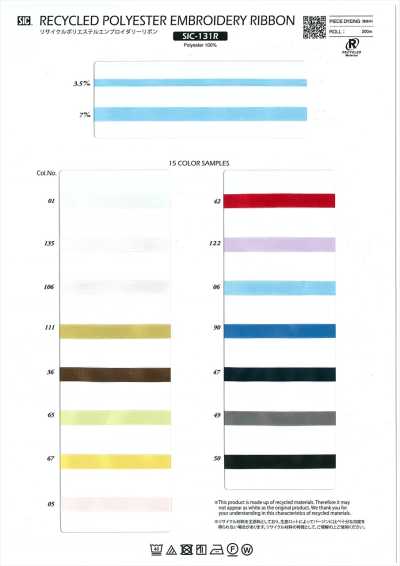
For embroidery, a flexible, thin ribbon that passes easily through the needle eye is suitable. Plain-woven silk and taffeta have natural luster and lightness, making them suitable materials for expressing delicate dimension like petals. Polyester versions are also used when color variety, strength, and ease of handling are important.
Ribbon weaves include plain weave, satin weave, and Jacquard with woven patterns. Satin-weave types tend to have more luster, while plain-weave types have a relatively subdued appearance. Thickness, firmness, and the finish on the edges affect how the ribbon passes through the needle and how it folds, so check with a test stitch.
How to Read Width and Thickness
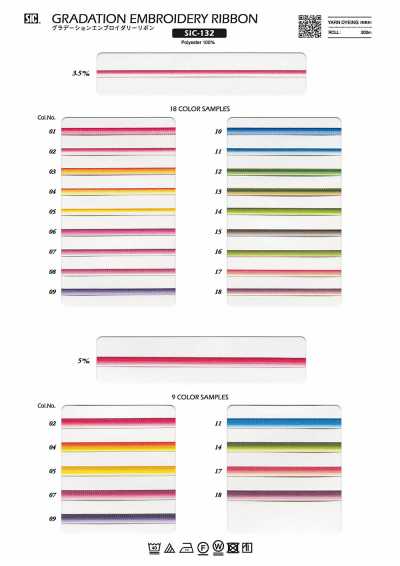
Ribbons for ribbon embroidery are generally indicated by width in millimeters. Narrow widths are suited to lines, small leaves, and fine outlines, while wider ribbons are suited to petals and larger motifs. Even at the same width, the occupied width and how the ribbon stands up when stitched vary depending on material, weave density, and thickness.
The required width should be chosen not only based on the size of the design, but also in relation to the thickness of the fabric, the size of the needle eye, and the stitch spacing. Forcing a wide ribbon through a small needle eye may damage the surface or cause puckering.
- Choose the width to match the finished size of the petals and leaves.
- Check the ribbon thickness and needle eye size in advance.
- Even with the same design, changing the width alters the density and dimensional effect of the pattern.
Main Uses and Differences from Similar Terms
It is used as accent decoration on blouses, dresses, bags, hats, accessories, and more. By layering it over flat embroidery or combining it with beads and other trims, the outline and texture of the decoration can be varied. In areas subject to friction, care is needed to avoid snagging.
Embroidery refers broadly to any process of creating patterns with thread, while ribbon embroidery is a technique within embroidery that uses ribbon as the main material. Appliqué, on the other hand, is a method of sewing separate fabric pieces or motifs onto fabric, and decoration that simply secures ribbon to the fabric surface is not necessarily called ribbon embroidery.
Selection and Handling Notes
When matching with the outer fabric, check the material’s luster, thickness, and washing conditions. Using a stiff ribbon on a thin fabric can easily cause puckering, and on stretchy knit fabrics the embroidered area may interfere with stretch. If necessary, use a stabilizing backing to reduce seam puckering.
Because ribbon ends may fray from the cut edge, finish them according to the specification, such as by passing them to the back and securing them or sewing them in. Shrinkage or color bleeding may occur with water washing, so for products that will be laundered, testing that includes both the outer fabric and the ribbon, as well as checking the care label, is necessary.
Frequently Asked Questions
What kind of ribbon is suitable for ribbon embroidery?
A thin, soft, narrow ribbon that passes easily through the needle eye is suitable. If delicate dimensionality is desired, silk-based ribbons may be chosen. Depending on the fabric used, the size of the design, and whether washing is required, check the material, width, thickness, and tendency to fray with a test stitch.
Can ribbon embroidery be machine washed at home?
Whether it is possible depends on the materials of the ribbon and outer fabric, the dyeing, and the embroidery specification. Water washing may cause shrinkage, color bleeding, loss of shape, or fraying at the edges. When producing a finished item, perform wash tests with the actual combination and decide the care method based on the results.