Self-tie
Self-tie refers to a specification for bow ties, ascot ties, and similar neckwear in which the wearer ties and shapes it at the neck, rather than a style with a pre-fixed knot.
Contents6 sections
Definition and Overview
Self-tie refers to a specification for neckwear such as bow ties and ascot ties, in which the wearer creates the knot by hand. Unlike ready-tied types with a fixed finished shape, it is characterized by the way the appearance changes depending on how it is tied and adjusted.
Because self-tie can refer either to a bow tie or an ascot tie, orders and specifications should list the item name, shape, and how it fits around the neck for confirmation.
Shape and Fastening
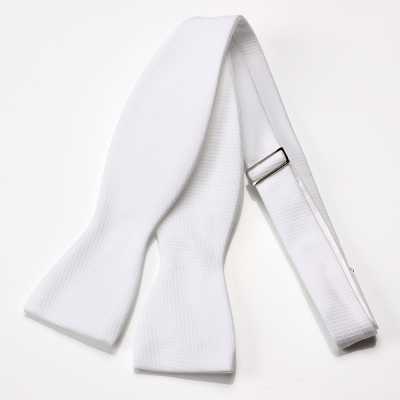
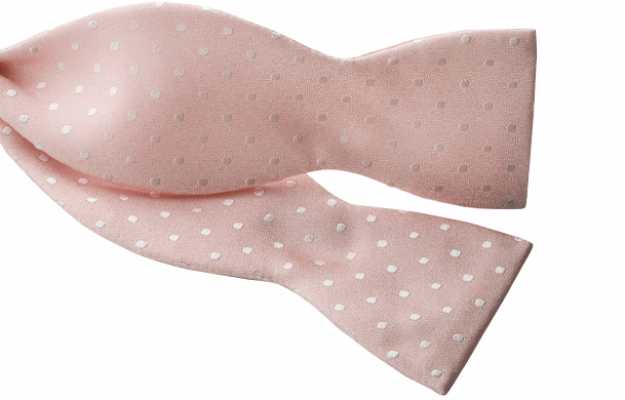
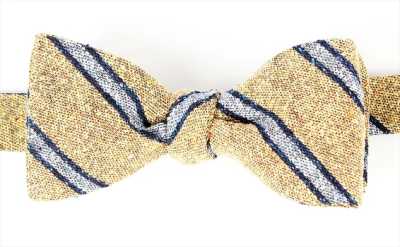
A self-tie bow tie consists of the neckband and the parts that become the wings, and is tied into a bow shape. Since it is tied from a flat state with the left and right wings overlapping, individual differences appear in the size of the knot and the left-right balance of the wings.
A self-tie ascot tie is generally worn by crossing the wide ends at the neck and tying them, then adjusting the knot and the hanging position. Depending on the product, some have hardware or fasteners to adjust the neck size, while others are secured by tying only.
- For bow ties, check the wing shape, band length, and whether neck-size adjustment is available.
- For ascot ties, check the end shape, overall length, and how it hangs after tying.
- Because a self-tie does not have a fixed knot, trying it on before wearing and confirming the tying method are important.
Materials and Finishes
Self-tie neckwear is made from silk, which makes it easy to take advantage of sheen and drape, as well as polyester, wool, and cotton. Depending on the material, weave structure, and whether interlining is used, the ease of tying, the three-dimensional look of the knot, and the surface appearance all change.
When aiming for formal wear, it is important to match the overall textile feel and sheen of the outfit. For example, highly lustrous materials tend to create a more festive impression, while materials with woven patterns or a brushed feel tend to pair well with daytime wear and seasonal outfits.
How to Match It with an Outfit
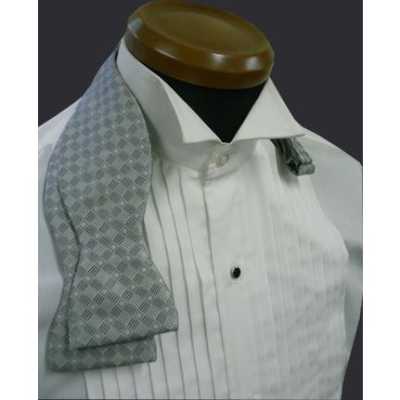
Self-tie bow ties are used for evening formal wear such as tuxedos, and are also worn for parties and ceremonies. In settings where the dress code is specified on the invitation, such as black tie or white tie, the color, material, and shape should match that dress code.
Self-tie ascot ties are used for daytime celebrations, social occasions, and as an accent at the neck with jacket styles. However, their acceptability and how they are worn differ in strict formal wear, so rather than judging only by time of day, the dress code indicated by the venue or host should take priority.
Selection and Handling Notes
When selecting, distinguish the item by its intended use, then check the length that makes it easy to tie, the range it fits around the neck, and the size after tying. If you are not accustomed to it, practice in advance and confirm through a fitting how it looks with the shirt collar shape and jacket lapels.
After wearing, do not store it with the knot tightened; untie it and reshape it. For delicate materials, take care to avoid discoloration and loss of shape due to sweat, moisture, and friction, and follow the care instructions for washing and cleaning for each product.
Frequently Asked Questions
What is the difference between a self-tie and a ready-tied bow tie?
With a self-tie, the wearer creates the knot from a flat state, so the appearance of the knot and wings can be adjusted. A ready-tied bow tie has a finished bow shape fixed in place and is generally attached to the neck with a fastener or similar device. Choose based not only on appearance, but also on wearing time and the skill required.
Can a self-tie bow tie be used for formal occasions?
It can be used in some settings, but only if it follows the dress code. In evening formal wear, a bow tie in the specified color and material may be required. If you are unsure about tying it, practice beforehand and shape the left and right wings and the knot neatly.
Can a self-tie ascot tie be worn with evening formal wear?
The handling of an ascot tie depends on the nature of the ceremony and the dress code. It may be used for daytime celebrations or jacket styles, but where there is a clear specification such as black tie, you need to choose the neckwear specified.