Tie Bar
A tie bar is a metal accessory that clips horizontally onto a tie and the shirt placket, keeping the tie in place and preventing it from moving while giving the chest area a neat appearance.


Contents6 sections
Definition and Overview
A tie bar is a piece of accessory that secures the wide end of a tied necktie to the shirt placket. It is generally a horizontally long, bar-shaped item, combining practicality that keeps the tie from shifting or moving in the wind with a decorative quality that adds a subtle sheen and design element to the chest area.
In Japan, tie clip, tie pin, and necktie pin are also commonly used terms. However, tie pin can also refer to a style that is fastened with a pin, so when placing an order or checking specifications, confirm from the shape photo or fastening specifications that it is a tie bar that clips on.
Parts and Construction
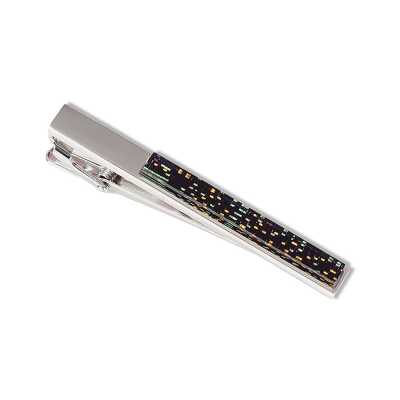
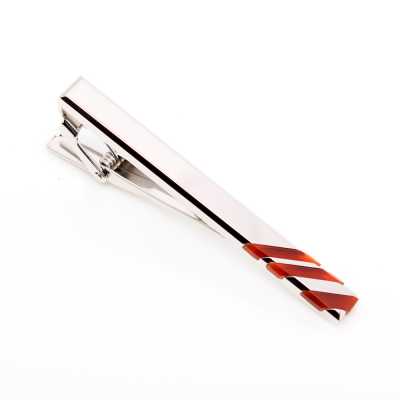
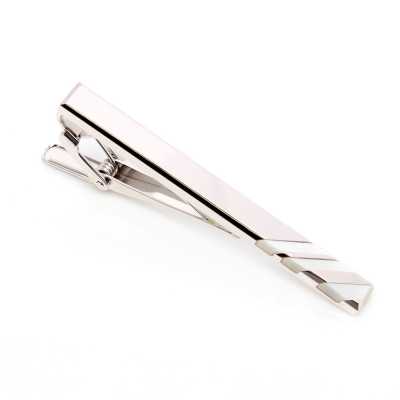
The basic structure consists of a decorative front section visible from the front and a fastening part that holds the necktie and shirt. Fasteners include a clip type that pinches with spring force and a type that secures with a folded-over metal fitting. Front-section shapes vary, including slim, wide, and curved styles.
When worn, the wide end and narrow end of the necktie are overlapped and fastened together with the shirt placket underneath. In general, it is worn horizontally around the center of the chest, below the knot of the tie and above the belt. Keeping the tie bar from extending too far beyond the width of the tie makes for a neater appearance.
- Clip types are easy to put on and take off and are used with everyday neckties.
- Fold-over types do not use a spring; with thin ties, check how securely they hold.
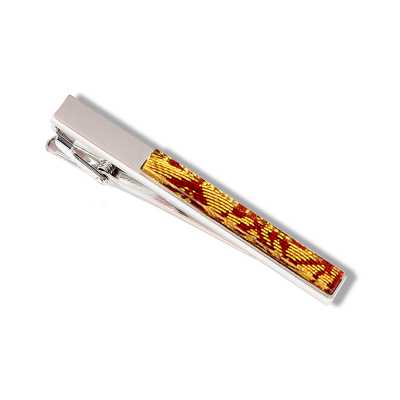
- The front section may feature solid finishes, engraving, patterns, or mixed-material decorations.
Materials and Finishes
Tie bars are often made of metal, with choices such as brass, stainless steel, and silver-colored alloys. Depending on the material and surface treatment, the weight, color tone, visibility of scratches, and aging characteristics differ. Some also combine decorative elements such as stone, glass, and resin.
The surface may be finished with mirror polish, matte finish, hammered texture, engraving, or plating. Mirror finishes tend to create a bright, dressy impression, while matte finishes give a more subdued look. Matching the tone with other metal accessories such as cufflinks and watches makes it easier to create a coordinated appearance.
How to Coordinate with Outfits
For business suits, jacket styles, and daytime ceremonies or celebrations, a restrained tie bar is easy to pair. When the tie pattern is strong, choose a solid or simple design; with a solid tie, a small decorative design helps prevent the chest area from standing out too much.
For formal evening wear, prioritize the type of neckwear worn and the dress code for the occasion. Black tie is based on a bow tie, so a tie bar is not used. White tie likewise does not involve the type of necktie to which a tie bar applies, so it is usually not paired with one.
- For daytime semi-formal wear and business settings, subdued metallic colors and simple shapes blend in well.
- With patterned ties or ties with a strong material texture, avoid overdoing the decoration.
- For celebratory or ceremonial occasions, give priority to the host’s guidance and local or organizational customs.
Selection and Handling Notes
When choosing one, check the width and thickness of the tie, the holding power of the fastener, and the length of the front section. A narrow tie bar pairs well with a slim tie, while ties with width or thickness are better suited to a fastener that can hold them securely. If the clip is too strong, it may leave pressure marks or damage the fabric.
After use, wipe off oil and moisture with a soft dry cloth. If perfume, hair styling products, or sweat remain on it, they may cause discoloration of the metal surface or plating. Store it so it does not contact other metal accessories, and if a clip becomes deformed, check its condition rather than forcing it back into shape.
Frequently Asked Questions
Where on the necktie is a tie bar attached?
It secures the wide end and narrow end of the necktie together with the shirt placket. The usual position is around the center of the chest, below the knot and above the belt. Adjust slightly so that it appears horizontal, depending on the wearer’s build and the length of the tie.
Are a tie bar and a tie pin the same?
In everyday conversation and in sales, they may be treated as synonyms. However, tie pin can also be used to include a style that fastens fabric with a pin. If you need a clipping type, it is safest to confirm in the specifications that it is a tie bar or a clip type.
Can a tie bar be used with black tie?
Black tie is evening wear based on a bow tie, and a tie bar is usually not used. A tie bar is an accessory mainly used to secure a regular necktie to a shirt. If the event instructions specify otherwise, follow that dress code.