


Snap Button Attachment
Snap button attachment is the sewing and attachment process of installing snap buttons, whose male and female sides interlock, onto garments and fashion items so they can be opened and closed.
Contents6 sections
Definition and Overview
Snap button attachment is the process of placing snap buttons on garment front openings, necklines, cuffs, and similar areas. In the sewn-on type, thread is passed through the holes in the parts to secure them to the fabric. It is important to align the opening and closing positions accurately and to achieve a neat appearance and finish when viewed from the right side.
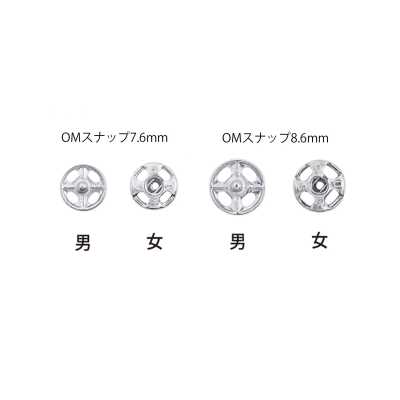
Snaps are generally used as a pair: a protruding male side and a receiving female side. One side is attached to the body or facing, and the other to the overlapping side, so it is important not to confuse the left-right or top-bottom pairing.
Materials and Structure
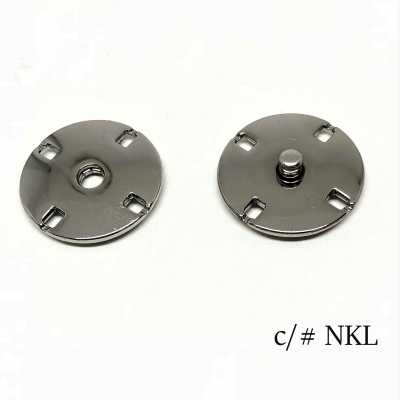
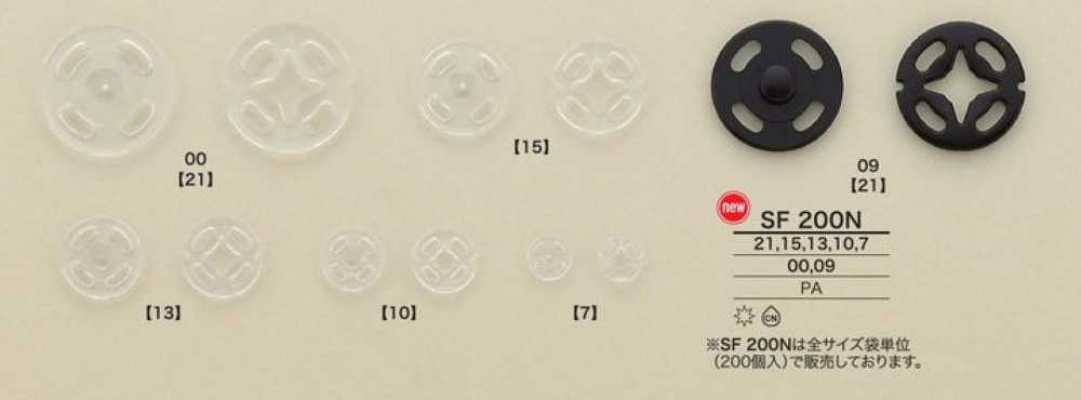
Sewn-on snaps consist of male and female parts, which hold together by interlocking. They are available in metal and resin types, and their shape, number of sewing holes, thickness, and fastening strength vary by type. The part combination must be matched to the intended application.
Snaps with sewing holes use a different fastening method from press fasteners or spring hooks, which are secured with a setting tool. The latter are fastened by piercing the fabric and crimping it, whereas sewn-on types are secured with thread, so they are sometimes used for lightweight fabrics or repairs.
- Use male and female parts of the same standard and matching pair.
- For metal types, check the gloss, durability, and plating specifications.
- Resin types are considered for applications that require lightness or consideration for metal detection.
How Size Is Indicated
Snap size is often indicated by the outer diameter in millimeters. However, whether the stated dimension refers to the male side or female side, or includes the outer edge, varies by product, so check both the specification sheet and the actual item. Not only the outer diameter but also the thickness and the position of the sewing holes affect the finished result.
A larger snap does not necessarily hold more firmly. Consider the fastening strength, part structure, attachment fabric, and sewing strength together. Checking the opening and closing feel and resistance to pulling at the sample stage can reduce defects in mass production.
How to Attach It and Main Applications
Mark the attachment position, then confirm the corresponding positions of the male and female sides with the fabric overlapped and closed before sewing. Pass the thread through each hole several times to secure it, being careful not to catch too much of the outer fabric. If you do not want stitches visible on the right side, consider a method that catches only the wrong-side fabric or the facing.
It is used for coat and jacket front openings, the inside of fly-front constructions, blouse chest openings, cuffs, necklines, and securing linings. When used as a fastening that is not visible from the outside, also check the fabric overlap when closed and how the parts appear when opened.
- Secure the beginning and end of stitching neatly on the wrong side of the fabric.
- Attach it where the fabric will not be pulled during opening and closing.
- For lightweight fabrics, the attachment area may be reinforced with fusible interlining or a pressing cloth.
- Check, with the item closed, that the left and right front edges and neckline heights are not misaligned.
Selection and Precautions
If a strong snap is used on thin fabric, the fabric may stretch or tear when opened and closed. On thick fabric, the snap may sink into the fabric and fail to engage properly. Select the part size and holding strength according to the fabric thickness, stretch, and whether reinforcement is used.
Metal snaps may rust or discolor due to sweat, moisture, washing, or storage conditions. Confirm in advance the plating and material specifications and compatibility with the washing method. For products intended for infants and toddlers, it is especially important to verify attachment strength, taking the risk of detachment into account.
For products that undergo needle detection, note that metal snaps themselves are subject to detection. Share the detector settings, detection characteristics of the accessories used, and inspection criteria before the process begins. This should be managed separately from sewing-related foreign-material countermeasures such as needle breakage or thread breakage.
Frequently Asked Questions
How do you align the male and female sides accurately in snap button attachment?
Rather than deciding the position by attaching only one side first, the basic approach is to check the corresponding positions with the actual product overlapped. Make temporary tacks or marks, and after confirming that the front edge, neckline, and facing are not twisted and that the left and right heights match when closed, attach them permanently.
What should you be careful about when attaching snaps to thin fabric?
If the opening and closing force is concentrated at one point, it can lead to stretching, holes, or tearing of the fabric. Keep the snap size and holding strength moderate, and reinforce the attachment area with a facing, fusible interlining, or a pressing cloth as needed. You also need to check whether stitches show on the right side.
What is the difference between sewn-on snaps and press fasteners?
Sewn-on snaps are secured to the fabric by passing thread through holes in the parts. Press fasteners are generally secured by crimping multiple metal parts with a setting tool or press. The required equipment, appearance after attachment, load on the fabric, and ease of repair are different.





