Strike-through
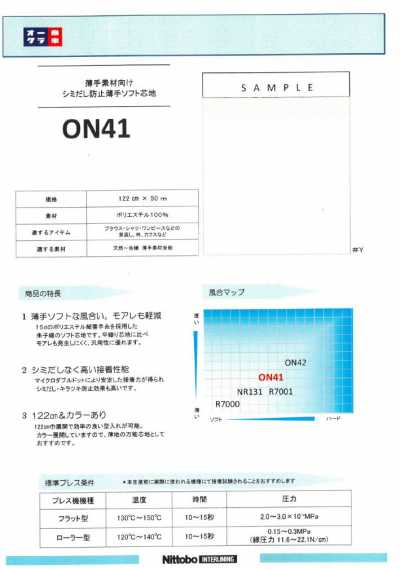
Strike-through is an adhesion defect in which, when fusible interlining is applied, the adhesive resin passes through the structure or gaps of the outer fabric and appears on the surface, impairing appearance and hand feel.

Contents6 sections
Definition and Overview
Strike-through is a phenomenon in which the resin in fusible interlining migrates from the back of the outer fabric to the surface due to heat and pressure, appearing as dot-like gloss, stiffness, and changes in color tone. It is more likely to occur in lightweight fabrics, open weaves, and sheer outer fabrics.
Adhesion defects also include interlining lift, where the interlining does not adhere sufficiently, and bubbling, where air pockets form between the outer fabric and the interlining. Strike-through is an appearance defect caused by overly strong adhesion or excessive penetration of resin into the outer fabric, and its mechanism of occurrence differs from these.
Areas Where It Occurs Easily and Their Role
Control of strike-through is important in parts such as front openings, facings, collars, collar stands, cuffs, and waist belts that use fusible interlining. These areas are interfaced to shape the garment and prevent stretching, but if resin marks appear on the surface, they greatly impair the product's appearance.
In particular, with light-colored, dark-colored, and glossy fabrics, even slight resin penetration can stand out differently. Check not only the outer fabric itself, but also the condition as seen from the outside after interlining is applied, and determine the suitable interlining and adhesion conditions for each part.
Relationship Between Materials and Interlining
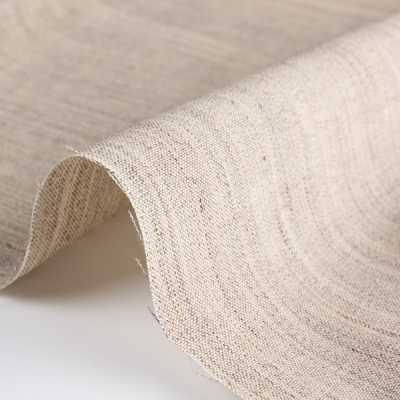
The likelihood of strike-through cannot be determined from the outer fabric material name alone. Weave density, knit size, thickness, nap, surface finishing, and color all have an effect. For lightweight plain weave, lawn, chiffon, lace, and open-knit fabrics, it is necessary to check for the risk of resin passing through.
Interlining is made by applying adhesive resin to a base fabric such as nonwoven interlining, woven interlining, or knit interlining. Because the amount, particle size, arrangement, and melting temperature of the resin differ, the effect on the outer fabric is not uniform even when the interlining has the same stiffness.
- For thin outer fabrics with an open structure, consider interlining with reduced resin amount or dot size.
- For outer fabrics with surface texture or nap, also check for pressure marks caused by pressing.
- For stretch materials, consider stretch interlining that will not easily restrict the fabric's stretch and recovery.
Selection and Adhesion Conditions
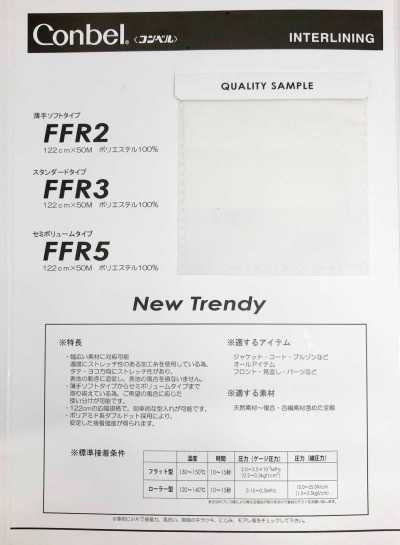
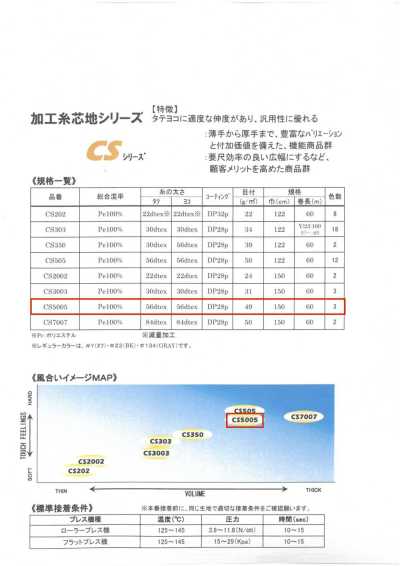
Choose interlining by balancing the required shape retention, while avoiding materials that are much thicker or stiffer than the outer fabric. Selecting based on stiffness alone can lead to resin penetration, reduced hand feel of the outer fabric, and step differences during sewing. The basic approach is to judge by test application using the outer fabric and interlining together.
Strike-through is more likely to occur when temperature, time, and pressure are excessive. However, if the conditions are lowered too much, peel strength will be insufficient. Using the specified conditions for the interlining as a reference, adjust while checking the appearance of both sides after pressing, the adhesion state, and changes after washing or dry cleaning.
- Test with the same outer fabric, interlining, press machine, and whether or not a pressing cloth is used as in actual production.
- Check changes in surface gloss, dot show-through, hardening, and color difference from multiple angles.
- Use cutting scraps and compare temperature, time, and pressure step by step.
Precautions in Sewing and Differences from Similar Terms
Once strike-through occurs, it is a defect that is difficult to correct after completion. Before applying interlining, check both sides of the outer fabric and perform tests including seam allowances. During sewing, also confirm whether misalignment in stitching caused by thickness differences between the interlining and outer fabric, or reheating with an iron, changes the appearance.
Bleed-through may refer to a condition in which adhesive resin or similar material appears to have seeped onto the surface, and it may be used in a meaning close to strike-through. On the other hand, fading refers to press marks caused by pressing pressure or seam allowance steps, and its main cause differs from strike-through.
Frequently Asked Questions
How should interlining be selected to prevent strike-through?
Avoid interlining that has more resin or is stiffer than necessary for the outer fabric's thickness, density, surface texture, and sheerness. Prepare multiple candidates, make test applications using the actual press machine, and compare surface dot marks, gloss changes, and adhesion strength before deciding.
Can strike-through be prevented by weakening the adhesion conditions?
Lowering temperature, time, and pressure may reduce strike-through, but it can lead to insufficient adhesion and interlining lift or peeling. Do not respond by adjusting only the adhesion conditions; also consider changing to an interlining with a resin specification suitable for the outer fabric.
How do you tell the difference between strike-through and fading?
Strike-through is mainly when adhesive resin appears on the surface of the outer fabric and is seen as dot-like gloss or stiffness. Fading is a press mark caused by seam allowances, interlining edges, or pressing pressure. Observe the surface and check whether it matches the resin pattern of the interlining.