Cotton Tape
Cotton tape is a narrow tape-like material made mainly from cotton and, depending on its woven or knitted structure, is used for garment reinforcement, cords, handles, and decoration.
Contents6 sections
Definition and Overview
Cotton tape is a narrow tape-like material made using cotton yarn. It is often flat in shape, and its rustic, natural texture and moderate absorbency make it suitable for a wide range of uses, from apparel to bags and miscellaneous goods. It is also called cotton flat tape or cotton tape.
Cotton tape, as a material name, does not refer only to a specific weave or manufacturing method. Even within cotton tape, stiffness, surface texture, strength, and applications vary depending on yarn thickness, density, thickness, finish, and dyeing.
Materials and Structure
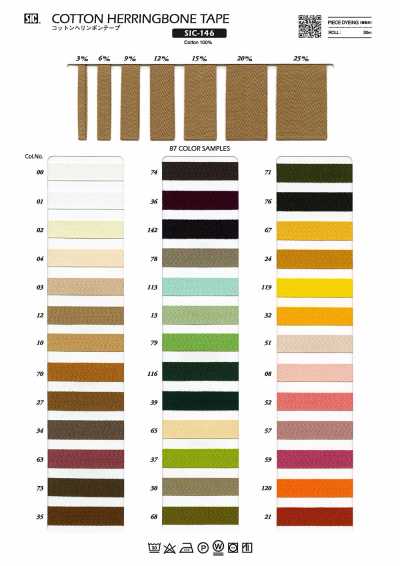
Many are made as woven fabrics by crossing warp and weft yarns, using plain weave or twill weave. Plain weave types are relatively uniform and easy to handle, while twill weave types show diagonal ridges and tend to have more flexibility and character. In some machine-woven products, the texture may be distinctive.
Some cotton tapes are made by knitting or braiding. Knitted structures differ from woven fabrics in stretch and how the edges curl, while braided structures have a more cord-like three-dimensional feel. When selecting flat cotton tape, check not only the material but also the manufacturing method and cross section.
- Woven: Shape is easy to keep stable and is used for reinforcement and handles.
- Knitted: Some have stretch and softness, so confirm the application.
- Braided: Some have roundness or thickness, and they are handled separately from flat cords.
How to Read Width and Thickness
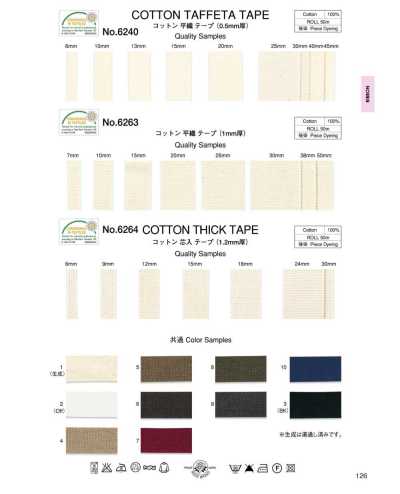
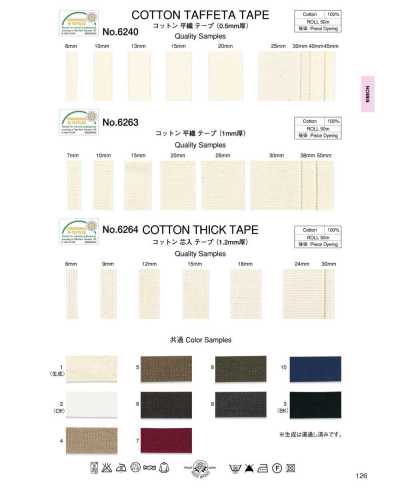
Flat cotton tape is generally specified by finished width in millimeters. Width alone does not determine thickness, stiffness, or strength, so it is important to also check the tape thickness, structure, weave density, and, if necessary, tensile strength.
For cotton materials in cord-like or braided structures, dimensions may be shown by diameter or thickness rather than width. For applications where the tape passes through hardware, confirm the actual dimensions including thickness, not just the tape width, and check compatibility with the inner diameter of a ring or slide adjuster through prototyping.
Main Applications and Selection
In apparel, it is used for necklines and shoulder seams as stay tape to prevent stretching, as loops, for reinforcement around the waist, for facing stays, and as decorative tape. In bags and aprons, it is used as handles, shoulder straps, and tie cords. Depending on the application, evaluate skin feel, sewability, and required strength.
For handles and straps that carry tensile load, consider not only width but also thickness, weave density, and the specification of the sewn attachment area. Since cotton tape may be less resistant than polyester tape to friction, tensile load, and colorfastness in general, testing and actual-use verification are necessary for applications expected to face heavy loads or frequent friction.
- For reinforcement: Check stiffness and how neatly it settles after sewing to prevent fabric stretch and distortion.
- For handles: Check thickness for comfort in hand and strength against load.
- For decoration: Check color, weave texture, fuzz, and changes in texture after washing.
- For loops: Match the width and thickness to the hardware or buttons being threaded through.
Handling and Precautions
Cotton absorbs moisture easily and may shrink during washing or processing. Whether to prewash before sewing into a product should be decided based on the shrinkage rate of the tape and main fabric, as well as the finishing process. In particular, if product washing or stone washing is performed, prior testing is necessary.
Cut edges fray easily, so apply treatment according to the application, such as folding in the edge, stitching it down, or finishing the edge. Methods that cut with heat to melt the edge, unlike synthetic fiber tapes, do not prevent fraying in cotton tape.
Dyed cotton tape may bleed or fade due to washing, friction, sweat, or light. Color differences by dye lot may also occur, so match the color with the main fabric, carry out washing tests before mass production, and check the color again when placing additional orders.
Frequently Asked Questions
How should cotton tape and polyester tape be used differently?
If a natural texture, absorbency, and dye appearance are important, cotton tape is a candidate. On the other hand, when strong friction, repeated load, and colorfastness are required, polyester tape may generally be more suitable. Select based on the application and test results.
Does cotton tape shrink when washed?
Cotton tape may shrink due to washing, moisture, and drying. Differences in shrinkage rate from the main product can cause seam shrinkage and rippling, so before mass production, perform washing tests combined with the main fabric and, if necessary, consider prewashed or shrink-resistant products.
Is there a way to reduce fraying at the cut edge of cotton tape?
There are methods such as sewing the edge into place, folding it back and securing it with stitching, or finishing the edge with an overlock machine or zigzag stitching. Since cotton does not melt with heat, heat cutting alone cannot seal the cut edge. Choose the finishing method according to the intended use.