


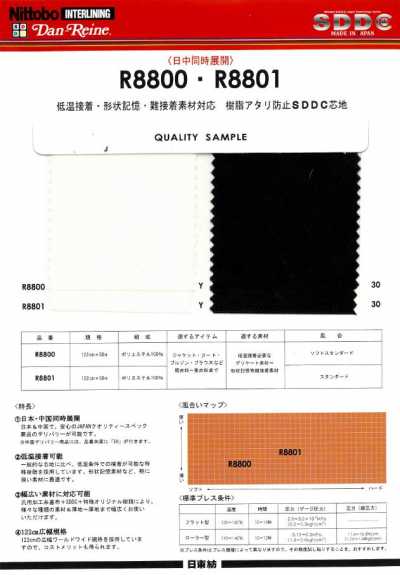
Low-temperature Bonding
Low-temperature bonding is a method, or the performance of that method, in which interlining is bonded to the outer fabric at a lower temperature than standard fusible interlining, in order to minimize effects on the texture and surface condition of heat-sensitive outer fabrics.
Contents6 sections
Definition and Overview
Low-temperature bonding is a bonding specification in which the resin of fusible interlining is melted at a relatively low temperature to integrate the outer fabric and interlining. It provides the necessary reinforcement and shape retention while minimizing heat-related deformation of the outer fabric, changes in gloss, and effects on coatings.
Low-temperature fusible interlining refers to interlining that uses resin designed to bond easily under these conditions. Being bondable at a low temperature does not automatically guarantee bonding strength, wash durability, or suitability for all outer fabrics, so the outer fabric and bonding conditions must be checked together.
Areas of Use and Role
It is used in the front panels, facings, collars, cuffs, pocket openings, and similar parts of blouses, shirts, jackets, coats, and other garments. It suppresses stretching and sagging in the outer fabric, improves ease of handling during sewing, and stabilizes the outline and opening areas of the garment.
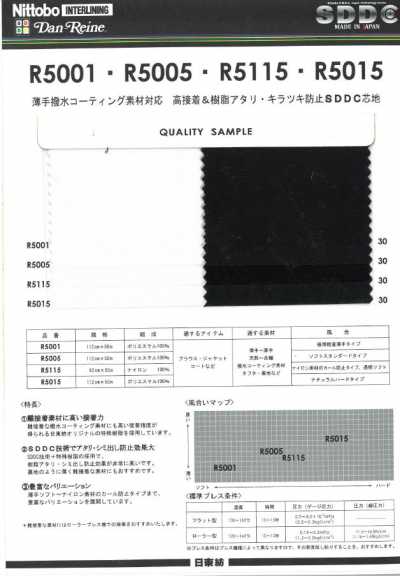
It is especially considered for thin fabrics, lightweight materials, water-repellent coated materials, shape-memory materials, synthetic leather, and other outer fabrics that are easily affected by heat. When used as a partial interlining applied only where needed, it helps preserve the outer fabric’s original softness and drape.
Materials and Types
The base fabrics used in interlining for low-temperature bonding include nonwoven, woven, and knit materials. The structure and thickness of the base fabric, its stretchability, and the type of bonding resin and dot shape all affect the post-bonding firmness, softness, and adaptability.
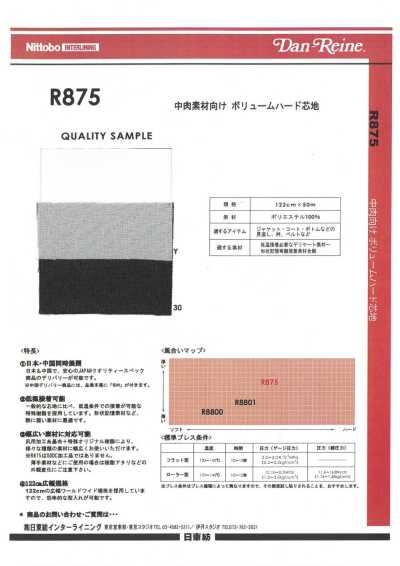
Thin, soft types blend well with delicate thin fabrics and blouse fabrics, while firmer types are used for areas where shape retention is important, such as front edges and collars. For stretch outer fabrics, a stretch interlining that follows the fabric’s stretch should be considered.
- Nonwoven interlining is lightweight and easy to cut, and is used in a wide range of areas.
- Woven interlining is easy to provide stability through grain direction and is used in areas where tailoring appearance is important.
- Knit interlining has stretchability and is used when adaptability to knit fabrics or stretch woven fabrics is needed.
Selection and Precautions
Choose interlining so that it does not become excessively thick, hard, or heavy compared with the outer fabric. If the interlining is too strong, it can impair the fabric’s texture or make folded-back areas look unnatural. Make your decision based on test bonding to match the outer fabric’s thickness, structure, stretch direction, and desired silhouette.
It is also important to check whether resin show-through or gloss appears on the surface after bonding, and whether the color or surface feel of the outer fabric changes. This is especially important for thin fabrics, dark colors, glossy materials, and coated materials. Aligning the grain direction and stretch direction of the interlining with those of the outer fabric also helps stabilize the finished result.
- Perform test bonding with each type of interlining using scraps of the outer fabric.
- Check the appearance and texture not only after bonding but also after cooling.
- For flexing areas, check for cracking or lifting caused by the hardness of the interlining.
- Check for peeling or changes in appearance after washing or the intended care process.
Bonding and Sewing Precautions
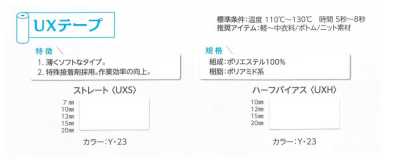
For bonding presses, set the temperature, time, pressure, and cooling to match the specified conditions for the interlining. If the temperature is too low, the resin may not bond sufficiently, which can lead to peeling or interlining lifting. Conversely, excessive heat or pressure can cause deformation of the outer fabric, resin strike-through, and show-through.
After bonding, allow sufficient cooling before cutting or sewing. If the material is moved before cooling, the bonded state may not stabilize properly. Heat is also applied during sewing pressing and finishing presses, so confirm the heat resistance of the outer fabric and the bonding condition of the interlining not only during the main bonding step but throughout the entire process.
Frequently Asked Questions
Can low-temperature fusible interlining be used for any outer fabric?
Even with low-temperature fusible interlining, compatibility with the outer fabric must be checked. The bonding result varies depending on the fabric material, surface finish, thickness, and stretchability. In particular, for water-repellent finishes, coatings, brushed fabrics, and glossy materials, conduct test bonding under the specified conditions and check the appearance, peeling, and condition after washing.
Does low-temperature bonding reduce bonding strength?
If interlining designed for low-temperature bonding is bonded under the specified conditions, it may achieve the strength required for the application. However, lowering the conditions simply because it is low temperature may result in insufficient bonding. Follow the temperature, time, and pressure specified for each interlining, and check the peel strength in combination with the outer fabric.
What is the difference between low-temperature fusible interlining and regular fusible interlining?
The main differences are the temperature range suitable for bonding and the consideration given to heat-sensitive outer fabrics. Low-temperature fusible interlining is designed to bond easily under lower temperature conditions. However, because the type of base fabric, hardness, thickness, and stretchability vary by product, selection should be based not only on whether it is low-temperature bonding but also on the resulting texture.





