Cutting Mat
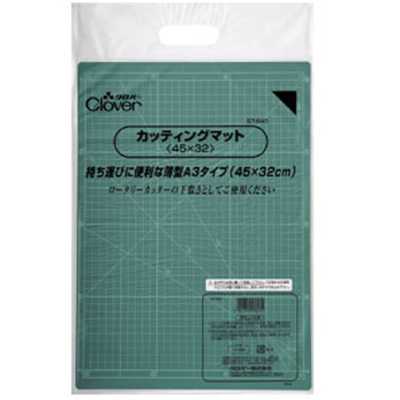
A cutting mat is a mat placed under fabric, paper, and other materials when cutting with a rotary cutter or utility knife, helping ensure stable cutting while protecting the work surface and blade.
Contents6 sections
Definition and Overview
A cutting mat is a board-like work tool placed under material to be cut. It prevents the blade from directly hitting the worktable and helps reduce scratches on the desk and wear on the blade tip. In dressmaking, it is used for cutting out patterns and cutting fabric and interfacing for small items.
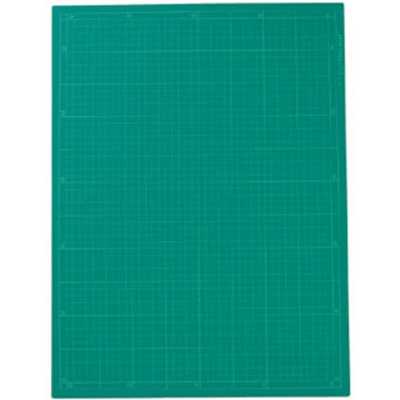
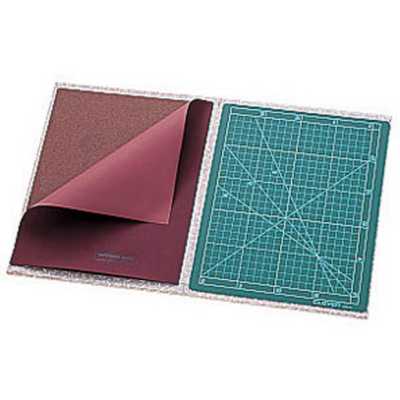
Many types have printed scales, grid lines, and angle lines on the surface, which help confirm dimensions and assist with straight or diagonal cutting. Some products combine the functions of a marking board and an ironing board, but they are treated differently from ordinary cutting mats in terms of the surface used and heat resistance.
How to Use
Place the mat on a flat, stable worktable and arrange the item to be cut so it does not shift. With a rotary cutter, hold the ruler firmly and move the blade away from your body to make straight cuts more easily.
When cutting fabric, place it so the mat extends sufficiently under the cutting line. Cutting along the edge or seam of the mat can make cutting unstable, so it is basic practice to work in the center of a wide surface.
- Replace cutter blades before their sharpness declines.
- Use a ruler that does not slip, and keep your fingertips away from the blade path.
- Do not insert the blade too deeply; cut once with the necessary force.
- After use, retract the blade and do not leave heavy objects on the mat for long periods.
Types and How to Choose
Common cutting mats include types that claim self-healing properties, in which blade marks are less noticeable and the surface more easily returns to normal after cutting. Some have scales on both sides so the front and back can be used separately.
When choosing one, use a size slightly larger than the pattern or parts to be cut as a guide. For mainly small items, a compact size that is easy to handle is convenient; for garment patterns or long straight lines, a large size is useful. Also check the unit of the scale, the visibility of the grid, the thickness, and whether it is one-sided or double-sided.
For rotary cutters, a type that does not let the blade sink in too deeply and absorbs it moderately is suitable. When repeatedly cutting thick paper and similar materials with a utility knife, check the durability for the intended use and the product's compatibility with the blade being used.
Care and Safety Notes
After use, remove fiber scraps and paper pieces with a soft cloth. Clean dirt according to the product instructions, and avoid strong solvents and hard brushes, as they may damage the surface. There is no need to forcibly dig out scraps left in cuts.
Leaving it in high temperatures, direct sunlight, near heating appliances, or in a car for long periods can cause warping or deformation. When storing it, keep it as flat as possible, and do not roll or fold it. Do not place an iron directly on products other than those that also function as an ironing board.
A cutting mat is not a tool that prevents injuries from blades. Do not place your hands in the direction of the blade, and when children use it, an adult should supervise. If wear or deep scratches make the cutting surface unstable, consider replacing it.
Differences from Similar Terms
The term cutter mat is used as another name for a cutting mat. In general, both refer to the mat placed during cutting.
An ironing board is a board for pressing with heat and steam, and is usually not suitable for cutting with blades. A marking board, on the other hand, is a board for transferring marks with tailor's chalk or a tracing wheel. In combined products, the purpose differs by surface, so check which side to use.
When cutting with dressmaking scissors, a mat is not essential. When cutting with a rotary cutter or utility knife, use a cutting mat to protect the worktable and ensure stable cutting.
Frequently Asked Questions
Can a cutting mat be used for anything other than a rotary cutter?
It can also be used when cutting paper, patterns, thin interfacing, and similar materials with a utility knife. However, repeatedly cutting thick or hard materials can cause it to wear quickly, so check the mat's intended use and its compatibility with the blade and material beforehand.
Can a cutting mat be used if it has warped?
A warped mat can make materials and rulers unstable, which may lead to misaligned cutting lines or injuries. Do not try to force it back into shape; store it in a flat place. If the warp does not improve and interferes with work, consider replacing it.
Is it okay to determine cutting dimensions using only the scale on the cutting mat?
The scale is useful as an aid for confirming the cutting position, but in pattern work that requires precision, use a ruler and the dimensions on the pattern as well. It is important to account for mat expansion and contraction, wear on the printed markings, and the scale specifications of each product, and to keep the reference dimensions consistent.