


Large Facing
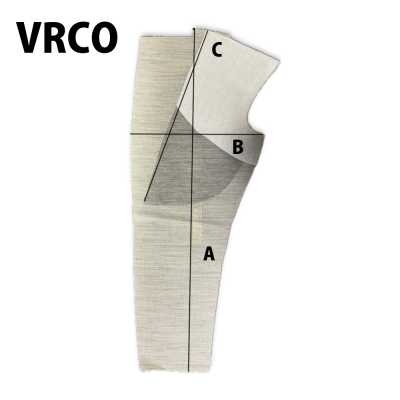
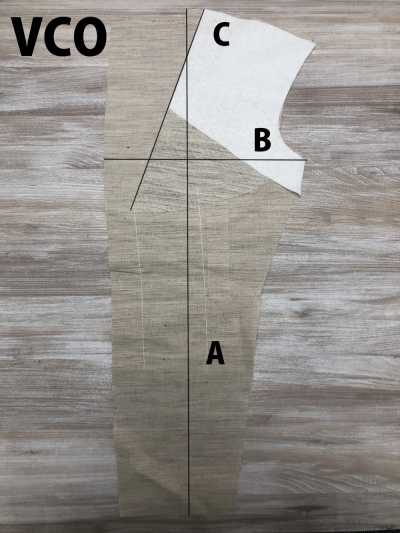
Large facing refers to a facing that is taken wider than usual inward from the edge of the front body, and is a tailoring component used to finish the front edge, stabilize the shape, and improve the appearance of the inside.
Contents6 sections
Definition and Overview
A facing is a piece of fabric attached to finish edge areas such as the neckline, front edge, and cuffs from the inside. A large facing refers to a construction in which this facing is made wider and covers a broad area on the inside of the front body.
It is often cut from the same fabric as the outer fabric and is placed continuously from the front edge around the collar and lapel area. While stabilizing the appearance of the front opening, it can also serve a design role by showing the outer fabric on the inside.
Areas Used and Role
It is mainly used for the front body of jackets, coats, blousons, and similar garments. In products that are not fully lined or in single-layer construction, it is used to cover seam allowances and interfacing at the front edge and to keep the inside looking neat.
Because the front edge is repeatedly subjected to putting on and taking off as well as friction, a large facing is a structure that makes it easier to reinforce the strength and shape of the edge. Since it also affects lapel roll and the front edge’s settled appearance, its width and shape are determined from both design and tailoring perspectives.
- Covers the seam allowances around the front edge, neckline, and lapel.
- Hides fusible interlining and partial interfacing, and tidies the inside appearance.
- Secures the stability of the front body while reducing the area that needs lining.
Materials and Types
For a large facing, a self-fabric facing using the same fabric as the outer fabric is common. This is because it is less likely to create color differences when seen from the outside and makes it easier to match the texture of the front edge and lapel. On the other hand, with thick fabrics or napped outer fabrics, a separate fabric may be used to reduce bulk.
When selecting a separate fabric, it is important to match the thickness, body, stretch, and post-wash shrinkage of the outer fabric as closely as possible. For products that require smoothness on the inside, a lining with a slippery finish or a back lining may be combined with the body portion other than the facing.
How to Choose and Points to Note
If the outer fabric is thin, white, light-colored, or sheer, check whether the color or pattern of the facing and the color of the fusible interlining show through to the outside. Even with the same fabric, overlapped areas may appear darker, so check the outside appearance during prototyping.
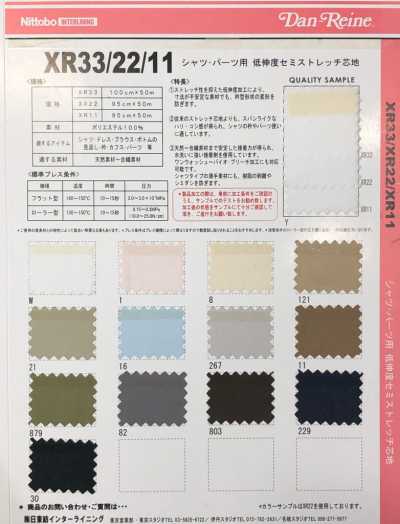
With stretch fabrics, if only the facing is difficult to stretch, the front edge may ripple or pull. Choose interfacing in line with the stretch direction of the outer fabric, and if necessary control the stretch at the front edge with stay tape or similar material.
If the slipperiness of the outer fabric and the facing differ, the facing may roll to the outside during wear or the front edge may not settle properly. With thick fabrics, steps caused by overlapping seam allowances are also more likely to appear, so the specification should be considered together with seam allowance trimming.
Sewing Notes and Differences from Similar Terms
Because a large facing has a large area, if the grain line shifts, it can lead to twisting at the front edge or the facing floating away. Take the grain accurately when cutting, make clips in the seam allowance at curved sections during sewing, and after turning, shape it and press it with an iron to settle it.
Facing refers to the general component used to finish edge areas, while a large facing is a specification with a wider facing width. A dobai often refers to the inner tailoring around the inside pocket area of the front body of a men’s jacket, and its purpose and placement differ from a large facing.
Frequently Asked Questions
What is the difference between a large facing and a lining?
A large facing is mainly a part made of the outer fabric or another fabric used to finish the front edge and the collar area. A lining broadly covers the inside of the body and sleeves, and provides smoothness, ease of putting on and taking off, and coverage of seam allowances. A large facing is used regardless of whether there is a lining.
Must a large facing always use the same fabric as the outer fabric?
It is often made from the same fabric, but it is not required. A separate fabric may be used when the fabric is thick and seam allowances become bulky, when napping is strong, or when smoothness on the inside is a priority. It is important to verify color difference, thickness, stretch, and shrinkage in prototyping.
What causes a large facing to roll to the outside?
The main causes are mismatched dimensions or grain line on the facing side, interfacing stiffness, seam allowance treatment, and pressing processes not matching those of the outer fabric. In some cases, the required stretch control at the front edge is applied, and the facing is made slightly smaller.





