Regimental Tie
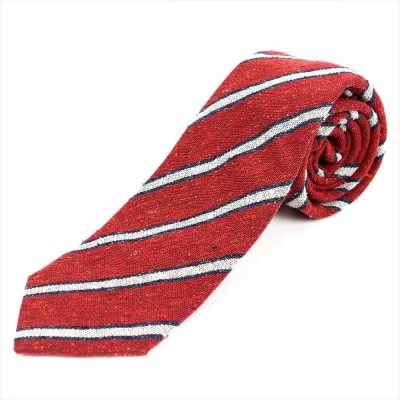
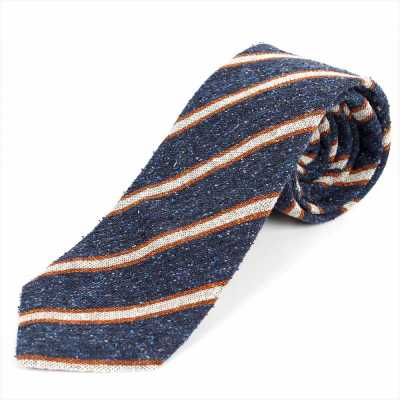
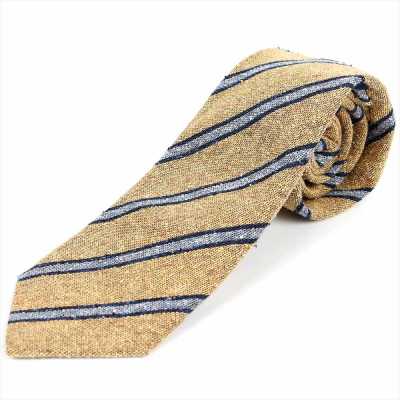
A regimental tie is a necktie with diagonal stripes on a ground color, mainly used for business and traditional styles.
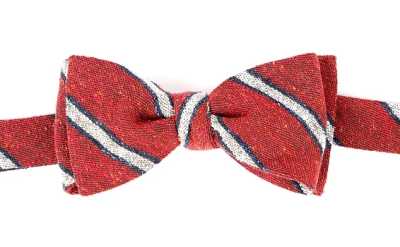
Contents6 sections
Definition and Overview
A regimental tie is a necktie characterized by diagonal stripes arranged at regular widths and intervals. It is named in connection with color schemes and stripe patterns associated with British regiments, schools, clubs, and the like, but today it is also widely used as a general decorative pattern.
“Regimental stripe” originally refers to the pattern itself. For that reason, it is also used for diagonal stripe patterns on shirt fabric, ribbons, tape, and similar items in addition to neckties. A regimental tie refers to a necktie made with that pattern.
Shape and Construction
In general, it is a long necktie worn by wrapping around the neck and tying, consisting of the wide blade, the narrow blade, and the middle section that tightens around the neck. When worn, it is tied with a simple knot, and creating a dimple below the knot makes the texture and three-dimensional look of the pattern and fabric easier to see.
The outer fabric is often cut on the bias, and an interlining is inserted to allow for easier tying and better shape recovery. The blade width, stiffness of the interlining, presence or absence of lining, and edge finishing such as hand-rolled edges all affect appearance and how it feels when tied.
- The wide blade is the broad end visible at the front.
- The narrow blade is the slim end tucked behind the wide blade.
- The blade width is chosen to harmonize with the suit lapel width and the wearer’s build.
Materials and Appearance
Silk is easy to give luster, vivid color, and suppleness when tied, and is used for everything from dressy styles to business wear. Wool gives a calmer look and is a material that pairs well with brushed suits and jackets for autumn and winter.
Cotton and polyester are also used. Cotton tends to give a relatively light, casual impression, while polyester tends to offer a wide range of pattern and color expression. Weave structure and surface sheen also change the formality even with the same color scheme.
How to Coordinate It
A regimental tie is an easy pattern to use with daytime business suits, jacket styles, and semi-formal attire. When paired with a solid or subtly woven shirt, the diagonal stripes become the focal point and make the overall look easier to balance.
For formal evening dress, bow ties and similar items specified for black tie or white tie are generally used. A regimental tie is not a tie for a tuxedo or tailcoat, so the invitation’s dress code and ceremonial customs should take priority when choosing one.
When pairing it with a patterned shirt or suit, it is important to organize the stripe spacing, number of colors, and scale of the pattern. For example, with a fine-striped shirt, pairing it with broader diagonal stripes of a different spacing helps keep the patterns from blending together.
Selection and Care
When choosing one, check whether the ground color and stripe colors harmonize with the jacket, shirt, and shoes you already own. In workplaces, schools, or organizations, certain color combinations may have specific meanings, so when wearing a pattern with historical associations, be mindful of how the colors are handled.
After wearing, untie the knot and hang it on a hanger or similar item to let it rest and recover its shape. Pulling it hard to untie it or storing it while still tied can cause wrinkles and twisting. If it becomes soiled, check the care label and clean it appropriately, avoiding improper water washing.
Frequently Asked Questions
What is the difference between a regimental tie and a regimental stripe?
Regimental stripe is the name of the diagonal stripe pattern itself, and it is also used for fabrics and ribbons other than neckties. A regimental tie refers to a necktie made with that pattern. When searching for a product, it is easier to choose if you check whether it is a finished item or fabric/apparel material.
Can a regimental tie be worn to a wedding?
At daytime weddings and receptions, it may be acceptable depending on the venue atmosphere, the invitation’s instructions, and your role. However, it may not be suitable for highly formal ceremonies or formal evening attire. If a specific tie in white, silver tones, or similar is specified, follow that guidance first.
Are there rules for the direction of the stripes on a regimental tie?
The direction of the stripes depends on designs originating in Britain and the interpretations used by different regions and brands based on them, so it cannot be treated as a single universal rule. For ready-made products, you can choose based on the design, but when planning them for uniforms or organizations, confirm any overlap with existing designs and their meanings.