Hand-rolled Finish
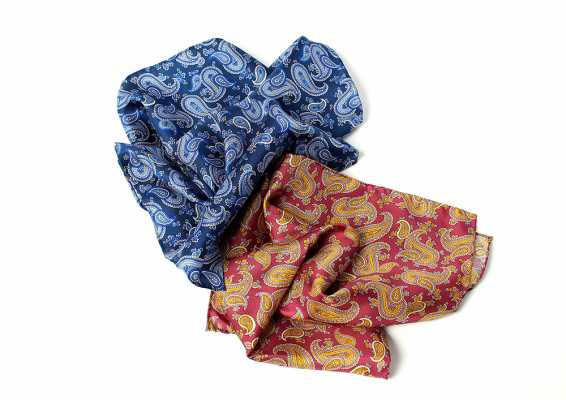
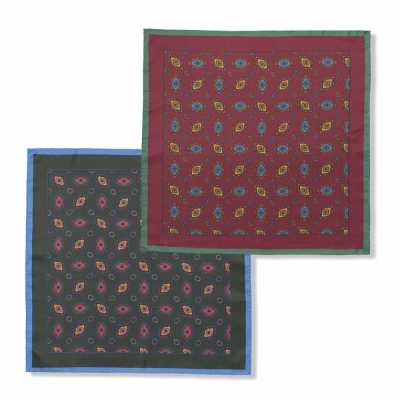
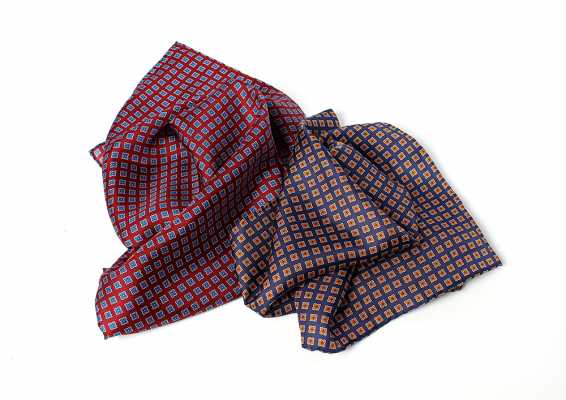
Hand-rolled finish is an edge finishing method that gives the edges of fabrics such as pocket squares a raised edge by narrowly rolling the fabric edge inward with your fingers and securing it with hand stitching.
Contents6 sections
Definition and Overview
Hand-rolled finish is an edge finishing method that secures the fabric edge with hand stitching while narrowly rolling it inward. It is often used around pocket squares, creating a subtle rounded edge and a natural irregularity. Unlike uniform machine stitching, it is characterized by a handmade look.
Here, hand-rolled finish refers to the finishing of the edge of a pocket square or similar item. It is distinguished from the act of rolling the entire product by hand or from decorative techniques that wrap thread around an item.
Parts and Construction
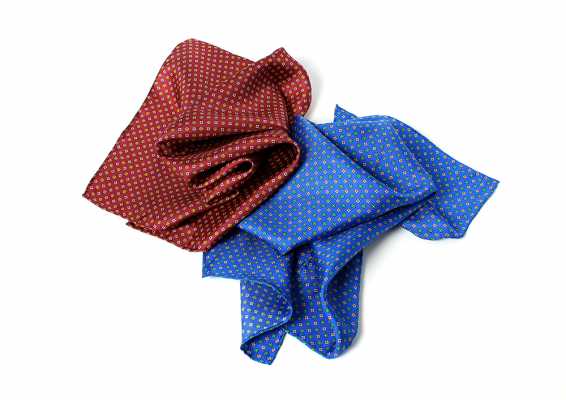
In general, all four sides of a square pocket square are finished. The cut edge is narrowly rolled inward, and the rolled section is secured with fine hand stitching in a way that catches the rolled edge, giving the edge a softly rounded, tube-like appearance.
The spacing of the stitches and the thickness of the rolled edge vary from piece to piece. When checking the finish, not only consistency but also smooth continuity all the way to the corners, and the absence of strong pulling on the textile from the front side, are key points.
- The edge is narrow and rounded
- Slight handmade differences appear even at the four corners
- There is no major puckering or waviness on the surface
Materials and Finish
Lightweight to medium-light, supple woven fabrics make it easier to create a narrow hand-rolled edge, and they also produce a natural volume when folded. Silk is often used for formal pocket squares because it makes good use of sheen and drape.
If the textile is thick, stiff, or prone to fraying, the rolled section may become bulky or the edge may look uneven. The finish also changes depending on the material, weave density, and texture of the printed surface, so it is important to check a finished sample.
How to Coordinate and Use
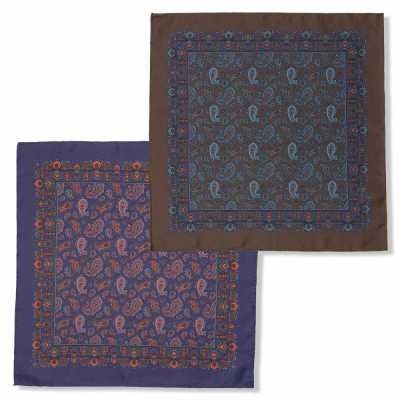
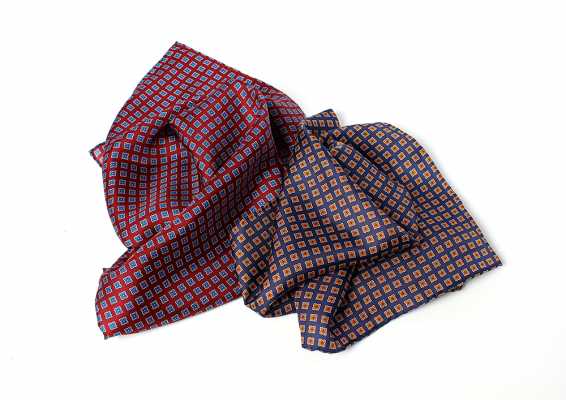
Hand-rolled pocket squares make it easy to show the dimensional quality of the edge and can be paired with suits and jacket styles. Subdued items such as plain white silk are suitable for formal occasions including celebrations, while colorful or patterned items can be incorporated into daytime ceremonies, dinners, parties, and similar outfits.
However, for evening formal wear or events where attire is specified in the invitation, the pocket square color, material, and fold should match the overall dress code. The fact that it is hand-rolled does not by itself determine the formality level; coordination with the shirt, tie, and jacket is important.
- Plain white items are suited to neat folds that do not show too much of the edge
- Colorful or patterned items are suited to soft folds such as puff or crushed styles
- For tuxedos and similar attire, priority is given to the required dress code
How to Choose and Handling Notes
When choosing, check the thickness of the edge, the finish of the corners, and the drape of the textile. When used so that only a small portion shows from the pocket, the edge becomes a visual accent, so it is easier to coordinate if you consider the contrast with the colors and patterns of the suit and tie.
The hand-rolled section may lose its shape if pulled hard or snagged on nails or accessories. After use, check for dirt and care for it according to the care label. When ironing, do not press the edge down too firmly; using a pressing cloth is safer.
Frequently Asked Questions
What is the difference between a hand-rolled and machine-stitched pocket square?
Hand-rolled finish narrows and rolls the fabric edge before hand stitching, so the edge has a rounded look and slight piece-to-piece variation. Machine stitching makes it easier to standardize the stitches and width, and the result tends to look flatter and more even. Rather than one being superior, choose according to the look and use you want.
Can a hand-rolled pocket square be used formally?
Yes. However, the formality of the outfit is not determined by the hand-rolled specification alone. For celebrations and other formal occasions, choose subdued colors and patterns such as plain white, and for evening formal wear, follow the rules required by the invitation or the attire such as a tuxedo.
If the hand-rolled edge is slightly uneven, is it defective?
With hand-rolled finish, small differences in edge thickness and stitching may appear. On the other hand, if there is major fraying, broken thread, significant waviness, or surface pulling, check the finish carefully. The criteria for judgment also depend on the product specifications.