Powder Dot
Powder Dot is a process in which powdery heat-melt adhesive resin is applied in dots to the base fabric of a fusible interlining and then heat-pressed onto the outer fabric to provide shape stability and reinforcement.
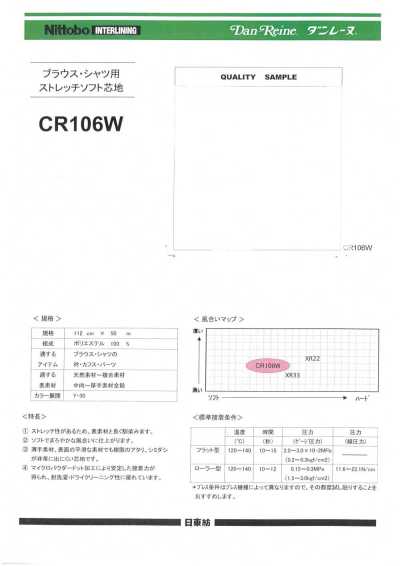
Contents6 sections
Definition and Overview
Powder Dot refers to a process in which thermoplastic adhesive resin powder is arranged in dots on one side of a fusible interlining, or to a fusible interlining that has undergone this process. The resin is melted by the heat and pressure of pressing to bond the outer fabric and interlining.
Because the resin is placed in dot form, this method makes it easier to reduce the impact on the texture and breathability of the fabric compared with a process that covers the entire surface with resin. However, the stiffness and bonding strength after fusing vary depending on the combination of resin type, dot amount, base fabric, and fusing conditions.
Areas of Use and Functions
It is mainly used for areas where contour shaping or stretch control is needed, such as the front body, facing, collar, collar stand, cuffs, placket, and belt sections. Its purpose is to supplement the firmness, resilience, and shape stability that the outer fabric alone cannot provide.
For lightweight fabrics, it is important to provide stability while minimizing sheerness and surface impact; for heavyweight fabrics, the thickness and stiffness of the interlining affect the finished appearance. The required performance differs between full fusing, which is applied to the entire product, and partial fusing, which is applied only to the necessary areas.
- Collars, cuffs, and plackets for shirts and blouses
- Front body, facing, and collar area for jackets and coats
- Belts, extensions, and pocket openings for pants and skirts
Materials and Types
Powder Dot interlining is made by attaching adhesive resin to a base fabric such as nonwoven, woven, or knit materials. The finished feel and followability after fusing are adjusted by combining the elasticity, thickness, and density of the base fabric with the type of resin, dot size, and dot density.
The resin is selected to match the fibers of the outer fabric and the required fusing temperature. Specifications that fuse at low temperatures are considered for heat-sensitive outer fabrics, but it is necessary to check not only the fusing temperature but also durability after washing and dry cleaning.
Selection and Fusing Precautions
As a rule, choose an interlining that is not markedly harder, thicker, or heavier than the outer fabric. Thin fabrics, delicate surface fabrics, stretch materials, brushed materials, and coated materials can show different appearance and fusing results even with the same interlining, so testing must always be done on the actual outer fabric.
In fusing, in addition to temperature, time, and pressure, sufficient cooling after pressing is important. If conditions are insufficient, interlining lift or peeling is likely to occur, while excessive heat or pressure can cause strike-through, show-through, surface fading, and a harder hand.
The sequence of fusing before or after cutting, the grain direction, and how much the fusing overlaps the seam allowance also affect the final result. After fusing, check not only the appearance but also whether there is any peeling, how the needle passes during sewing, and waviness near the seams, then determine production conditions.
Differences from Similar Terms
Dot interlining is a name that may refer generally to fusible interlining with adhesive resin applied in dots. Powder Dot specifically refers to the method of forming those dots with powdered resin.
Paste Dot is a method in which dot patterns are formed by printing paste-like adhesive resin. Double Dot refers to an adhesive specification with a two-layer dot structure. These terms describe mainly the resin application method or structure, not the hardness of the interlining itself.
Frequently Asked Questions
What kind of outer fabric should Powder Dot interlining be matched with?
Choose it according to the thickness, weaving or knitting density, elasticity, surface texture, and heat resistance of the outer fabric. For thin or delicate outer fabrics, focus on checking strike-through and fading; for stretch materials, focus on followability to stretch. It is important to perform fusing tests and post-wash evaluations on the actual outer fabric.
Are Powder Dot and Paste Dot the same?
Both share the concept of applying adhesive resin in dots, but the dot-forming method differs. Powder Dot uses powdered resin, while Paste Dot uses paste-like resin. Compatibility with the outer fabric and the proper fusing conditions must be checked for each specification.
What should be checked if the interlining lifts after fusing?
First, check whether the press temperature, time, pressure, and cooling time meet the specified conditions. Next, review the compatibility between the outer fabric's processing and surface condition and the adhesive resin, the interlining selection, and the uniformity of the pressing surface. Before mass production, perform peel tests and check the condition over time.