Front Interfacing
Front interfacing is interfacing used mainly on the inside of the front panels of tailored jackets and coats to shape the front edge and chest area, add body, and improve recovery.

Contents6 sections
Definition and Overview
Front interfacing is interfacing placed on the front panels of garments, especially from the front edge to the chest area. It supports the shape that cannot be maintained by the outer fabric alone, stabilizes the front opening, improves the appearance around the chest, and helps create a neat silhouette when worn. It is used across the entire front panel or over the required area.
Fusible interlining bonded to the outer fabric with adhesive is commonly used, but tailored construction may also use non fusible interlining or haircloth interlining sewn in place. Front interfacing is not the name of an interlining material; it is a term indicating the area and application used on the front panel.
Areas of Use and Role
It is mainly used in the front panels of jackets and coats, the front edge, around the lapel, and the chest area. In some cases, only part of the front panel, such as the facing or front placket, is reinforced. The area to be interfaced varies depending on the design, outer fabric, and tailoring method.
Front interfacing helps suppress stretching and waviness at the front edge and stabilizes how the garment lies when buttoned. It also supports the three-dimensional shape of the chest area and the roll of the lapel, helping the garment return to shape after wear or storage.
- Front panels and lapel area of tailored jackets
- From the front edge to the chest area of coats
- Reinforced areas of the facing and front placket in front-opening garments
Materials and Types
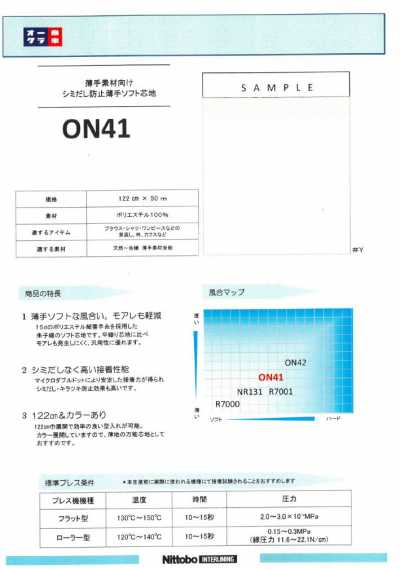
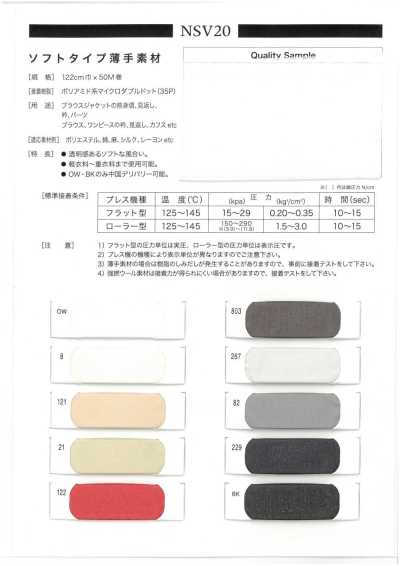
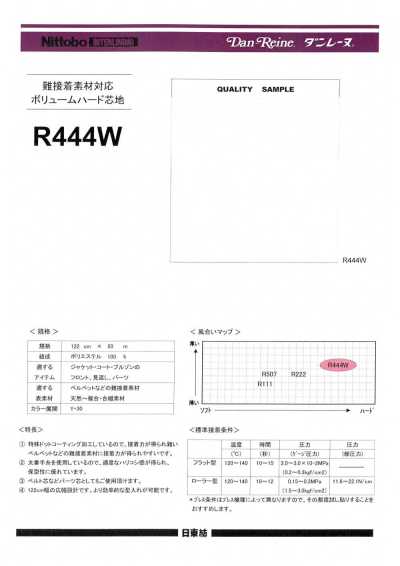
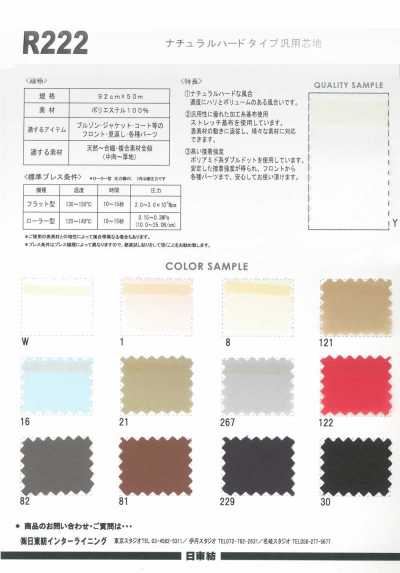
Front interfacing may use woven interlining, nonwoven interlining, knit interlining, or haircloth interlining. For fusible interlining, dot interlining with adhesive resin applied in dots to the base fabric is common. Woven interlining offers good shape stability, while nonwoven interlining allows a wide range of textures depending on the application.
For autumn and winter jackets and coats, front interfacing that emphasizes crispness and recovery may be used. On the other hand, for thin outer fabrics or lightweight tailoring, interfacing with less stiffness and thickness is chosen so as not to impair the outer fabric's drape or lightness.
Selection and Precautions
Front interfacing is selected according to the thickness, stretch, fabric weight, weave structure, and desired final stiffness of the outer fabric. If the interfacing is too stiff compared with the outer fabric, unnatural tension and creasing are likely to appear; if it is too weak, it will not sufficiently support the front edge or chest area. Lay the outer fabric and interfacing together and also check how they blend when bent.
When using fusible interlining, perform test bonding at the specified temperature, pressure, and time. If the conditions are not suitable, peeling, lifting, bubbling, or adhesive bleed-through may occur. Before mass production, it is important to check the appearance and bonding condition, including after washing, dry cleaning, and pressing.
When cutting, be mindful of the grain direction of the interfacing and the direction of the outer fabric. In particular, at the front edge and lapel, the effect on stretch prevention and the roll changes depending on the direction and application method of the interfacing. In the sewing process, also pay attention to shrinkage differences after interfacing, seam shifting due to thickness, and pressure marks from pressing.
Differences from Similar Terms
Front interfacing is a general application name for interfacing used on the front panel. Collar interlining is interlining used to shape the collar, waist interlining is used to stabilize the waist area, and chest padding interlining is used to add thickness and three-dimensional shape to the chest area; the areas and purposes are different.
Haircloth interlining is a type of interlining made with animal hair and similar materials, and it may be used as front interfacing. Fusible interlining is also a classification based on the bonding method. Therefore, front interfacing is not a concept opposed to haircloth interlining or fusible interlining; it is the name used when those materials are applied to the front panel.
Frequently Asked Questions
Is front interfacing the same as fusible interlining?
No, it is not the same. Front interfacing is the name for the application and area of interlining used on the front panel, while fusible interlining is a type of interlining bonded to the outer fabric with heat and pressure. Fusible interlining is often used for front interfacing, but some tailoring also uses haircloth interlining or non fusible interlining.
What problems occur if front interfacing is too stiff?
The original softness and drape of the outer fabric may be lost, and the front panel may look board-like. In addition, press marks may appear at seams and folds, and the lapel roll may become unnatural, so the difference in texture from the outer fabric should be checked when selecting it.
How can lifting of front interfacing be prevented during bonding?
Perform test bonding for each combination of outer fabric and interfacing, and set the proper temperature, pressure, and time. The condition of the fabric before bonding, cooling after pressing, and the cutting direction also affect the final result. It is important to check the bonding condition even after washing and dry cleaning.