Seven-fold Tie
Settepieghe is a tie construction that uses no lining, folds a wide fabric over several times, and minimizes the use of interlining.
Contents6 sections
Definition and Overview
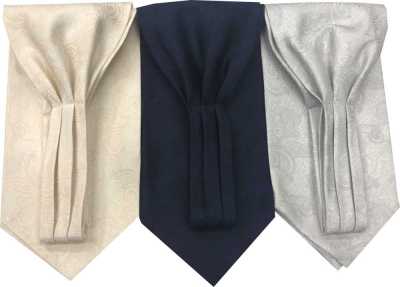
Settepieghe is a way of making a tie, and the name means "seven folds" in Italian. Rather than layering the outer fabric, interlining, and lining like a standard tie, it folds a single piece of wide outer fabric inward to create thickness and shape.
The name suggests seven folds, but the actual folding method, stitching, and whether interlining is used vary depending on the maker and product design. For that reason, the number of folds alone does not determine quality or formality.
Parts and Construction
The wide blade and narrow blade are shaped by folding in both ends of the cut fabric. The central overlap is often secured in places with overcasting stitches, and the triangular lining commonly seen in lined ties is generally not used.
Because the fabric itself is layered, the knot tends to have natural thickness, and when untied the folded structure becomes visible. Pulling the stitches too hard can distort the shape, so the securing thread is treated as part of the structure that holds it in place.
- Wide blade: the wider front end of the tie.
- Narrow blade: the slender end that passes behind the neck and sits behind the wide blade.
- Overcasting stitch: a stitch used to secure fabric edges or overlaps by hand sewing or similar methods.
Materials and Finish
In many cases, silk fabric with softness and moderate resilience is used. The weave, yarn thickness, and finish affect the size of the knot, drape, and surface sheen. If the fabric is thin, layered folds tend to add more thickness; if it is heavy, the knot tends to become larger.
The edges may be finished by hand-rolled construction, in which they are wrapped in by hand, or by sewing. Because this construction does not rely heavily on lining for shape, checking the pattern placement, cutting direction, edge finish, and left-right balance of the folds helps confirm both appearance and ease of tying.
How to Wear It and How to Use It
Settepieghe is used as a tie with suits and jackets. For daytime business wear and formal celebratory occasions, it is easier to achieve balance if you choose one whose knot will not become overly large relative to the suit fabric and shirt collar shape.
For evening formal wear, follow the dress code indicated on the invitation. Black tie generally calls for a bow tie, so a Settepieghe tie should not be used as a substitute; it is appropriate for normal suit styles or attire that follows the stated dress code.
- For heavy fabrics, check compatibility with a smaller knot such as the plain knot.
- For patterned fabrics, check whether the pattern sits centered on the wide blade when tied.
- For mourning occasions, prioritize customary sheen, patterns, and colors, and avoid anything that looks overly ornate.
Selection and Care Notes
When choosing one, check not only the construction name but also the wide blade width, length, fabric thickness, and how well the knot sits. Because there is little interlining or lining, it may feel light and comfortable to wear, but depending on the material the knot may also loosen more easily.
After use, do not pull the knot out; undo it by retracing the tying steps in reverse. Smooth it into shape and let out moisture, then store it without strong pressure. For stains or wrinkles, check the care label and consult a professional cleaner if needed.
Frequently Asked Questions
What is the difference between Settepieghe and a regular tie?
A regular tie is generally constructed by combining outer fabric with interlining and lining. Settepieghe is made by folding a wide outer fabric inward several times, so its defining feature is that it uses no lining or uses very little of it. The texture of the fabric is more likely to show in the knot and in the way it hangs.
Can Settepieghe be worn with a tuxedo?
For black tie, which means wearing a tuxedo, a black bow tie is generally used. Since Settepieghe is a regular tie, it is not suitable as a substitute when black tie is specified on an invitation or similar notice. For evening suit styles without a specific dress code, choose one based on the overall material feel and color.
Can Settepieghe be washed at home?
Many are made of silk, and because washing may damage the folded structure and edge finish, home water washing should generally be avoided. Light wrinkles can be removed with steam held at a distance, without pressing hard. If it gets dirty, check the care label and consult a specialist shop.